

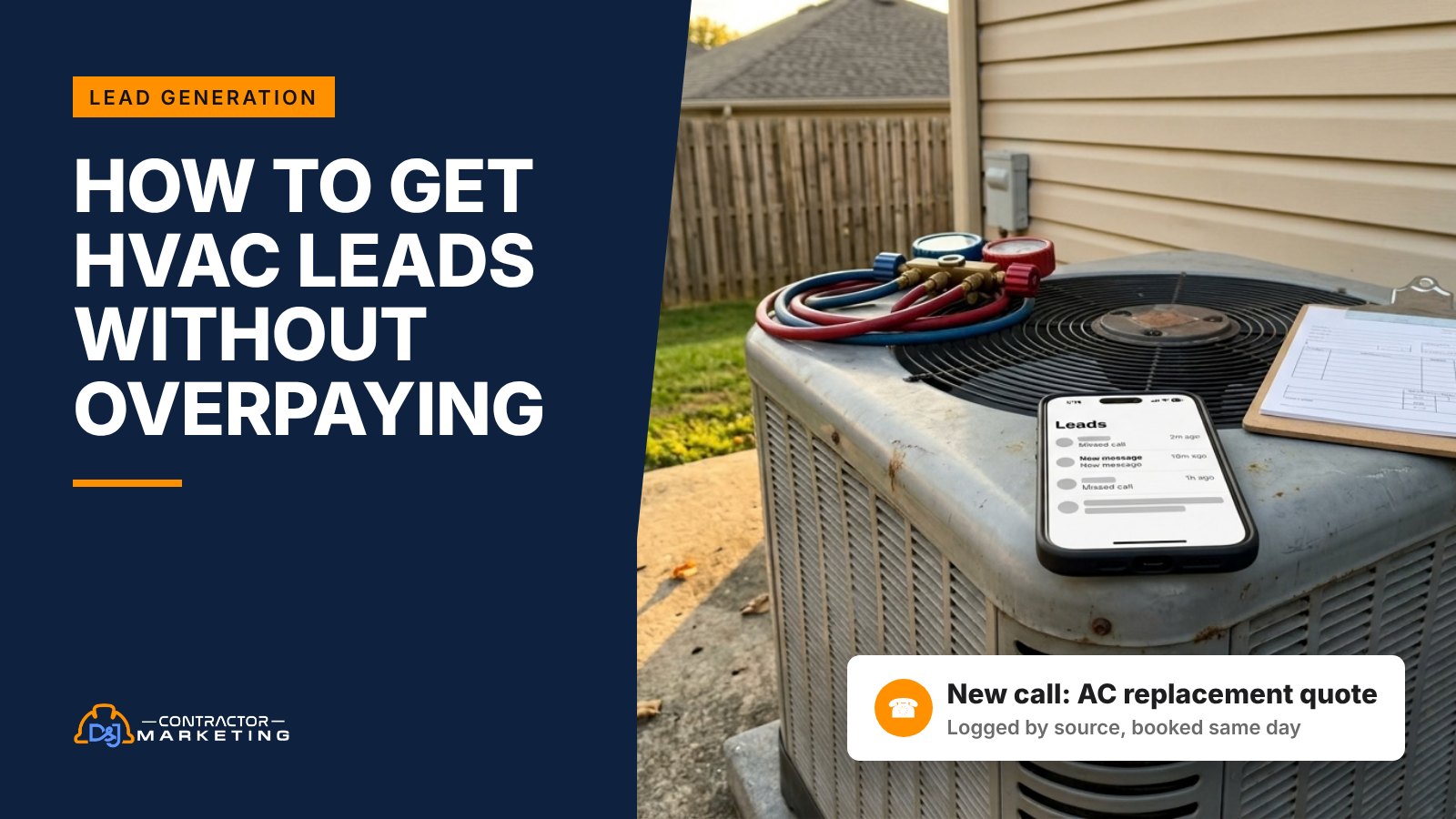
Every HVAC contractor has had the same August. The phone rings all month, a good chunk of those calls came from a lead service, and then the invoice shows up and eats most of what the work earned.
The problem is usually not the lead source. It’s that nobody ran the numbers on it.
Most advice on how to get HVAC leads is a list of places to go find them. This isn’t that list. This is the arithmetic that tells you which of your channels you’re overpaying for, and what to do once you can see it.
Key takeaways
- Judge every channel by cost per booked job, not cost per lead. A $60 lead you book 1 in 5 times costs $300 per job. The one number
- Shared marketplace leads at a 12% close rate work out to about $500 per booked job: fine for replacements, a loss on tune-ups. Marketplace math
- Google Verified replaced the Google Guaranteed badge, and manual lead disputes are gone in Local Services Ads. LSA changes
- Your Business Profile and your past customer list are the two channels that get cheaper as you book more work. Owned channels
- Most overpaying comes from slow callbacks, untracked channels and buying back customers you already had. Where money leaks
- The Section 25C tax credit is gone for property placed in service after December 31, 2025, so pull it from your offers. Retire that offer
The only HVAC lead number that matters
Every answer to how to get HVAC leads runs into one number. It’s almost never the right one.
Cost per lead is what every vendor quotes you. On its own, it tells you very little. The number that pays your crew is cost per booked job.
The formula:
Cost per lead ÷ close rate on that channel = cost per booked job.
Say a marketplace lead costs you $60 and you book one in five. That’s $300 to put one job on the board. Whether $300 is a bargain or a disaster depends entirely on what that job is.
On a $450 capacitor replacement, you just handed over two thirds of the ticket before anyone touched a tool. On an $8,500 system changeout, $300 is a rounding error and you should buy every one of those leads you can get.
This is why two HVAC companies can use the same lead service and come to opposite conclusions. One is buying service calls. The other is buying replacements.
So before you evaluate a single channel, you need three things written down: what you pay per lead, what percentage of those leads you actually book, and what the average job from that channel is worth. Most contractors have the first number and are guessing at the other two.

How to get HVAC leads from each channel, and what each one really costs
Run each of your channels through that same formula and the picture changes fast. Here’s roughly how the common options shake out. Your figures will differ by market, but the pattern holds almost everywhere.
Shared lead marketplaces
The ones that sell the same homeowner to three or four contractors at once. Published prices for HVAC commonly land somewhere between $35 and $85 a lead, and the close rate is low by design, because you’re in a footrace with competitors who got the identical notification.
At a 12% close rate on a $60 lead, you’re at $500 per booked job. That works on replacements. It doesn’t work on tune-ups, and a lot of what these services send is tune-ups.
There’s a deeper version of this comparison coming in a later post on exclusive versus shared leads.
Google Local Services Ads
Still the best starting point for most HVAC companies, because you pay per lead rather than per click and the homeowner picked you specifically out of the unit. 2 things changed recently that a lot of articles on this topic have not caught up with.
First, the badge. Google retired the green Google Guaranteed badge, along with Google Screened, License Verified by Google, and the money-back guarantee attached to them. They were replaced in October 2025 by a single Google Verified badge that appears on eligible Local Services Ads profiles that have completed screening and verification. If your website, truck wrap, or email signature still says “Google Guaranteed,” that language is out of date.
Second, and this one costs real money: manual lead disputes are gone. Google’s help documentation on automated lead credits explains that leads judged invalid or low quality aren’t charged at the outset. Charged leads then get reassessed over time, and may be credited automatically if later judged low quality. If you think a lead was poor quality, the way to say so is the feedback survey attached to that lead.
Google Search ads
Pay per click rather than per lead, which means you absorb the cost of everyone who clicks and doesn’t call. That makes the close-rate math harsher, but it buys you something Local Services Ads won’t: control over which searches you show up for.
The practical use is targeting replacement intent instead of repair intent. “Furnace not working” and “heat pump replacement cost” are very different jobs attached to very different tickets. Our overview of pay-per-click for contractors covers the structure side of that.
Your Google Business Profile
If you fix only one thing about how to get HVAC leads, fix this one. The marginal cost of the next call from your profile is essentially zero. The close rate is usually the highest of anything on this list, because the homeowner read your reviews and chose you before they dialed.
It’s not free, exactly. It costs attention: hours, services, photos, and a steady flow of recent reviews. But it doesn’t get more expensive as you book more work, which is the opposite of every paid channel above. Keeping that profile properly set up is the groundwork, and a working review request routine is what keeps it ranking.
Your own customer list
The cheapest HVAC leads you’ll ever get are the people whose equipment you already installed. You have their address, their system, its age, and its service history. Nobody is bidding against you for them.
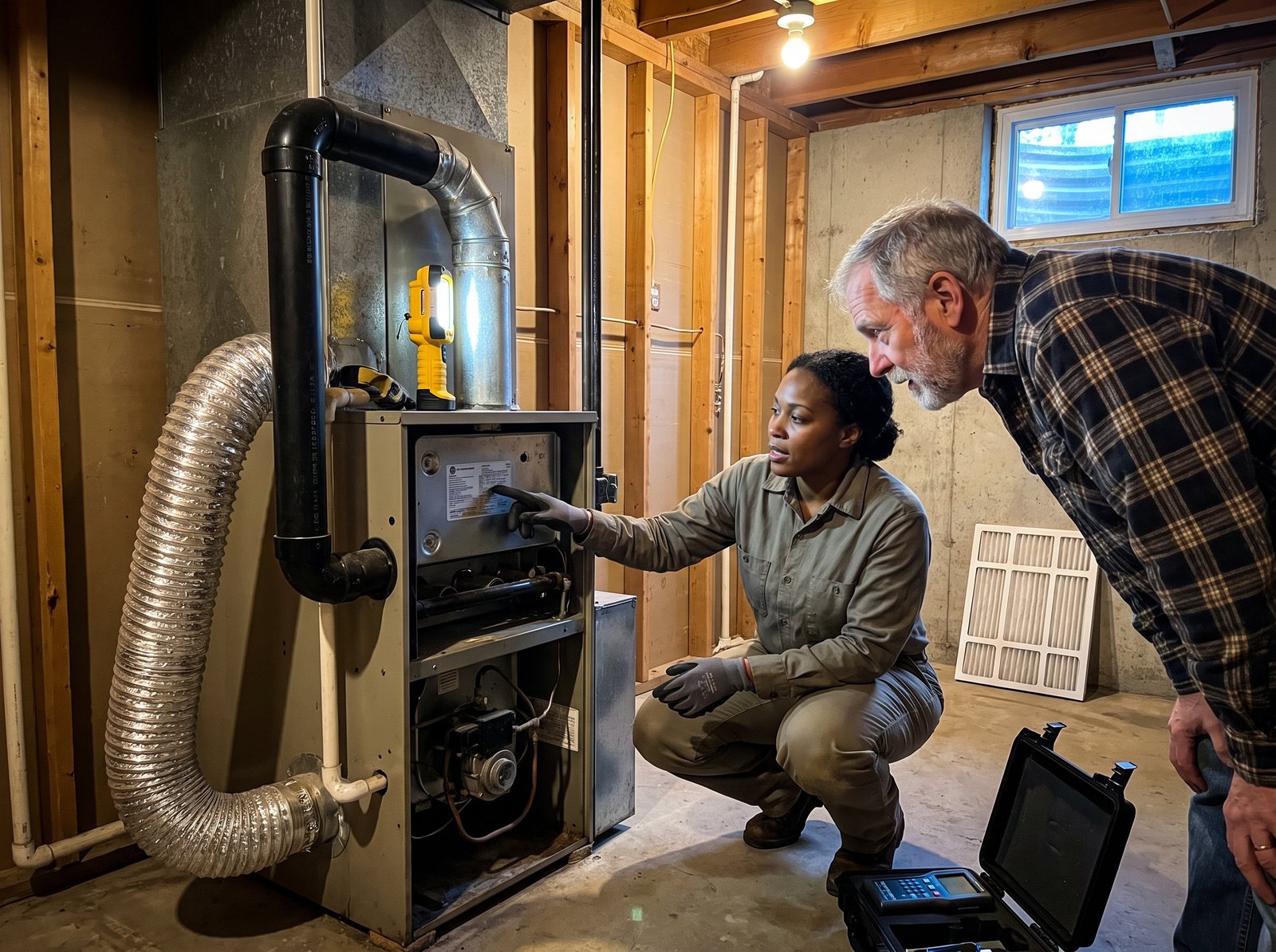
Most HVAC companies sit on a few thousand of these records and touch them twice a year at best.
Steal this text: “Hi Dana, it’s Ryan at Keller Heating and Air. Our records show we put in your Carrier system in spring 2017, which puts it at about nine years. Nothing is wrong, this is just the age where we start recommending a check before the summer run. Want me to get you on the schedule for a spring tune-up? Takes about an hour.”
Trade referral partners
Plumbers, electricians, home inspectors, property managers, and remodelers all stand in houses with aging HVAC equipment and no reason to think about you. The cost per lead here is a phone call and some reciprocity, and the close rate is high because it arrives with a recommendation attached.
Steal this text: “Hey Marcus, Ryan at Keller Heating and Air. You and I keep ending up in the same houses in Fairfield and I’d rather we send each other work than lose it to the big outfits. If you run into a furnace or AC that’s on its last legs, text me the address and I’ll be out same week. I’ll do the same for you on water heaters and repipes. No kickbacks, just a straight trade.”
Three places HVAC contractors quietly overpay
Here’s the uncomfortable part. For most contractors, how to get HVAC leads cheaply isn’t a channel question at all. They don’t have a pricing problem, they have one of these three.
You are slow to the phone
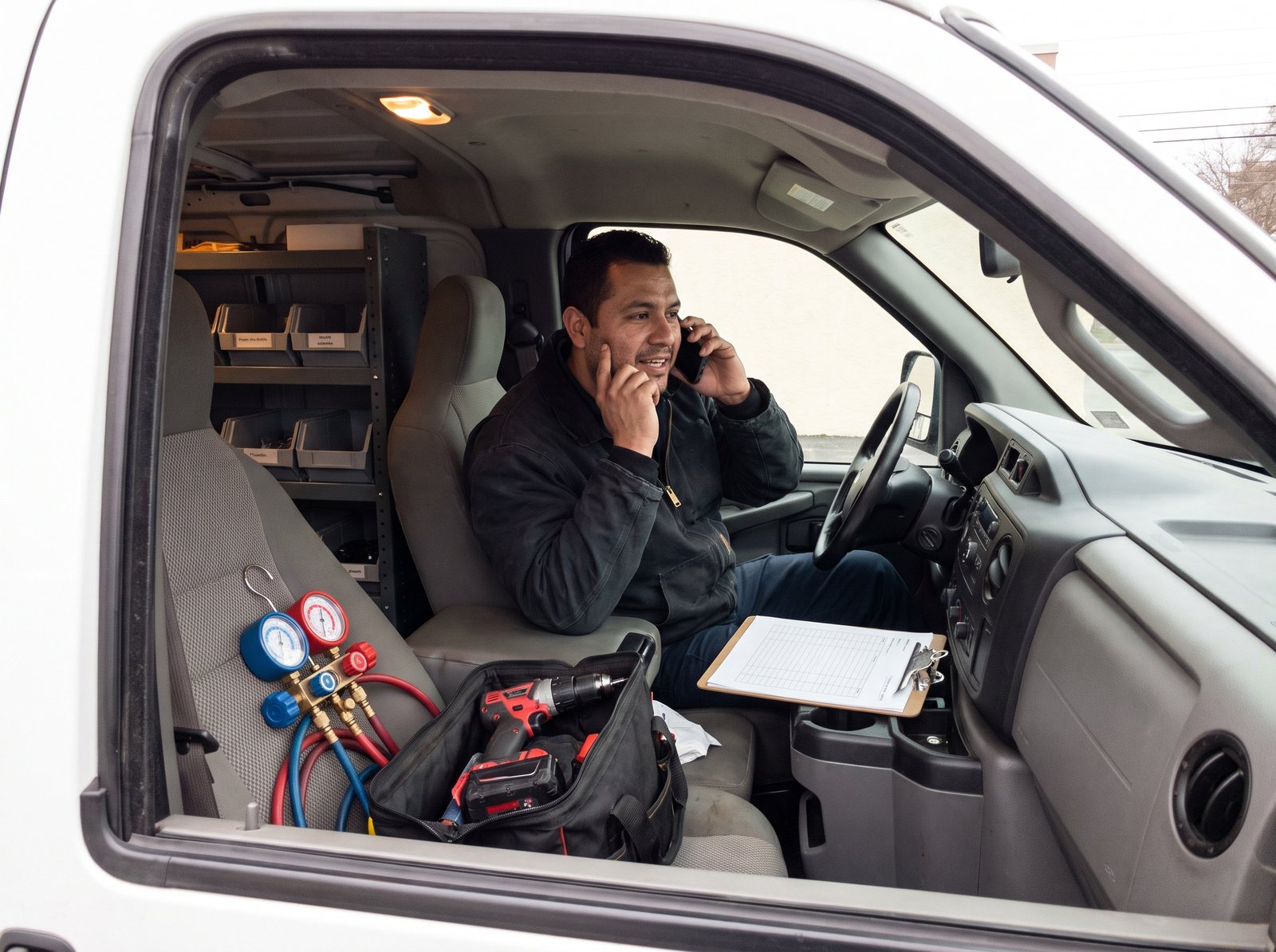
A shared lead went to four companies at once. The one who calls back in two minutes books it. The one who calls back at six that evening is paying full price for a customer who already said yes to somebody else. The lead cost the same either way. Only one of you got a job out of it. Our breakdown of how Angi leads are billed shows why that first call matters.
You cannot tell which channel is which
If every call lands on the same number and nobody logs where it came from, you have no close rate per channel. That makes the formula at the top of this page unusable. You’re flying on gut feel and vendor invoices. A separate tracking number per paid channel fixes this in an afternoon.
You are paying to reach people who already know you
This is the quiet one. A past customer searches your company name, clicks a marketplace ad, fills out a form, and arrives back at you as a $70 lead you just bought for a customer you already had. Strong branded search presence and an active customer list are what stop that leak.
Here’s the text that recovers the first problem when a call genuinely gets missed:
Steal this text: “Hi, this is Ryan at Keller Heating and Air, sorry we missed you just now. I’m on a job in Norwalk until about 3. If this is an emergency, call my cell at (203) 555-0148 and I’ll pick up. Otherwise text me what’s going on with the system and I’ll get you on the board today.”
The seasonal trap, and one offer to stop making
Timing changes the answer to how to get HVAC leads affordably, because lead costs in HVAC aren’t flat across the year. In the first genuinely hot week of summer, every contractor in your market turns their budget up at once, and the same lead that cost $40 in April costs considerably more. Then October arrives and the market goes quiet.
Most companies do the exact opposite of what the math suggests. They spend hardest when leads are most expensive and competition is fiercest, then go dark in the shoulder season when leads are cheap and homeowners are actually making replacement decisions without a crisis forcing their hand.
The fix isn’t complicated: spend steadily, push maintenance agreements in spring and fall, and reserve your aggressive paid spend for replacement intent rather than emergency repair intent.
One related offer to retire. A lot of HVAC marketing collateral still leans on the federal efficiency tax credit as a reason to buy now. That credit is gone. Under the law commonly known as the One Big Beautiful Bill, the Section 25C energy efficient home improvement credit isn’t allowed for any property placed in service after December 31, 2025.
So if your landing pages, estimate templates, or seasonal mailers still promise homeowners up to $2,000 back on a heat pump, pull that language now. State and utility rebates may still apply in your market. Check those and cite them specifically instead.
How to get HVAC leads more cheaply, starting this month
None of this requires a new budget. It requires knowing your own numbers, which takes about a week of paying attention.
- Put a distinct tracking number on every paid channel you run.
- For 30 days, log every lead’s source, whether it booked, and what it was worth.
- Divide spend by booked jobs for each channel. That’s your real cost per booked job.
- Kill or shrink anything where that figure is a meaningful chunk of the average ticket it produces.
- Take what you free up and put it into the two channels that get cheaper over time: your Business Profile and your existing customer list.
That last step is the whole argument, and it’s the same one behind the broader question of renting your lead flow versus owning it. Paid channels are rented. You stop paying, they stop producing. A review profile and a maintenance list are owned, and they compound.
If you want more on the demand-generation side rather than the lead-buying side, our HVAC marketing playbook covers the channels that create calls in the first place.
Start with 30 days of tracking
Most contractors asking how to get HVAC leads more cheaply aren’t actually paying unusual prices. They just can’t see which of their channels is working, so they keep funding all of them equally.
Thirty days of tracking fixes that, and it usually pays for itself in the first month by killing one channel that was never earning its keep. Want someone to run those numbers with you? D&J Contractor Marketing does a free audit that looks at where your HVAC leads are coming from, what each one is costing you, and which channels are worth keeping.
FAQ
It depends heavily on the channel and your market. Shared marketplace leads for HVAC commonly run $35 to $85, and Local Services Ads leads for HVAC typically fall in a similar band, higher in major metros and lower in mid-size markets. The figure that matters more is your cost per booked job, which is the lead price divided by your close rate on that channel.
There is no single best channel, only the best mix for your ticket size. Companies selling system replacements can absorb expensive leads profitably. Companies living on service calls usually cannot, and should lean harder on their Business Profile, their maintenance list, and referral partners.
Work the two assets you already own. Keep your Google Business Profile current and keep recent reviews coming in, since that is what decides whether you appear when someone searches in your service area. Then contact past customers whose equipment is aging into replacement range. That is how to get more HVAC leads without raising a single budget.
Not in the way the phrase is usually sold. Services advertising free HVAC leads are generally offering a trial before paid tiers, or sending you the leads nobody else bought. Genuinely low-cost leads come from channels you build rather than buy, and those cost time instead of money.
Shoulder seasons are when replacement conversations happen without a crisis, so push maintenance agreements, run equipment-age outreach to your customer list, and keep a steady paid presence rather than going dark. Lead costs are typically lower in spring and fall than in the first heat wave.
With no review history and no customer list, you are starting from the two channels that cost money rather than time. Local Services Ads are usually the fastest way onto the board, since the pay-per-lead model means a small budget still produces calls. Run them while you build reviews from every single job, because that review profile is what eventually replaces the ad spend.
No. The Section 25C energy efficient home improvement credit was terminated for property placed in service after December 31, 2025. Homeowners who completed a qualifying install on or before that date may still claim it on their 2025 return. Check state and utility rebate programs in your market, since many of those continue independently.


