
Reputation Management for Contractors, Done by the Rules
More fresh Google reviews, a real reply to every one and fast help with fake or scam reviews, without the shortcuts that get profiles frozen.
5.0on Google- Google Partner
- Meta Business Partner
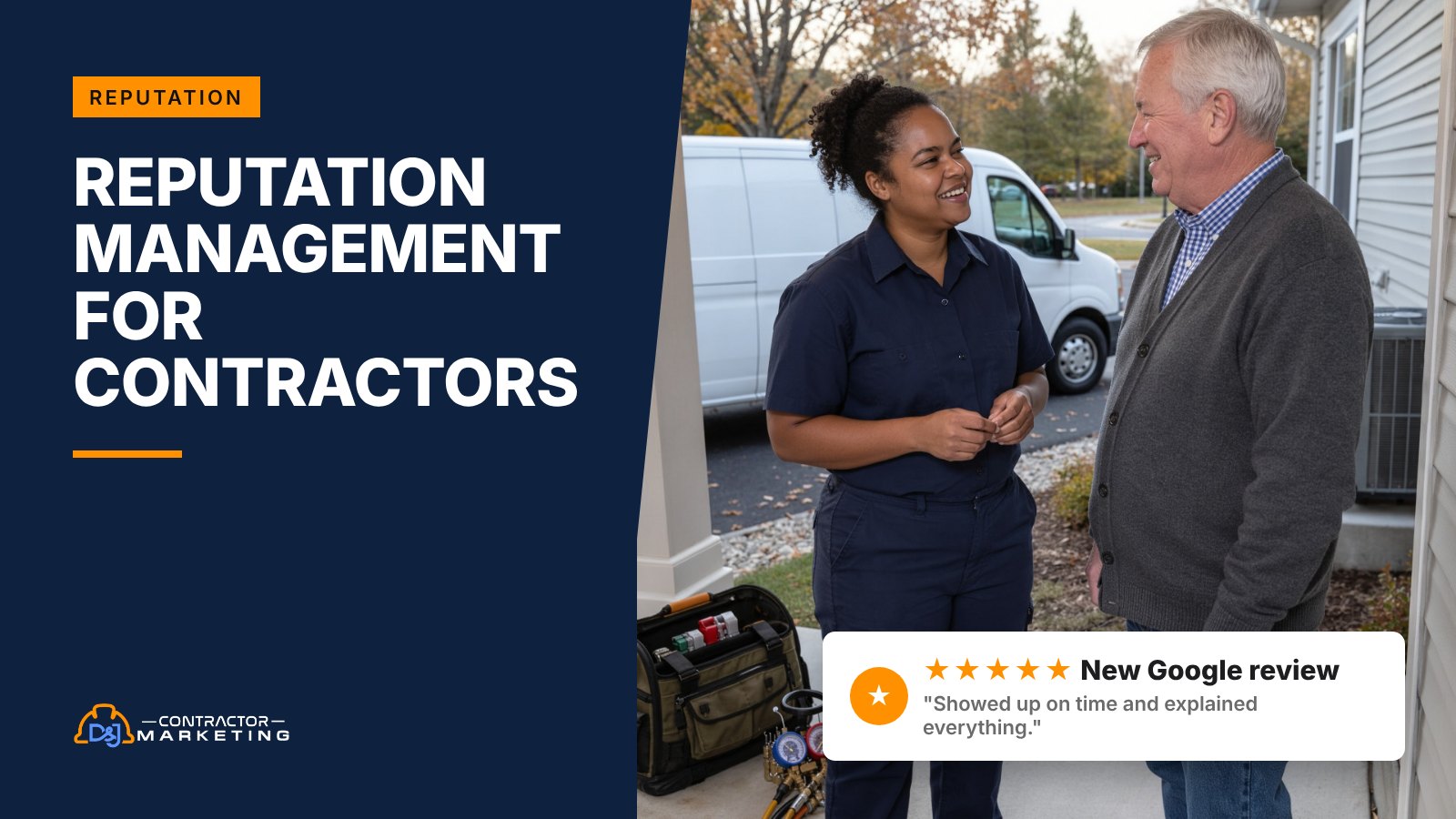
Think about a homeowner standing in the kitchen with a bucket under a leaking roof. They don’t know you. They know your star rating and how many reviews you have. They see how old those reviews are and how you answered the last angry customer. Reputation management for contractors keeps all of that strong, every week. And it does it without breaking Google’s rules or the FTC’s.
We ask every customer for a review at the right moment for your trade. We reply to each one the way you would, and we deal with the bad ones and the fake ones before they sit there for weeks scaring off the next person who finds you. Each month we show you the calls and clicks your Google profile sent. You stay the owner of your Google profile the whole time.
In short: good reputation management means asking every customer, not just the happy ones, so fresh Google reviews land every month. Each review gets a personal reply. Fake and scam reviews get reported fast with the proof attached. And there are no shortcuts like discounts, tech quotas or “mention my name” scripts, which Google’s current policy bans.
Key takeaways
- The work is four jobs: ask, reply, protect and report, all on a profile you own. What it includes
- In BrightLocal’s 2026 survey, 74% of people only cared about reviews from the last three months, so a busy-season burst isn’t enough. Why contractors
- Google bans review incentives, tech review quotas, asking customers to name a staff member and asking only happy customers. The rules
- Break them and Google can freeze new reviews, unpublish old ones or show a fake review warning. The penalties
- Ask when the customer feels the result, like the evening the heat comes back on, not when the invoice goes out. Timing by trade
- Your next customer reads the 2-star and your reply to it, so the reply has to be specific and owned. Reply example
- We report new reviews, reply time and the calls your profile sends, every month. How we measure it
What reputation management for contractors includes
Reputation management for a contractor comes down to four jobs. Ask every customer for a review at the right moment. Reply to every review like a person. Deal with the bad ones and the fake ones. Then report how your reviews and calls are moving.
Software can send the texts and even draft a reply. It can’t pick the right moment for a roof job versus a drain call, make that reply sound like you, or tell a real angry customer from a scammer. That’s the part we do.
- Ask: a short text or email after every finished job, with your direct Google review link, sent to every customer (not just the happy ones).
- Reply: a written reply to each new review, usually within two business days, that mentions the actual job.
- Protect: flag reviews that break Google’s rules, handle review extortion, and keep your team clear of the habits that get a profile restricted.
- Report: one page each month with review count, rating, reply time and the calls your profile sent.
Why bother? Google says local results are mainly based on relevance, distance and popularity, and that more reviews and positive ratings can help your business’s local ranking. So reviews do two jobs at once: they help you show up, and they help the person who finds you pick up the phone.
One more thing before we go further. You stay the owner of your Google Business Profile and your review link the whole time. If you ever leave, your profile, reviews and review link stay with you.
Why reviews hit contractors harder than most businesses
Your customer is letting a stranger into their home, often for a job that costs thousands. And a lot of them are reading your reviews in a hurry, with water on the floor or no heat in January.
BrightLocal’s 2026 Local Consumer Review Survey asked 1,002 US adults how they use reviews for local businesses of all kinds. A few of the answers should change how you think about yours:
- 47% said they won’t use a business with fewer than 20 reviews.
- 74% only care about reviews written in the last three months.
- 68% will only use a business with four stars or more, up from 55% the year before.
That 74% is the one that hurts. Plenty of contractors get a burst of reviews in busy season, then nothing for months. A roofer whose newest review is from last spring looks inactive to a homeowner in November, even with 4.9 stars.
Trades also have a few review quirks that other businesses don’t:
- Reviews name the job. When a customer reviews a service business, Google may ask them which service you did. Those choices come from your services list, your website or a standard list for your business type. If “sewer line repair” isn’t on your profile, it may never show up in your reviews.
- One bad job is loud. A busy restaurant serves hundreds of people a week, and a few cranky diners barely move its rating. A remodeler might finish 40 jobs a year, so a single angry review is a bigger share of what people read.
- The customer isn’t always the payer. Restoration and insurance work puts an adjuster, a landlord or a property manager in the middle. You ask the person who lived through the job, and you ask when it’s truly over.
So no, you don’t need thousands of reviews. You need a steady trickle of fresh ones that name the work you want more of, plus replies that make you look like the company that actually picks up the phone when something goes wrong.
The review rules that get contractor profiles frozen
The fastest way to wreck a good profile is a review habit that sounds smart and breaks the rules. Giving techs a review quota, asking customers to name the tech, texting only the happy ones: Google’s own Maps content policy names all three.
Here’s the short version of what Google and the FTC say, and what we do instead. The FTC column comes from the federal Rule on the Use of Consumer Reviews and Testimonials, which took effect on October 21, 2024.
| Common habit | Google’s policy | FTC rule | What we do instead |
|---|---|---|---|
| $25 off the next service for a review | Not allowed. Any incentive for a review is banned. | Banned if the reward is tied to a positive (or negative) review. | No rewards for reviews. Just a clear, easy ask. |
| Only texting customers who seemed happy | Not allowed: no selectively asking for positive reviews. | Not named in the Rule. | Every finished job gets the same request. |
| A weekly review quota for each tech | Not allowed: no asking staff to get a certain number of reviews. | Not named. | Send the request from the office, so techs never chase reviews. |
| “Please mention Mike in your review” | Not allowed: no asking for specific content, including a staff member’s name. | Not named. | Ask for honest feedback in the customer’s own words. |
| Handing the customer a tablet to review on the spot | Don’t require or pressure customers to review on the spot. | Not named. | Send the link by text after the crew leaves. |
| Owner, staff or family writing reviews | Conflict of interest content gets removed. | Reviews by owners or managers without a clear disclosure are banned. | None. Ever. |
| Threatening to sue over a bad review | No specific rule. Google won’t take sides in a dispute, and the review stays unless it breaks policy. | Groundless legal threats to stop or remove a review are banned. | Calm public reply, report it only if it breaks Google’s policy. |
Notice the gap in the first row. The FTC rule targets rewards tied to a positive or negative review, while Google bans incentives like free or discounted goods or services for any review at all. For Google reviews, a reward for any review is off the table, whatever the wording. We follow the stricter rule.
What happens if Google catches it? Google lists the possible restrictions: your profile can be blocked from getting new reviews for a set time, your existing reviews can be unpublished for a set time, and a warning can show that fake reviews were removed. For a contractor, that warning is worse than a few 3-star reviews.
Yelp is its own world. Its content guidelines say plainly that “businesses should never ask customers to write reviews.” So we don’t send Yelp review requests. We claim and clean up your Yelp page and reply there, and we put the asking effort into Google.
What we won’t do
- Buy reviews, swap reviews with other businesses or write reviews for you.
- Run a “happy customers go to Google, unhappy ones go to a form” filter. A private survey is fine only if every customer still gets the Google link, whatever they answered.
- Promise to remove reviews. Only Google decides that, and only for policy violations.
- Post replies that share a customer’s address, phone number, invoice or claim details, or anything else private.
What our reputation management service covers
 Review requests and follow-up
We set up a request that goes out after every finished job, by text or email, with your direct Google review link. Google lets you copy that link or download a QR code from your profile under Read reviews, then Get more reviews. Google only makes the QR code on a computer, not on a phone, so we make it for you and size it for invoices, leave-behind cards and truck magnets.
Texts go only to customers who gave a mobile number for job updates, and every text has an opt-out. One reminder goes out a few days later if there’s no review yet. After that, we stop. Two messages is a nudge. Five is spam.
Review replies that sound like you
Every review gets a reply. Google’s own advice is to skip the same “thank you” for everyone, use the reviewer’s name, answer what they said and leave out promotions. In BrightLocal’s 2026 survey, 50% of people said templated or generic replies make them unlikely to pick a business.
So our replies mention the actual work (the water heater, the panel upgrade, the crew that cleaned up), use the customer’s first name and sound like an owner wrote them. We draft them in BuilderBase, our own software, which writes a first draft with AI. Then one of us edits it so it sounds like you, usually within two business days of the review. If a review is about a bill or a dispute, we check the reply with you first.
 Google Business Profile and reviews
Your reviews live on your profile, so we keep the profile right too: correct categories, a full services list (so reviews tag the jobs you want more of), fresh job photos and your review link where it belongs. You need a verified profile before you can reply at all. If yours is a mess, our Google Business Profile management service fixes that first.
Bad reviews, removals and scams
A real customer who’s unhappy gets a calm public reply and a phone call from you. A review that breaks Google’s rules (spam, a competitor, someone with no real experience with your business, hate speech) gets flagged through the profile or Google’s Reviews Management Tool. Google says evaluation typically takes several days. If Google leaves it up, you can appeal that decision once, and one appeal can cover up to 10 reviews. We track every report and appeal so nothing gets lost.
Then there’s extortion: a sudden wave of 1-star and 2-star reviews, followed by someone asking for money to make them go away. Google’s advice is clear: don’t engage with or pay them, gather screenshots right away and use Google’s extortion report form. We help you gather the proof and file it. Our full playbook for removing a bad Google review covers the rest.
 Website and service pages
Good reviews shouldn’t sit only on Google. We pull real ones, word for word with the customer’s first name, onto the matching service pages: a furnace review on the furnace page, a roof replacement review on the roofing page. That’s where a buyer is deciding.
 Call tracking and reporting
We can add call tracking numbers, so you see which calls came from Google, your website or your ads. Each month you get a short report: new reviews, average rating, how fast replies went out, and the calls and website clicks your Google profile sent. BuilderBase also tracks where you show in the map pack for your main searches, with a monthly scan. If the reviews are working, you see it in calls, not just stars.
 Answering and booking
More reviews should mean more calls, and a missed call is a lost job. Restoral, our own AI system, answers calls and chats when you can’t and books jobs onto your calendar. It works with Google Calendar, Calendly, Cal.com, Jobber and most trade CRMs, and our team sets up the connection.
When to ask for reviews, trade by trade
The best time to ask is when the customer feels the result, not when you send the invoice. That moment is different in every trade. Too early and the job isn’t done. Wait a week and they’ve forgotten the details.
| Trade | Best moment to send the request | Skip this moment |
|---|---|---|
| Plumbing | Within a couple of hours of a fixed leak or clog, while they’re relieved | The next morning, after the bill hits their card |
| HVAC | Evening of the repair, once the house is warm or cool again | During the visit, with the tech still standing there |
| Electrical | After the final walk-through or passed inspection | Before the panel or permit is signed off |
| Roofing | After cleanup, the final walk-through and final payment, with before and after photos sent the same day | While the insurance claim or final payment is still open |
| Restoration | After the home is dry and put back together, to the person who lived through it | During mitigation, when fans are still running |
| Remodeling | A few days after the punch list is done and they’ve used the new space | On completion day, when everyone’s tired |
Every request is short, uses the customer’s name and the job, and goes straight to your Google review link. No star picker first. No “were you happy?” filter. Here’s what an HVAC request looks like, by email and by text:
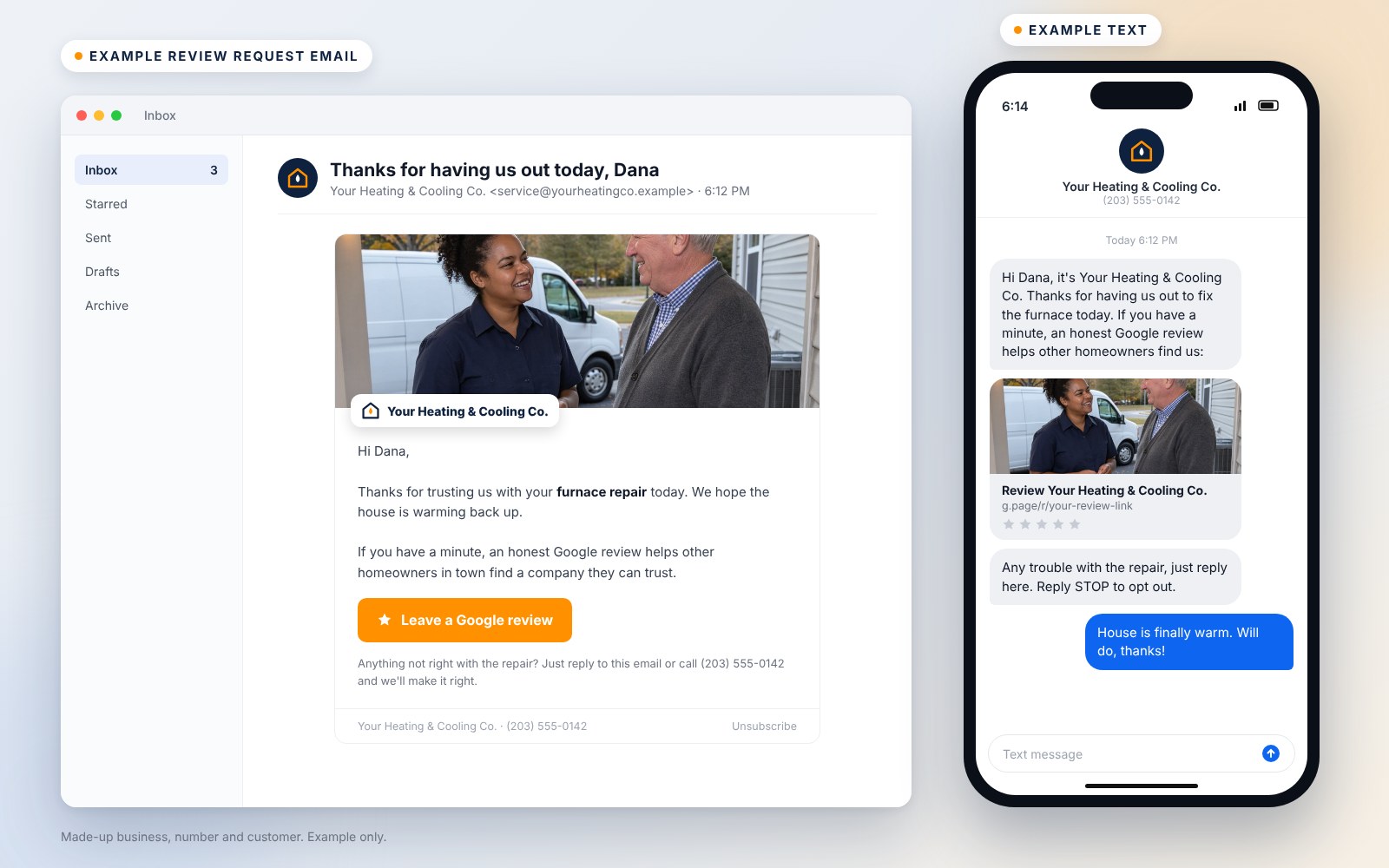
The text we’d send after a furnace repair:
“Hi Dana, it’s Your Heating & Cooling Co. Thanks for having us out to fix the furnace today. If you have a minute, an honest Google review helps other homeowners find us: (your review link). Any trouble with the repair, just reply here. Reply STOP to opt out.”
Notice what’s missing: no “5-star,” no tech’s name to mention, no discount. And the last line gives an unhappy customer a direct way to reach you. That’s not a filter, since they still got the Google link. It just means you hear about a problem early. For more wording by situation, see our guide on how to ask for reviews, or make your link in a few seconds with our free review link generator.
A 2-star review reply, before and after
Your next customer reads the 2-star review and your answer to it. Here’s a made-up example of the kind of review roofers get, and two ways to answer it.
The review (2 stars): “Roof looks fine but the crew left nails all over my driveway and nobody called me back for three days.”
The reply we see all the time: “We’re sorry you feel that way. We pride ourselves on quality work and customer satisfaction. Please contact our office.”
It says nothing. It ignores both complaints, and “sorry you feel that way” reads like a shrug.
The reply we’d write: “Tom, you’re right on both counts, and that’s on us. Nails in a driveway is a flat tire waiting to happen. I’m sending a crew with a magnet sweeper tomorrow morning, and I’ll call you myself today. We’ve also changed how callbacks get logged so this doesn’t sit for three days again. Rick, owner”
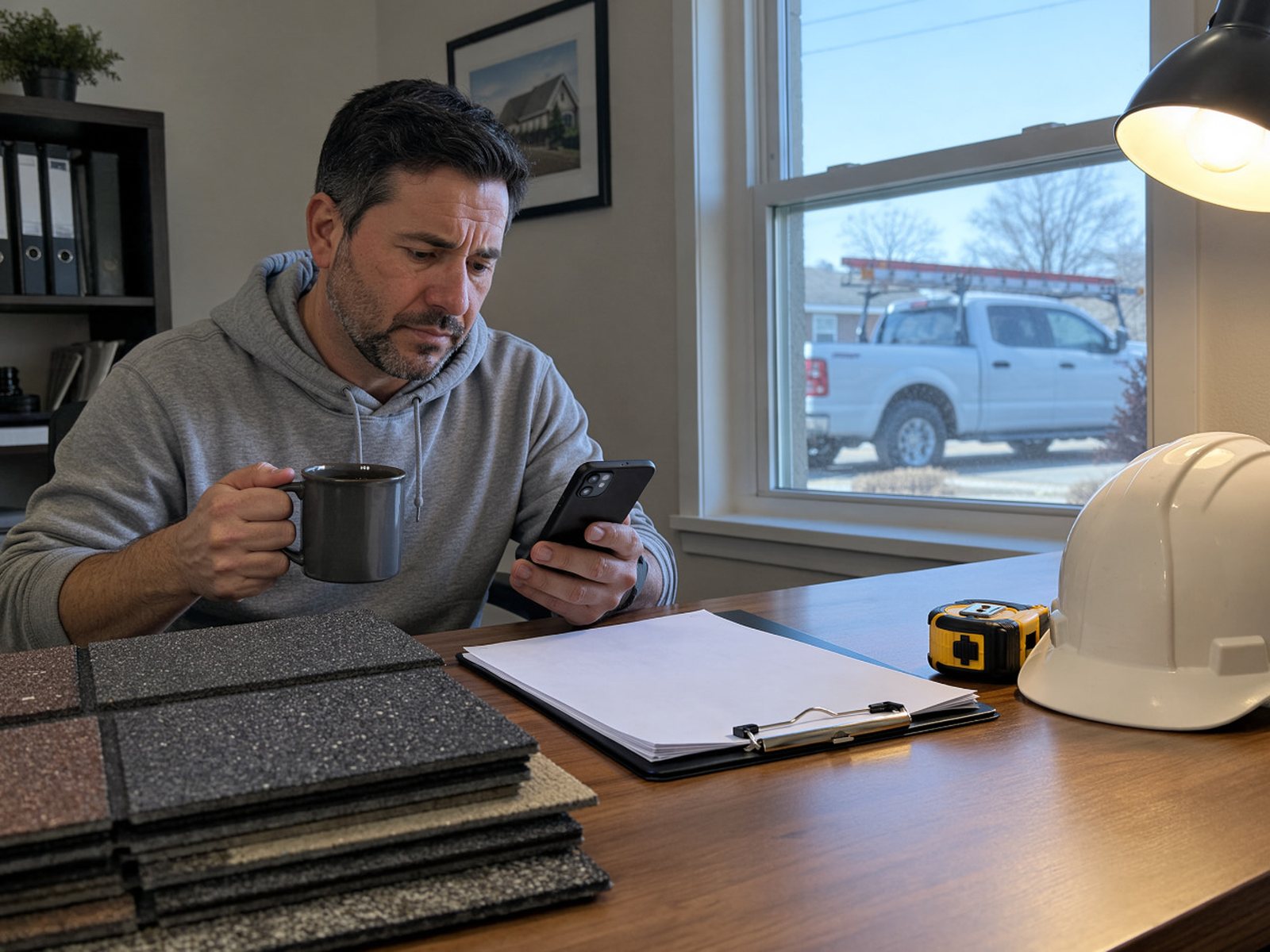
Why the second one works:
- It uses his name and answers both specific complaints, which is what Google’s reply tips ask for.
- It owns the mistake without groveling and says what happens next.
- It moves the fix offline (a phone call) and shares nothing private.
- It’s signed by a real person.
There’s a bonus. Google notifies the reviewer when you reply, and customers can still change their review after reading it. A customer who gets a swept driveway and a call from the owner may go back and edit. We never ask them to, though. That decision stays theirs. For more examples, see our guide to replying to Google reviews.
Google itself says “a mix of positive and negative feedback often feels more trustworthy.” Buyers want to see how you act when something goes wrong.
How we measure reputation management
The scorecard is built around one question: are more of the people reading your reviews calling you? Here’s what you get each month:
| What we track | Why it matters | What good looks like |
|---|---|---|
| New Google reviews this month | Recency. Most buyers only care about recent reviews. | New reviews every month, all year, not just in busy season |
| Requests sent vs reviews received | Shows if the ask is working or the timing is off | Holding steady or rising once requests are live. If it drops, we change the timing or wording. |
| Average rating | 68% of people in BrightLocal’s survey won’t use a business under 4 stars | Steady or climbing. Google can take up to 2 weeks to update it. |
| Reply time | Buyers expect replies, and fast | Every review answered within two business days |
| Reviews that name a service | Ties reviews to the jobs you want more of | Your money jobs showing up by name |
| Calls and website clicks from your profile | The number that pays the bills | Trending up as reviews grow |
Two notes on the numbers. Your star rating is the average of all ratings published on Google, and Google says a new review can take up to 2 weeks to show in that score. So don’t panic if a new 5-star doesn’t move it right away. And on speed: BrightLocal found 19% of people expect a reply the same day, and 81% expect one within a week.

What the first 90 days look like
The first month is setup and cleanup. The second is when the review flow starts. By the third, you should start to see it in your report.
Month 1: Access, audit and cleanup
- We get added as a manager on your Google Business Profile. You stay the owner.
- We read every review on Google, Facebook, Yelp and the BBB, and reply to the ones that never got an answer.
- We flag any review that clearly breaks Google’s rules and file the reports.
- We fix your services list, so new reviews tag the right jobs.
- We check your team’s current habits (quotas, discounts, “mention my name”) and swap out anything that breaks the rules.
Month 2: Requests go live
We connect the request to how you close jobs, whether that’s your field software, a daily list from the office or a simple form your techs fill in. Requests and one reminder start going out on the timing that fits your trade. You get your review link and QR code ready for invoices and leave-behind cards.
Month 3 and on: Report and adjust
Your first full monthly report lands. If requests go out but reviews don’t come back, we test the timing or the wording. If one service never shows up in reviews, we look at whether it’s on your profile. Then we keep going: new reviews, fast replies and a report every month.
How many reviews should you expect? It depends on how many jobs you finish. Say you run a plumbing shop with a dozen calls a day. You’ll have a lot more chances than a remodeler finishing a few projects a month. We’d rather show you real numbers in month 3 than promise a count now.
Why work with D&J
We’re a marketing agency for contractors and home service businesses. We’re based in Stamford, Connecticut. Reviews touch everything else we do: local SEO, Google Ads, Local Services Ads and your website.
- We’re a Google Partner, a Meta Business Partner and a Yelp Partner.
- We’ve worked with 30+ SERVPRO franchises and have never lost a SERVPRO client, so we know how reviews work in restoration, where every customer is having a bad week.
- We build our own tools: BuilderBase for review requests, reply drafts and Google posts, and Restoral to answer and book the calls that good reviews bring in.
You can see some of that work on our case studies page.
What to do this week
You don’t need us to start. These five steps fix most of what we find when we audit a contractor’s reviews:
- Get your link. On a computer, open your profile and choose Read reviews, then Get more reviews. Copy the link and save the QR code.
- Answer the backlog. Reply to every review from the last six months that has no answer, good or bad. Use names and mention the job.
- Kill the risky habits. Drop any review discount, tech quota or “mention my name” script today.
- Fix your services list. Add the jobs you want more of, so customers can pick them when they review you.
- Ask everyone from this week. Text or email every customer whose job you finished, at the moment that fits your trade. Only text people who gave you a mobile number for the job, and include a way to opt out.
Want a second set of eyes first? Our free local SEO audit checks your Google profile and reviews against your competitors, and the bigger guide to getting more Google reviews walks through every step in detail.
Reputation management FAQ
How much does reputation management cost for a contractor?
It depends on how many jobs you finish, how many locations you have and whether it’s on its own or part of a bigger SEO or ads plan. Review software alone is cheaper, but you still write every reply and chase every problem yourself. Book a call and we’ll price it to your job volume and what you already have in place.
Can you remove bad Google reviews?
Only the reviewer or Google can take a review down, and Google only removes ones that break its policies, like spam, fake reviews, conflicts of interest or hate speech. We report those and file the appeal if needed. A real customer’s honest bad review stays up, so the fix is a strong reply and more fresh reviews around it. Anyone who promises removal is guessing.
Is it legal to offer a discount for a review?
A reward tied to a positive review breaks the FTC’s review rule. And Google’s policy goes further: it bans incentives for any review, positive or not. Google can remove those reviews and restrict your profile. So for Google reviews, the answer is no discounts, gift cards or entries in a drawing.
Can my techs ask customers to mention them by name?
No. Google’s current policy says merchants can’t ask for reviews with specific content, including content that names a staff member, and can’t give staff a review quota. Customers can still mention a tech on their own, and many do. Tie tech bonuses to things you measure yourself, like callbacks, repeat customers or your own post-job survey, not to Google reviews.
Is review software enough, or do I need a service?
Software is enough if someone on your team will reply to every review within two business days, handle fake and scam reviews, and check the numbers monthly. A lot of contractors we audit have the software and nobody doing those parts. A service covers the people side; the software just sends messages.
Should we ask for Yelp reviews too?
No. Yelp’s guidelines say businesses should never ask customers to write reviews. We claim and tidy up your Yelp page and reply to the reviews there, and we put the asking into Google, where asking every customer is allowed.
How long until we see more reviews?
Requests usually go live in month 2, after the cleanup and setup in month 1. Month 3 brings the first full report, with requests sent and reviews received side by side. How many you get depends on job volume and timing, so we report real numbers instead of promising a count up front.
What if a past agency bought reviews for us?
Stop it right away and don’t add more. Google’s policy bans paid reviews and unusual review patterns, and it can restrict a profile that breaks the rules. We don’t try to bury or game old reviews. We build a steady flow of real ones from real customers, so your rating rests on work you actually did.