

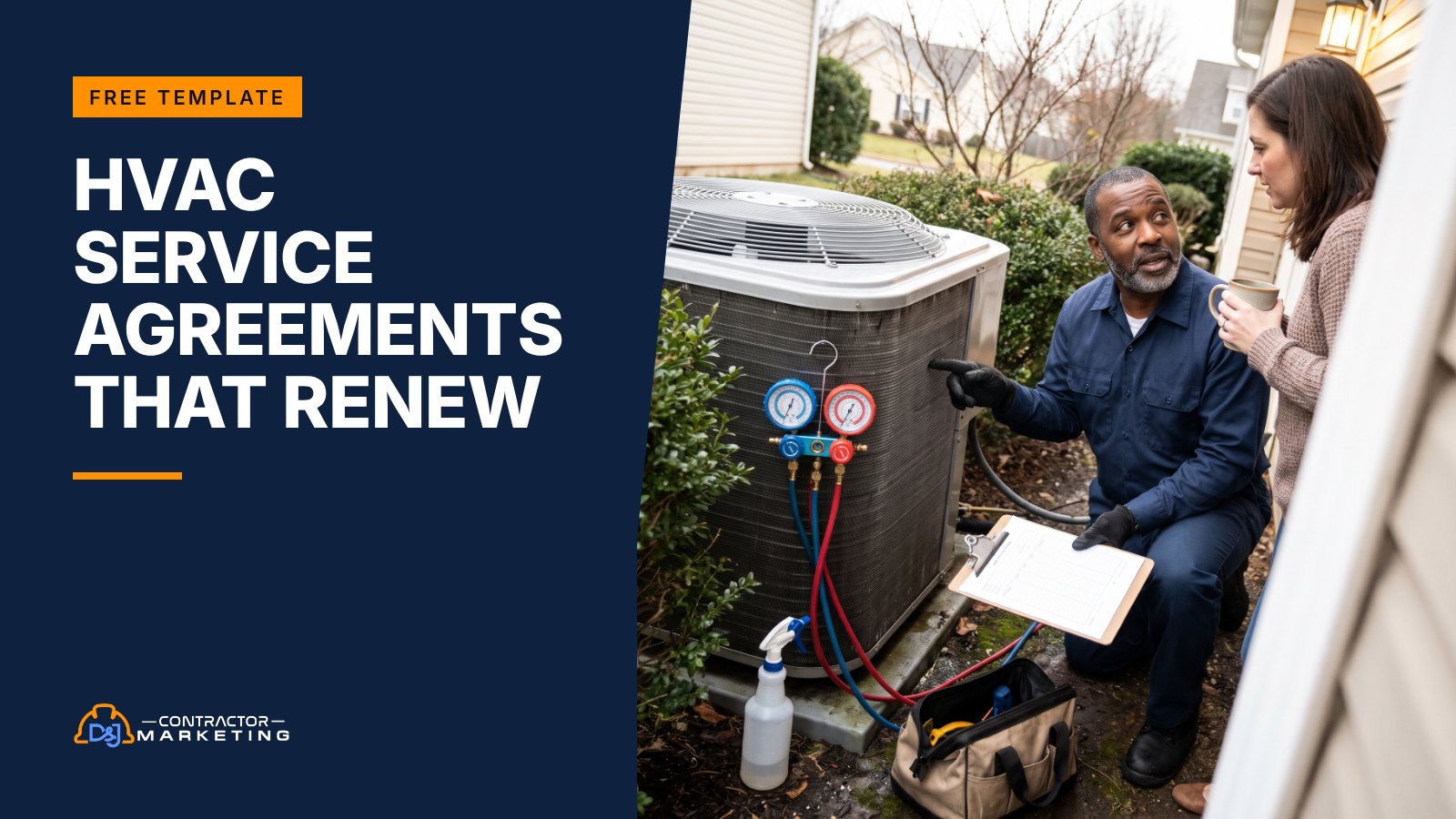
An HVAC service agreement gets you paid in March for work you’d otherwise chase in July. Members pay on a schedule you set, book their visits when you’re slow, and call you first when something breaks. But a sloppy one turns into fights about filters, refrigerant and “priority.” Below is a free template you can edit today. We also cover how to price it, what each visit should include, what your techs can say, and how to get members to renew.
Short answer: An HVAC service agreement is a yearly contract. The homeowner pays a set price for scheduled maintenance visits, usually one in spring and one in fall. In return they get perks like priority scheduling and a repair discount. Angi puts these plans at $150 to $300 a year. Price yours from your real cost per visit, spell out what’s not covered, and set up renewal reminders before the plan ends.
Key takeaways
- Our free template comes as an editable Word file, a PDF and a filled-in example. Get the template
- Get three sections airtight first: what’s not covered, what “priority” means and how the plan ends. What to include
- Build the visit checklist from ENERGY STAR and ACCA 4 QM, and write the readings on the report. Visit checklists
- Ahrefs estimates “ac tune up” searches at 32,690 in June 2026 and 12,809 in December 2025, so book cooling visits before the rush. Peak-season data
- In our example math one member costs about $217 a year to serve, so a $199 plan loses money. Pricing math
- The easiest moment to offer a plan is the end of a visit, while the tech shows what they found. Sales scripts
- Start renewal 60 days out, call at 30 days, and check your state’s auto-renewal rules. Renewals
Download the free HVAC service agreement template
Grab the template first, then read the rest while you fill it in. It’s a plain-English residential HVAC service agreement for a 12-month plan with one or two visits. You get a plain, editable Word file (no form fields to fight with), a PDF to print, and a filled-in example so you can see what a finished one looks like.
Here’s what’s inside:
- Your company and customer details, plus a table for each piece of equipment (make, model, serial, age).
- The plan level, price, billing choice and term dates.
- A spring cooling visit and a fall heating visit, with the tasks listed.
- Member perks: priority scheduling, a repair discount and no diagnostic fee, with blanks for your numbers.
- What’s not covered, in plain words.
- Manual renewal by default, cancellation and refund terms, a home-sale transfer choice, a text consent line and a signature block.
To use it, swap in your logo and license number, set your prices, delete any plan level you don’t offer, and save it as your master copy. Then fill a fresh copy for each customer.
This is a starting point, not legal advice. Rules on cancellation, renewals and consumer notices change from state to state, so have a local attorney look it over once before your techs start handing it out.
What to put in an HVAC service agreement
Write it so the homeowner never has to call and ask what’s covered. Get three sections airtight first: what’s not covered, what “priority” really means, and how the plan ends.
| Section | What to write | Common mistake |
|---|---|---|
| Parties | Your legal business name, license number, phone. Customer name, service address, billing address. | Signing up a tenant without the owner’s name or OK, so nobody can approve repairs. |
| Equipment covered | Each system: type, make, model, serial, approximate age, location. | “All HVAC equipment,” which turns a second furnace into a free visit. |
| Plan and term | Plan name, start date, end date, number of visits. | No end date, so nobody knows when renewal is due. |
| Visits and tasks | When each visit happens and the task list for each. | “Tune-up” with no tasks listed. |
| Price and billing | Annual price, or monthly amount and number of payments. Payment method. | Monthly billing with no line on what happens if a card fails. |
| Member perks | Priority scheduling (define it), repair discount percent, diagnostic fee waived or not. | Promising “same-day service” in July. |
| Not covered | Parts, refrigerant, ductwork, code upgrades, damage from outside causes, equipment not listed. | Leaving it out and arguing at the door. |
| Customer duties | Access to equipment, pets secured, filter changes between visits if you don’t supply filters. | Nothing about access, so a locked attic becomes your problem. |
| Rescheduling | How much notice, and what happens to a missed visit. | Unused visits rolling over forever. |
| Renewal | Manual or automatic, how you’ll remind them, how prices can change. | Auto-renew buried in small print. |
| Cancellation | How to cancel, notice needed, refund rule for unused time. | No refund rule, so every cancel is a negotiation. Cover monthly payers too: if they cancel, they owe the standard price of visits already done, minus payments made. |
| Signatures | Both signatures, date, and a copy for the customer. | No copy left with the homeowner. |
Spend the most time on the “not covered” section. Write it the way you’d say it in the driveway: “This plan pays for the two visits and the discount. It doesn’t pay for parts, refrigerant or repairs.” If you include a filter with each visit, say which size and how many.
Refrigerant needs its own line, because members often assume the plan pays for it. Say that refrigerant added is billed separately, with your member discount. Federal rules require EPA Section 608 certification for techs who service equipment that could release certain refrigerants, so send only certified techs on plan visits.
Last, keep “priority” honest. “Members get the first open appointment ahead of non-members” is a promise you can keep in a heat wave. “Same-day service” isn’t.
What each visit covers: spring and fall checklists
Don’t write your visit checklist from scratch. ENERGY STAR and ACCA have already written the core tasks. Start there and add what your techs check that they don’t.
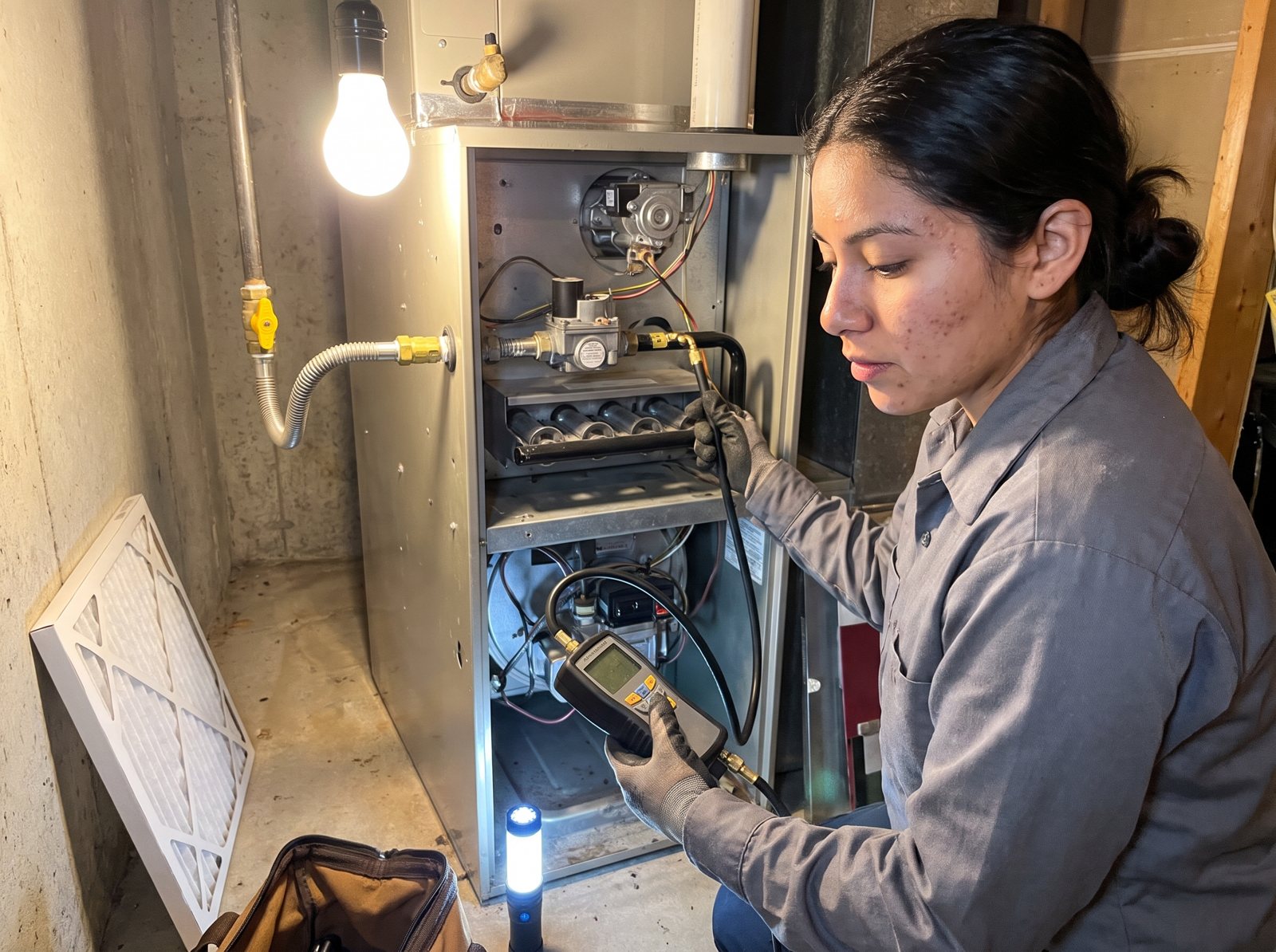
ENERGY STAR’s maintenance checklist tells homeowners to have the cooling system checked in the spring and the heating system in the fall. Here’s how its tasks split into your two plan visits.
Spring cooling visit
- Clean the condenser coil and check the evaporator coil. ENERGY STAR lists cleaning both. Quote a full evaporator cleaning as its own job, since it can mean opening the coil cabinet, and say so in the agreement.
- Check refrigerant charge (temperature split, plus superheat or subcooling against the manufacturer’s chart if the numbers look off) and adjust if needed. Refrigerant added is billed separately.
- Clean and adjust the blower for proper airflow. ENERGY STAR says airflow problems can cut efficiency by up to 15 percent.
- Clear and check the condensate drain on the AC or heat pump.
- Tighten electrical connections and measure voltage and current on motors.
- Check the thermostat and controls, and watch a full start, run and shut-off cycle.
- Replace the filter if the plan includes one.
Fall heating visit
- Check gas or oil connections, gas pressure, burner combustion and the heat exchanger.
- Lubricate moving parts.
- Tighten electrical connections and check the controls and start-up cycle.
- Check the condensate drain on a high-efficiency furnace.
- Replace or clean the filter and show the homeowner how to change it.
- Check the thermostat.
- Not on ENERGY STAR’s short list, but worth adding: inspect the flue and venting, check for carbon monoxide, and check the flame sensor and ignitor.
Heat pumps get checked on both visits: in cooling mode in the spring and heating mode in the fall.
Want something more detailed for your techs? ACCA’s 4 QM standard for maintaining residential HVAC systems was reaffirmed in 2024, and ACCA offers it as a free download. ACCA describes it as a minimum task list, and says it gives contractors “a common platform for creating a maintenance program.”
Write the readings on the visit report. Temperature split, amp draw, gas pressure, filter condition. A report with numbers looks like real work. It also gives the next tech a baseline, and it makes the renewal call easier because you can point to what you found.
Why HVAC maintenance agreements move work out of your peak
The fee is nice. The bigger win is timing. Homeowners search for AC tune-ups most in June and July, the same months no-cool calls fill your board. A plan lets you do that work in March and April instead.
We pulled 12 months of US search estimates from Ahrefs to show it. Ahrefs puts “ac tune up” at 32,690 searches in June 2026, more than 2.5 times the 12,809 in December 2025. “Furnace tune up” jumps to its high of 18,672 in November 2025 and bottoms out at 9,604 in June.

ENERGY STAR even tells homeowners that “contractors get busy once summer and winter come,” and to book cooling checks in spring and heating checks in fall.
With a plan, you pick the dates. Book cooling visits in March and April and heating visits in September and October, before the rush. Your techs stay busy in the shoulder months, and members don’t fight non-members for a July slot.
There’s a second payoff. A tech who’s been in the same house twice a year for three years isn’t a stranger. When the 18-year-old furnace quits, they call that tech.
How to price an HVAC maintenance agreement
Price the plan from your own costs, not from the shop down the road. Start with what one visit really costs you, add what the perks cost, then check that the number lands where homeowners expect it.
For that last check, Angi’s HVAC maintenance cost guide (updated July 2026) puts maintenance agreements at $150 to $300 a year. For HVAC maintenance in general, Angi puts the average at $250, with a range of $100 to $650.
Step by step: an example calculation
Say you run two trucks, your loaded cost for a tech and truck is $60 an hour, and a tune-up takes 1.25 hours with drive. These numbers are made up to show the math. Plug in your own (if your tune-ups run 1.5 hours with drive, rerun the labor line), and count everything: wages, payroll taxes, workers’ comp, insurance, the truck, fuel, tools and software.
| Cost line | How to figure it | Example |
|---|---|---|
| Labor per visit | Hours on site plus drive time, times your loaded hourly cost | 1.25 hours x $60 = $75 |
| Materials per visit | Filter, coil cleaner, drain tablets | $15 |
| Two visits | (Labor + materials) x 2 | $180 |
| Waived diagnostic fees | Your fee x the share of members who’ll use it | $89 x 1 in 4 = about $22 |
| Office time and reminders | Booking calls, texts, billing | $15 |
| Total cost per member | Add it up | About $217 |
| Same plan at $90 an hour | Rerun the labor line | About $292 |
At $217 in cost, a $199 plan loses money before the first repair. A $279 plan leaves about $62 per member, about 22% of the price, and still sits inside Angi’s range. That’s the Comfort price we use in the rest of this post. Your number will differ.
Now look at the last row. If your real loaded cost is $90 an hour, the same plan costs about $292 to serve, and $279 loses money. That’s why you run your own numbers before you print a price.
Copy that table into a spreadsheet and swap in your numbers.
Don’t forget the repair discount. A 15% discount doesn’t cost you anything if nobody needs a repair, but it does shave margin off every member job. Price your repairs so the member rate still makes money.
Repair and replacement work is upside, not the thing that rescues a plan priced too low.
Monthly or annual billing?
Monthly is easier to say yes to. “$23.25 a month” sounds smaller than “$279 a year,” even though it’s the same money. The catch is failed cards, so you need someone who chases them. Annual is cleaner but asks for more at once. You can offer both and let the homeowner pick. Card fees cost you too. At an example 3%, that’s about $8 a year on a $279 plan. And ask your accountant whether your state charges sales tax on maintenance plans.
If you’re not sure where to land, start a little high and add perks rather than starting low. It’s much easier to throw in a third visit later than to raise the price on 300 members.
Can your techs handle the visits?
Check capacity before you sell 300 plans. Example numbers: 300 members, about 40 workdays in March and April, and the same 1.25 hours per visit (drive included) from the cost table. That’s 7.5 visits a day. One tech can fit about 6 in an 8-hour day, so you need one tech full time plus a second for one to two days a week, before slack for rain and reschedules.
With two trucks, that’s most of your spring capacity, so cap membership lower or spread visits from February through May.
Cost the whole paid day, not wrench time. Six visits fill 7.5 of 8 paid hours, so each visit really costs about 1.33 hours (about $227 a member). If techs only fit 4 a day, it’s 2 hours a visit and about $307, and the $279 plan loses money.
HVAC maintenance plan tiers: good, better, best
Stop at three tiers. More than that is hard to explain at the kitchen table.
Here’s a three-tier layout built on the cost math above. The prices are examples. Basic and Comfort sit inside Angi’s $150 to $300 range. Premier runs a bit above it on purpose, because it covers more.
| Basic | Comfort | Premier | |
|---|---|---|---|
| Example price | $189 a year | $279 a year | $349 a year |
| Visits | 1 (cooling or heating) | 2 (spring and fall) | 2, plus a discount on added systems (example: half price) |
| Filters | No | 1 standard filter per visit | All filters for the year |
| Priority scheduling | Yes | Yes | Yes, plus after-hours fee waived |
| Repair discount | 10% | 15% | 15% |
| Diagnostic fee | Charged | Waived | Waived |
| Who it fits | Newer system, tight budget | Most homes | Older or multiple systems |
Notice the Basic plan only has one visit. That’s on purpose. In our example math, a one-visit member costs about $100 to serve ($75 labor, about $10 materials with no filter, $15 office time), so $189 leaves about $89 per member. The 10% repair discount comes out of repair jobs, not the plan fee. Basic also makes the Comfort plan look like the obvious pick, which is the one you want most people on.
Yes, Basic clears more per member in this example ($89 against $62). Comfort still earns its spot: two visits a year means two chances to catch repairs, and two visits give the homeowner more reasons to renew.
Run Premier through the same cost math. Example: $217 base, plus about $30 for extra filters and about $25 for waived after-hours fees, is about $272 to serve, so $349 leaves about $77. Those added costs are example numbers too. A second system on the same trip might cost about $150 for its two visits (1 hour each at $60, plus $15 materials), so half price ($174.50) clears only about $25. If yours takes longer, charge more than half.
A few rules:
- Pick perks that cost you little but feel big. Moving members up the list in July costs you little. Free repairs cost a lot.
- Never include parts or refrigerant in any tier. That’s how plans lose money.
- Name the plans after the result, not the metal. “Comfort” tells the homeowner what they get. “Silver” doesn’t.
- Price a second system up front. A tech guessing at the kitchen table looks bad.
Scripts techs can use to sell the plan
The easiest moment to offer a plan is the end of a visit. The tech has just shown the homeowner a dirty coil or a weak capacitor, and the plan makes sense right then.

If your techs don’t like selling, good. These scripts just tell the homeowner what the tech found and what the plan covers. Prices in brackets are the example prices from the tier table, so swap in yours.
1. At the end of a repair or tune-up
“You’re all set. Here’s what I found today [shows photo or reading]. A maintenance visit is where we catch this kind of thing early. We have a plan that covers two of these visits a year, puts you ahead of non-members when it’s 95 out, and takes 15% off repairs. It’s [$279] a year or [$23.25] a month. Want me to leave the sheet with you?”
2. When they say “let me think about it”
“Totally fair. If you sign up in the next 7 days, we’ll take [$25] off the first year. Here’s the sheet with my number on it.” Keep any discount well under your margin. In the example math, Comfort clears about $62 a member before card fees (about $54 after), so crediting today’s full tune-up price toward the plan would wipe out year one’s margin.
3. On the invoice
Add one line under the total: “Comfort Plan members save 15% on repairs. On today’s bill, that’s [$60].” (Example: 15% of a $400 repair.) Use the real number from their bill.
4. The text the next day
“Hi [Name], it’s [Tech] from [Company]. Thanks for having us out yesterday. If you want the maintenance plan we talked about, you can sign up here: (your sign-up link). We’d book your next tune-up before the [cooling/heating] rush.”
Only text customers who agreed in writing to get marketing texts from you. Our template has a text consent line you can copy onto your work order. Have your attorney check the wording.
A rule to know before you sell in the home
The FTC’s Cooling-Off Rule gives buyers three days to cancel certain sales made at their home. The rule doesn’t cover a repair or maintenance visit the homeowner asked for. But the FTC says things bought beyond that request are covered, and a plan sold during a service call can fall into that bucket. Ask your attorney whether you need the cancellation notice, and if so, add it to your paperwork.
If you want techs to sell plans, pay them for it. Pay a flat bonus per plan on the next paycheck. It’s simple, and techs can see it.
Renewals: how to keep members in year two
A renewal costs you a letter, a call and a text. A new member costs you a lead. Members leave quietly when nobody calls them before the plan runs out.
Here’s a renewal timeline to set up for every member:
- Last visit of the year: the tech mentions renewal and leaves the visit report with readings.
- 60 days out: email or mail a short note with what you did this year and the renewal price.
- 30 days out: the office calls. A real person, not a robocall.
- 7 days out: one text with a link to renew.
- After it lapses: one last call within two weeks, then move them to your regular list.
The 30-day call does the most work, because a person is asking. Here’s a script: “Hi, it’s [Your name] from [Company]. Your Comfort Plan runs out on the 14th. This year we did both tune-ups and caught a weak capacitor in April. Want me to renew it at the same price and book your spring visit?”
Auto-renew or manual renew?
Auto-renew means nobody has to remember to say yes again, but it comes with rules. California is a good example of how strict they can be. Its automatic renewal law says a business “shall send an annual reminder” to customers on an annual auto-renew plan. For a price change, it requires notice no less than 7 days and no more than 30 days before the new fee kicks in.
Rules differ from state to state. That’s why our template uses manual renewal by default. If you want auto-renew, get your attorney to write that clause for your state, and keep proof the customer agreed to it.
Either way, track three dates for every member in your software or a spreadsheet: start date, next visit due, and renewal date. If you can’t pull a list of “renewals due in the next 60 days” in under a minute, fix that first.
Commercial HVAC service contracts work differently
Commercial agreements are priced by the unit, not the house. And the facility manager reading it cares about response times, access and spending limits.
Our template is built for homes. If you take on a strip mall or an office, change these parts:
- Equipment list by site. Every rooftop unit, split system and exhaust fan, with location, tonnage and serial.
- Price per unit, per visit. Some commercial customers want quarterly or even monthly visits, so price each visit, not one flat yearly fee.
- Response time, not fix time. Promise when a tech arrives, like “within four business hours.” Don’t promise when it’s fixed, because parts can take days.
- A spending limit. Say how much repair work you can do without a new approval, and who can approve more.
- Access rules. Roof keys, hours you can work, check-in steps and who to call on site.
- After-hours rates. In writing, before the first 2 a.m. call.
For the task list, start from ASHRAE/ACCA Standard 180. ASHRAE says it sets “minimum HVAC inspection and maintenance requirements” for commercial buildings. Quoting a recognized standard in your scope tells a facility manager you’re not making it up as you go.
Put your HVAC maintenance plan in front of customers
Put the plan where customers already see you:
- A plan page on your site. One page with the tier table, what each visit covers, the price and a sign-up form. Link to it from your tune-up and repair pages. If your current HVAC website has no clear place for it, that’s worth fixing before spring.
- Your Google Business Profile. Add the plan to the services listed on your profile. Post about spring visit booking in late February and fall booking in late August.
- Every invoice. The savings line from the scripts above.
- The review request. Members see your techs twice a year, so they’re a good group to ask for reviews after each visit. Our free review link generator makes the link in a minute, and our guide on how to get more Google reviews covers the timing.
- Your phones. When a plan question comes in at 7 p.m., somebody needs to answer it. If nobody picks up after 6 p.m., an answering service or an AI receptionist like our Restoral can take the question and book the visit.
If you’re spending on ads to fill the board, our guide on how to get HVAC leads shows where new customers come from, and the plan is how you keep them. For the bigger picture, see our HVAC marketing services.
Billing members? Our free contractor invoice template lets you list the plan and each repair as their own line items.
HVAC service agreement FAQ
What is an HVAC service agreement?
It’s a contract where a customer pays a set yearly or monthly price for scheduled maintenance on their heating and cooling equipment. Most residential plans cover a spring cooling visit and a fall heating visit, plus perks like priority scheduling and a repair discount. It also spells out what isn’t covered, like parts and refrigerant, and how the plan renews or ends.
How much should I charge for an HVAC maintenance agreement?
Start with your cost to serve one member: labor and drive time for each visit, materials, waived fees and office time. Then add your margin. Angi’s July 2026 cost guide puts maintenance agreements at $150 to $300 a year, which tells you what homeowners expect. In our example math, one member cost about $217 a year to serve, and adding about $62 of margin puts the plan near $279. Your number will differ.
Is a service agreement the same as a service contract?
Most people use them interchangeably. Some shops use “service contract” for a one-time job or a commercial deal and “service agreement” for a yearly plan. Whatever you call it, the paper should state the term, the visits and how it renews. Our template is the yearly plan kind.
Should HVAC agreements renew automatically?
Auto-renew saves your office from chasing every member, but some states regulate it closely. California, for example, requires an annual reminder for annual auto-renew plans and notice before a price change. Our template uses manual renewal by default. If you want auto-renew, have your attorney write the clause for your state and keep proof the customer agreed.
Do I need a lawyer to use this template?
You don’t need one to fill it in, but we’d have a local attorney review your master copy once. Rules on cancellation rights, auto-renewal and required notices vary by state, and a sale made in the home can trigger the FTC’s Cooling-Off Rule. One review now is cheaper than rewriting the agreement after a dispute or a complaint to the state. This page isn’t legal advice.
What to do this week
- Download the Word template and fill in your company details, prices and perks.
- Run the cost math with your own loaded hourly rate. Make sure every tier makes money before a single repair.
- Send your master copy to your attorney for a one-time review.
- Print the four scripts and go over them at your next tech meeting.
- Add a plan page to your website and the plan as a service on your Google Business Profile.
- Put renewal dates for every current member in one list, sorted by date.
Want more homeowners finding your plan page? Our free local SEO audit looks at how you show up on Google for the searches that bring tune-up and repair calls.


