
Pest Control Marketing That Fills Routes and Keeps Them Full
Pest control marketing built around recurring plans, tight routes and real pest search seasons, plus the state ad rules that catch pest companies.
5.0on Google- Google Partner
- Meta Business Partner
Pest control marketing should fill your routes with plan customers, not just make the phone ring in July. We build it around the pests your area searches for, the months they search, and the streets you already drive. Then we count plans sold and what each one cost you.
The short answer: good marketing for pest control companies turns one-time calls into recurring plans on tight routes. For most shops that means a strong Google Business Profile with steady reviews, Local Services Ads and search ads timed to pest seasons, one page per service, and every call answered. California’s pest board treats “safe” claims by licensed pest companies as misleading, and “EPA approved” too unless the agency authorized it. We’d drop both everywhere. Judge it all by cost per plan sold.
Key takeaways
- A plan customer can be worth several one-time jobs, so we build pest control marketing around plans sold. What it should do
- In 2025, US “mosquito control” searches ran close to four times higher in July than in January, while mice searches peaked in October. Pest search seasons
- Google Business Profile allows up to 20 service areas, and we match them and your ad areas to the routes you want to fill. Route density
- California’s pest board treats “safe,” “harmless” and “EPA registered” claims as misleading, and Texas wants your license number on trucks and contracts. Ad rules
- Termite inspection clicks cost about five times what mosquito clicks do in Ahrefs data, so termite pages that rank save real money. Searches by channel
- Cost per lead can warn you early, but cost per plan sold tells you if it worked. How we measure it
What pest control marketing should actually do
A one-time wasp call pays once. A quarterly customer pays you four times a year and can add mosquito or termite work later.
An example with made-up numbers: Say your quarterly plan is $120 a visit and the average plan customer stays two years. That’s eight visits, or $960 from one sign-up, before any add-ons. A one-time ant spray at $175 pays once. You’d need more than five of them to match one plan customer.
So when we look at a pest control company’s marketing, we ask three things first:
- How many new plan customers did you sign last month, and from where?
- What share of one-time callers got offered a plan on the first visit?
- Are the new stops close to the routes you already run?
A lot of marketing reports can’t answer that first one. They count calls and clicks. They don’t tell you which calls turned into a plan.
Pest control marketing uses the same channels you’ll see on every agency page: your Google profile, reviews, a website, Local Services Ads, search ads and some social. What changes for pest is when you spend, where you spend, and that you count plans, not calls.
When pest searches peak, month by month
In 2025, US searches for “mosquito control” went from about 15,300 in January to about 59,500 in July. That’s close to four times as many. Those numbers come from Ahrefs’ monthly search estimates, which we pulled in November 2026.
Other pests peak at other times. Ahrefs shows “termite inspection” at about 11,900 searches in January 2025, about 29,600 in May and a high of about 32,400 in August. “Mice exterminator” ran on its own clock. It was lowest in February (about 5,700) and highest in October (about 9,600), as the weather turns cold.

So one flat budget all year doesn’t fit. It wastes money in slow months and runs out when the phones should be ringing. Your local timing will shift with your climate, but this is roughly how we’d plan the year:
| When | What’s rising | What we’d push |
|---|---|---|
| January to February | Mosquito and termite searches are a fraction of their summer peak | Build pages, fix your Google profile, collect reviews from your plan customers’ winter visits |
| March to May | Termite inspection searches are near their peak by May, and mosquito searches are still well below July’s peak | Termite inspection pages and ads, mosquito season sign-ups before the peak |
| June to August | Mosquito peaks in July, termite inspection peaks in August | Full ad budgets, answer every call, offer a plan on every one-time visit |
| September to November | Mice searches peak in October | Rodent pages and ads, exclusion work, renew plans before winter |
Pages have to be live before the season starts. A mosquito page you publish in June is late for that summer. Google takes time to find and rank new pages, so we build seasonal pages two or three months ahead and turn ads up and down as the searches move.
Termite shops get a head start here. Termite inspection searches were already near their peak by May, so termite pages and ads should be ready in early spring. If you do inspections for home sales, give that its own page and ask local real estate agents for referrals. In Texas, remember your termite disclosure documents need your license details too (more below).
Mosquito works the other way. It’s a natural add-on for plan customers you already have, so we’d offer it to them in March and April, before searches climb toward July.
This is also why a plan is worth so much in this trade. A general pest plan sold in July keeps paying in January, when the phones are slow.
What our pest control marketing service covers
Here’s what we run for pest control companies, and how each piece works in this trade. You don’t need all of it on day one. Most shops start with the profile, reviews and the phone, then add ads and pages.
 Your Google Business Profile
For “pest control near me” (about 187,000 US searches a month in Ahrefs), Google shows a map pack of three local companies on page one. That’s the spot your profile is fighting for. We set your categories and services to match the work you want (general pest, termite, rodent, mosquito, bed bugs, wildlife if you do it). We set your service areas to the towns you route through, and we post real job photos from your techs.
 Service pages and pest control SEO
One page per service you want more of: termite inspection, rodent exclusion, mosquito treatment, bed bugs and your recurring plans. Each page says what you treat, how the visit works, what’s included in the plan and what areas you cover. Generic “we kill bugs” pages give Google and customers nothing specific to match a termite or mouse search. Good contractor website design makes those pages easy to act on. For the bigger picture, here’s our guide to local SEO for contractors.
 Local Services Ads
Pest control is one of Google’s Local Services Ads categories, and Google says you pay only for leads related to your business and services. For pest control, Google’s screening page lists background checks, business registration checks, general liability insurance, and state business and owner licenses where local law requires them. Google marks each of these checks as applying to select users only, so you may not face all of them.
You also need a verified Google Business Profile. Google says full screening takes 3 to 4 weeks on average after you submit your documents. We handle the setup and flag bad leads through Google’s lead feedback. Google also offers pre-badge ads, so you can get leads after the first checks while the rest finish. More on how Local Services Ads work.
Search ads
Google Ads lets you pick exact keywords and set a bid for each one, which Local Services Ads don’t. In the US, Google restricts locksmith and garage door ads until the business passes advanced verification. Pest control isn’t on that list, so you skip that extra step. We split campaigns by pest, so a busy mosquito week can’t eat the termite budget.
 Reviews
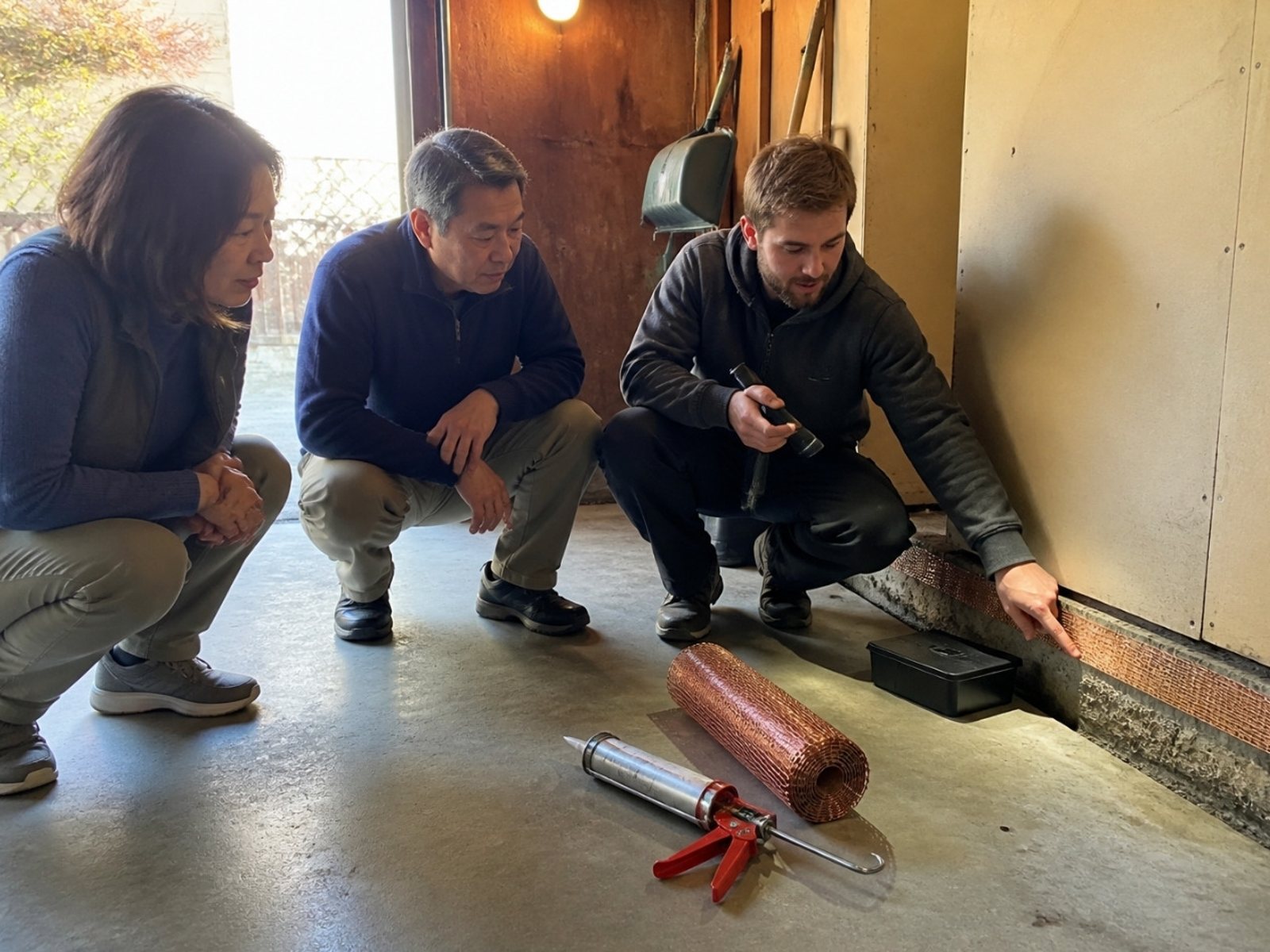
We set up a simple ask after every service: a text with your review link, sent by the tech or the office. Google’s rules say you can’t offer discounts, free services or payment in exchange for a review, so we ask everyone and offer nothing.
Plan customers see you four times a year. If they don’t leave a review after the first visit, the tech can ask again after a visit that fixed a real problem. Our guide on getting more Google reviews has the scripts.
 Answering every call
Pest calls come in when someone just saw a mouse or a swarm. If you don’t pick up, they call the next name. Restoral, our own AI system, answers calls and chats and books jobs onto your calendar. It works with Google Calendar, Calendly, Cal.com, Jobber and most trade CRMs, and our team sets up the connection. If you’d rather use people, here’s what to look for in an answering service for contractors.
 Trucks, door hangers and referrals
Your trucks are parked in front of customers’ houses every day. A clean wrap with your phone number and website gets seen on every street you service (check your state’s lettering rules first, more on that below). After a job, a door hanger on the next few houses lets neighbors know you’re already on their street. A referral ask to plan customers works the same way and fills in the same route. Lawn companies work streets the same way, and our lawn care marketing page runs the postage math.
 Offering the plan on every one-time call
The ad only gets you in the door. Make it a habit: the tech finishes the one-time job, shows the customer what turned up, and offers the plan before leaving. Something like:
“You’ve got ants coming in at the back door and the garage. I treated both today. If you want, I can put you on our quarterly plan, so we check and treat every season instead of waiting for you to call. Want me to set that up?”
Then the office follows up by text two days later if they said “let me think about it.”
Keeping customers on the plan
Keeping a $120 quarterly customer one more year is worth $480 (the made-up price from above). Send a reminder text before each visit and a seasonal note (“mosquito season starts soon, want us to add it?”). Most scheduling software can do this. BuilderBase, our own social media tool, keeps your page posting real jobs, so customers who check you out see an active company. The goal is fewer cancellations and more add-ons.
 Call tracking and reporting
Every channel gets its own tracking number, so you know which calls came from the map, the ads, the website or a truck. Then we match calls to booked jobs and plans sold. That’s what goes in your report.
Draw your service area for route density
Route density is how many stops you can fit in a tight area. Marketing that pulls in customers 40 minutes apart looks good on a lead report and bad on fuel and drive time. So we set up your ads and Google profile around the neighborhoods you want to fill, not the widest map you can draw.

Google gives you a few limits to work with. On your Business Profile, you can set up to 20 service areas, like cities or ZIP codes. You can’t set a radius. And Google says your overall area shouldn’t be more than about 2 hours of driving time from where your business is based.
Two hours is the outer limit, not a goal. For most pest routes we’d go much tighter. Here’s how we’d set it up:
- Pull your customer list and mark where your current plan customers live.
- Circle the towns or ZIP codes where you already have a route most weeks.
- List those in your Google service areas, and leave out the far edges you only drive to once a month.
- Set your search ad and Local Services Ads areas to the same ZIP codes. In search ads, raise bids on the ZIPs where you want more stops, or give those ZIPs their own campaign and budget.
- Look at it again every quarter. When a new area fills up, add the next one next to it.
Pick your own cutoff. Say a stop adds 25 minutes each way. Four visits a year is about 3 hours 20 minutes of extra driving for $480 a year (made-up numbers). Price an hour of your tech and truck, and you’ll know. If it doesn’t add up, wait until a couple of neighbors sign up too. A one-time termite job pays enough up front to justify a longer drive.
Pest control ad rules that catch people
In pest control, some of the most common ad words can get you in trouble. Here are two states’ pest control advertising rules worth knowing, because they’re specific and easy to break by accident. Your state will have its own, so check with your state’s pest control regulator before you print or post anything.
California: no “safe” claims
California’s Structural Pest Control Board rules (16 CCR section 1999.5) apply to licensed structural pest control companies. They list examples of misleading advertising, including:
- Claims that a pesticide application or pesticide is safe, including words like “safe,” “nonpoisonous,” “non-injurious,” “harmless” or “nontoxic to humans and pets.” Adding “when used as directed” doesn’t fix it.
- Saying a pesticide or device is “EPA approved,” “EPA registered” or approved by the pest board, unless that agency specifically allowed you to say it.
- Claims of a general environmental benefit you can’t back up under the FTC’s Green Guides (16 CFR 260.5). That covers a lot of “eco” and “green” wording.
The rule doesn’t stop at print. It covers websites, phone calls, door-to-door talks and “vehicle or equipment signage.” It also says that once a misleading claim is made, later disclosures or disclaimers can’t fix it. So don’t count on fine print to rescue a “pet safe!” truck wrap.
Texas: license numbers on trucks and contracts
Texas rule 4 TAC 7.141 says a pest control business has to show its license number on every vehicle used for customer contact or service. It has to be permanently fixed, and magnets don’t count. It starts with “Texas Pest Control License #” or “TPCL #.” It goes on both front fenders or both front doors, at least 2 inches tall and 1 inch wide, in a contrasting color.
Under 4 TAC 7.145, your contracts, service agreements, warranties, guarantees and termite disclosure documents need your business name, license number, address, phone number and the state’s jurisdiction statement on the face of the document.
Words we’d take out of your ads
This is our own checklist, not legal advice. Run your copy past your regulator or attorney.
- Swap “safe for kids and pets” for what you actually do, like “we explain re-entry times before we leave.”
- Drop “EPA approved” and “EPA registered” from ads and your website.
- Back up any “green” or “eco” claim with something specific, or cut it.
- Check truck wraps and door hangers against your state’s rules before you print 5,000 of them.
Which pest searches go to which channel
“Pest control near me” is a fight in the map pack and Local Services Ads. “Termite treatment cost” is someone doing homework, and a good page wins that one. Here’s how we’d match the big searches.
| Search | US searches a month | Est. cost per click | Where we’d go after it |
|---|---|---|---|
| pest control near me | 187,000 | $9.00 | Google Business Profile, Local Services Ads |
| exterminator near me | 103,000 | $10.00 | Google Business Profile, Local Services Ads |
| rodent control | 47,000 | $9.00 | Rodent page, fall search ads |
| mosquito control | 44,000 | $2.50 | Mosquito page, spring and summer ads |
| termite inspection | 23,000 | $13.00 | Termite page, search ads from spring through August |
| bed bug exterminator | 21,000 | $7.00 | Bed bug page, ads set by your local demand |
| wasp nest removal | 15,000 | $0.25 | Wasp page, summer ads, plan offer on every visit |
| termite treatment cost | 5,600 | $2.50 | A cost guide on your site |
| quarterly pest control | 400 | $7.00 | Your plan page |
Termite inspection clicks cost about five times what mosquito clicks do in this data, so a termite page that ranks on its own saves real money. And very few people search for “quarterly pest control.” People search for the problem they have today. So your plan has to be sold on the ant, mouse or wasp call, not found by a search.
That’s why we don’t judge a mosquito or rodent campaign only by its own leads. We look at how many of those callers ended up on a plan.
What we’d do at $1,500, $5,000 and $15,000 a month
More budget means more channels running at the same time. These are total monthly amounts, ad spend plus whatever you pay for help, and they’re how we’d think about it rather than a price list for what we charge. Every market is different.
About $1,500 a month: one or two trucks
- Get your Google Business Profile right: categories, services, service areas and weekly photos.
- Send a review request after every visit.
- Start Local Services Ads with a small weekly budget once Google’s checks clear.
- Make sure every call gets answered, even when you’re under a house.
Skip social ads for now. Skip big SEO projects too. At this size, every dollar should go where people are already searching.
About $5,000 a month: a growing shop with a few techs
Everything above, plus service pages for your top three pests and your plan page. Add Google search ads split by pest and timed to the season. Add call tracking so you can see which channel sold plans. This is where seasonal timing starts to pay off, because you have enough budget to move money around.
About $15,000 a month: multiple routes or locations
Full SEO across every service and the towns you route through, search ads and Local Services Ads in every area you serve, and social posting. With more than one real, staffed location, each one can have its own Google Business Profile and service areas. You should see cost per plan sold by location, every month.
Whatever the budget, we’d hold back some of it for peak months. The seasons table above shows when.
How we measure it: cost per plan sold
Cost per lead (what you paid for each call or form) is a fine early warning. But it’s not the score. We track what it cost to sign each new recurring customer, and how many of them are still on the plan later.
Here’s what goes in the monthly report:
- Calls and forms by channel, with the junk taken out (wrong numbers, sales calls, people outside your area).
- Booked first visits by channel.
- New plans sold, and which channel the customer first came from.
- Cost per plan sold, by channel.
- Cancellations, so a channel that brings in customers who leave after one visit shows up.
A made-up example: you spend $3,000 on ads in May. You get 100 calls, book 60 first visits and sell 18 plans. Your cost per lead is $30, which sounds great. Your cost per plan sold is about $167. (Those 42 one-time visits paid you something too, so the real cost is a bit lower.)
If a plan customer brings in $960 over two years (our example from the top of the page), that can still be a good trade, depending on what it costs you to run the route. If half of them cancel after one visit, you’ve paid about $333 for each plan that sticks.
To make this work, your office or software has to record where each customer came from. If that’s not happening today, it’s the first thing we’d fix. It’s also worth checking how many calls you miss. Our missed call calculator shows what that costs in a few seconds.
What the first 90 days look like
Search ads can bring calls within days of launch. Local Services Ads can start with pre-badge ads after Google’s first checks, then get the badge when screening finishes. SEO pages usually take months to climb. So here’s the order we’d run it in.
Month 1: fix the basics
We audit your Google Business Profile, website, reviews and call handling. We set up call tracking, start the Local Services Ads checks, and launch search ads for whatever pest is in season. We also go through your ads, site and truck copy for risky claims like “safe,” “EPA approved” or “EPA registered.”
Month 2: build the pages
We write the service pages for your top pests and your plan page, plus the page for next season’s pest. Review requests are running after every visit. Local Services Ads get the Google Verified badge once the full screening clears.
Month 3 and on: tune and grow
Now there’s real data. We move budget toward the channels that sell plans, cut the ones that only bring one-time calls from far away, and add the next town next to your best route. Each month you get the cost per plan sold, not just a chart of clicks.
Why work with D&J on pest control marketing
We’re a marketing agency for contractors and home service businesses, based in Stamford, Connecticut. We’re a Google Partner, a Meta Business Partner and a Yelp Partner.
We do SEO, local SEO, Google Ads, Local Services Ads, websites, reviews, social media and call tracking. Social runs through BuilderBase, our own tool. Calls can go to Restoral, our AI system that answers and books jobs.
We’ve worked with more than 30 SERVPRO franchises and never lost a SERVPRO client. That’s restoration, not pest. But it’s the same kind of work: urgent calls and local search. You can see more on our case studies page, and our list of contractor marketing ideas that work in any trade covers the basics we use everywhere.
What to do this week
You don’t need an agency for any of these. Pick one and get it done before Friday:
- Ask your office to record where every new customer heard about you, starting today.
- Check your Google service areas against your actual routes and drop the far edges.
- Search your website, ads and truck wrap for “safe,” “harmless,” “EPA approved” and “EPA registered.”
- Text a review link to every customer your techs see this week.
- Have your techs offer the plan on every one-time job this week, using the script above.
Want a second set of eyes? We’ll look at your Google profile, site and local rankings for free. Then we’ll tell you what we’d fix first.
Pest control marketing FAQ
How much should a pest control company spend on marketing?
There’s no single right number. It depends on your market, your plan price and how fast you want to grow. We’d start with what a new plan customer is worth to you, then work back to what you can afford to pay to sign one. Small shops can start around $1,500 a month total and grow from there.
Is SEO or Google Ads better for pest control?
You want both, for different jobs. Search ads and Local Services Ads bring calls fast and can be turned up in peak season. SEO takes months but keeps bringing calls without paying per click. We’d run ads now and build pages for next season at the same time.
Do Local Services Ads work for pest control?
They can. Pest control is one of Google’s Local Services Ads categories, and you pay for leads instead of clicks. You’ll need a verified Google Business Profile, and you may need to pass background, insurance and license checks. Google says screening takes 3 to 4 weeks on average after you submit your documents.
How long does pest control SEO take?
Expect months, not weeks. Fixing your Google Business Profile and getting steady reviews can help sooner. New service pages take longer to rank, so start each seasonal page well before that pest’s busy months.
Can I say our treatments are safe for kids and pets?
In California, no. The pest board’s rules treat words like “safe,” “harmless” and “nontoxic to humans and pets” as misleading, even with “when used as directed.” Other states have their own rules. We’d describe what you actually do instead, like explaining re-entry times, and check your copy with your regulator.
Should I buy pest control leads?
Shared leads can fill gaps, but you’re often competing with other companies for the same caller, and you don’t build anything you own. We’d put that money into your own profile, pages and ads first. If you do try lead generation sites, track how many leads turn into plans, not just jobs.