

Roofing marketing should fill your calendar with roofs worth climbing, not price shoppers or calls from three counties over. We build it around the jobs you want, the season you’re in and the rules your state puts on roofing ads. Then we count signed roofs and what each one cost you.
The short answer: good roofing marketing gets you booked inspections and signed roofs. For most roofers that means a Google Business Profile with real job photos and new reviews every month, Local Services Ads or search ads for urgent calls, a website with real service pages, and someone answering every call. Time the spend to the weather. Judge it by cost per signed roof, not cost per lead.
Key takeaways
- Judge roofing marketing by signed roofs and what each one cost, not by how many leads came in. How we measure it
- Retail, storm, repair and commercial roofers need different channels, so pick the mix by the work you want. Mix by business type
- “Hail damage roof” searches in March and April 2025 ran close to double the winter before, so storm pages go live in winter. Search seasons
- Florida wants your license number in every ad. Texas bans offering to waive, rebate or absorb a deductible, Colorado bans advertising or promising one, and Florida bans gifts or deductible waivers for a roof inspection or claim. Roofing ad rules
- Google bans rewards for reviews, so ask every customer and offer nothing. What we run
- Search ads can bring calls within days, Local Services Ads start after Google’s first checks, and SEO pages take months, so start before your busy season. First 90 days
What good roofing marketing actually does
A lead isn’t a job. Picture two roofers (made-up numbers). One gets 60 leads in a month and signs four roofs. The other gets 20 and signs eight. Roofing marketing that works is judged by the second number.
So we don’t start with “how do we get more leads.” We start with “which jobs do you want, and who’s searching for them right now.” A full reroof and a small leak call come from different people, at different times, with different questions.
For most roofing companies, the plan has five parts:
- Get found on the map. A Google Business Profile with the right categories, real job photos and a steady flow of new reviews.
- Catch the urgent calls. Local Services Ads or search ads for “roof leak repair” and “hail damage roof” type searches.
- Win the planned jobs. A website with one real page per service, so replacement shoppers can compare you before they call.
- Answer every call. A missed call in storm week is a roof someone else signs.
- Count signed roofs. Track every call and form back to its source, so you know what to cut.
Reviews sit under all of it. In BrightLocal’s 2026 Local Consumer Review Survey of 1,002 US adults, 97% said they read reviews for local businesses. A homeowner about to spend five figures on a roof is going to read yours.
What we skip: an account on every social platform, and “brand awareness” ads with no way to track them. We post real job photos to the one or two places your customers use. Paid spend that can’t be tied to booked inspections waits.
Pick your roofing marketing mix by the jobs you want
A storm roofer in Texas and a retail reroofer in Florida shouldn’t run the same plan. The jobs you want decide the channels, the ad copy and what you measure. Here’s how we’d set it up for the four main kinds of roofing companies.
| Your main work | Lead with | Add next | Usually skip at first | Watch this number |
|---|---|---|---|---|
| Retail replacement (homeowner pays) | Google Business Profile, reviews, replacement and material pages | Search ads on “roof replacement” terms, financing page | Broad social ads | Inspection to signed rate |
| Storm and insurance work | Local Services Ads, Google profile, hail and wind pages built before the season | Search ads that switch on after a storm, yard signs on finished jobs | Year-round flat spend | Cost per signed roof by storm |
| Repair and maintenance | Local Services Ads, “roof leak repair” pages, fast answering | Maintenance plan follow-ups to past customers | Expensive replacement keywords | Calls answered and booked |
| Commercial roofing | Service pages by roof system, project pages, search ads on commercial terms | Email and direct outreach to property managers | Local Services Ads tuned for homeowners | Bids sent and bid win rate |
Retail replacement buyers shop around. They read reviews, look at your photos and compare two or three bids. Your website and your Google profile do most of the selling here, so that’s where we put the work first.
Storm and insurance work comes in waves. You want pages that already rank when hail hits, and ads you can turn up fast in the zip codes that got hit. A flat monthly budget wastes money in quiet months and runs dry in busy ones.
Repair calls are urgent. A homeowner with water in the ceiling tends to call down the list until someone answers. Repair jobs are smaller, but they turn into replacements later if you stay in touch.
Commercial roofing is slower and more personal. A property manager wants proof you’ve done their kind of roof. So we build pages by system: TPO, EPDM, metal, coatings and repairs. Each project page lists the roof system, building type, size and scope, plus the warranty you offered. A property manager who gets your name from a referral or a bid list will usually check your site before calling, so those pages need to hold up.
Most roofers do some of each. We start with the one or two kinds of work that pay you best, then add the rest.
Roofing demand follows the weather
Roofing searches swing a lot from month to month. We pulled US search estimates from Ahrefs Keywords Explorer for a few homeowner searches.
Take “hail damage roof.” In both 2025 and 2026, March and April searches ran roughly double the December to February level. In 2025 the spring peak passed 8,000 searches a month. The winter before it sat between about 3,700 and 4,700.
Repair searches move too, just later. In 2025, “roof repair” searches in July and August were more than double the March number. We can’t say for sure why. Summer storms are probably part of it.
Three things follow from that:
- Build before the spike. A hail page you publish in April is late. New pages usually take weeks to months to get found and start ranking. We get storm pages live in winter.
- Budget in waves. Ads should follow demand. More money when searches climb, less when they don’t.
- Staff the phone for the peak. Twice the searches means more calls at once. If those calls go to voicemail, the extra ad money is wasted.
These are national numbers. Your town has its own storm calendar, so we check your area’s search trends before we set the budget.

A roofing marketing calendar for the whole year
Here’s the calendar we’d plan your year around. Shift it a few weeks for your region. A roofer in Dallas and a roofer in Minneapolis don’t get the same spring.
| When | What homeowners are doing | What we do for you |
|---|---|---|
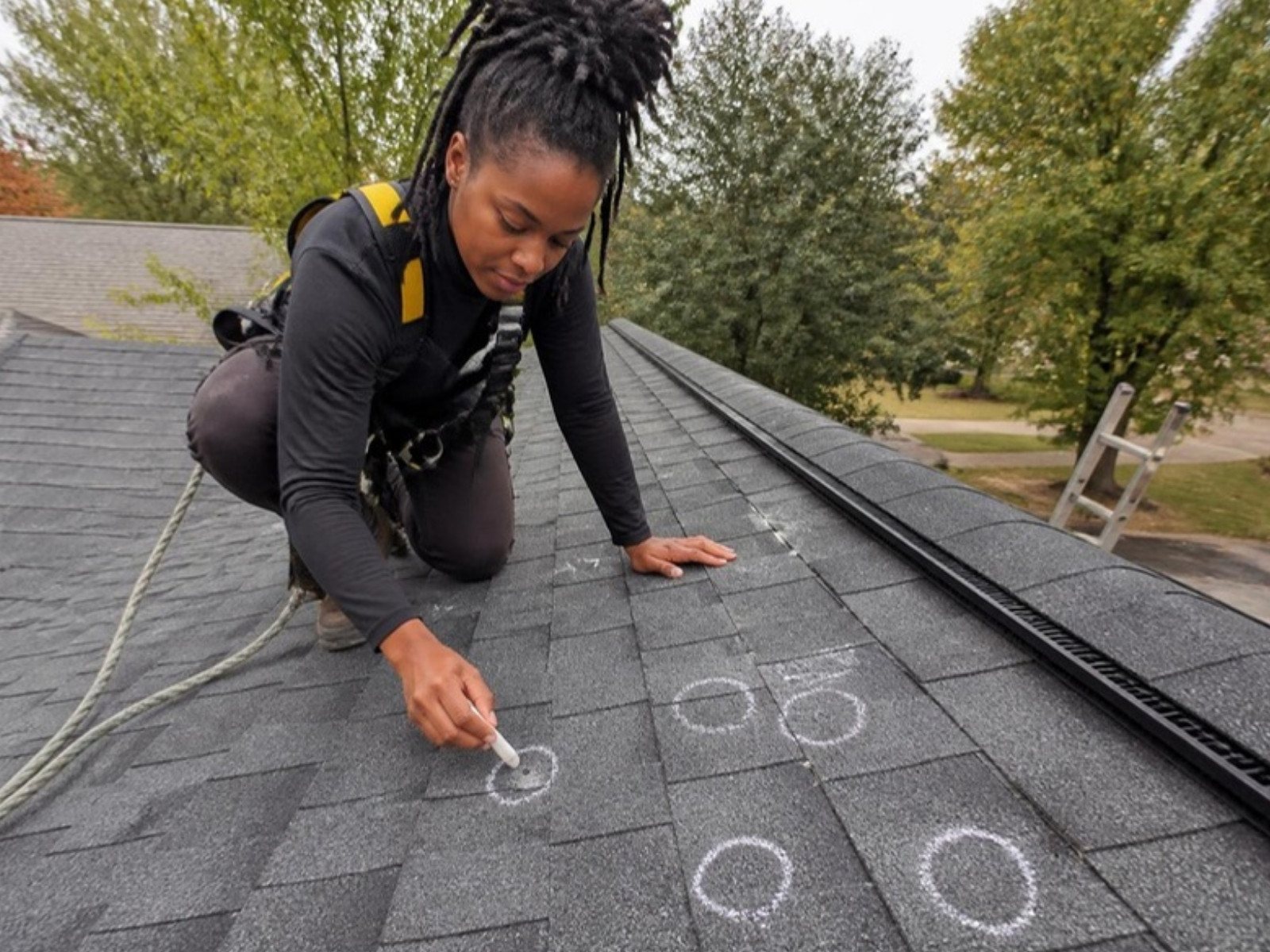
| December to February | Fewer searches. Ice dams and leaks in cold states. | Build and fix pages, clean up your Google profile, ask past customers for reviews, set up tracking, plan storm ads. |
| March to May | Hail and wind searches climb. Inspections and claims start. | Turn ads up by zip code after storms, post storm job photos, answer every call fast. |
| June to August | Repair searches in July and August 2025 ran more than double March. Summer storms. | Push repair and leak pages, keep review requests going on every finished job. |
| September to November | Last push to replace before winter. | Replacement and financing ads, follow up with spring inspections that didn’t sign. |
Winter is when you fix the website, film a few job walk-throughs and get your review link onto every invoice. In March there’s no time.
One more thing on storms. When a big one hits, we don’t blast ads across your whole service area. We look at which zip codes got hit and put the money there for the next few weeks.
Before March, decide who picks up the second line when the office manager is already on a call.
What our roofing marketing service covers
Google Business Profile and reviews
We set your categories, services and service area. If homeowners don’t come to your shop, Google’s service area help page says to remove your address. You can list up to 20 service areas. Google says the whole area shouldn’t be more than about 2 hours of driving from your base.
Then we build a review habit. Your crew lead sends the link the day the job is done, with a photo of the finished roof. No gift cards or discounts for reviews, because Google doesn’t allow that. More on review requests in our guide to getting more Google reviews.
Website and service pages
We build one page per real service: replacement, repair, each roof type you install, storm damage, and gutters if you do them. Each one tells a homeowner comparing roofers on a Sunday night what you do, where you work and what happens after they call. Each page shows your own job photos and answers the questions homeowners ask on the phone. The SEO side of this is its own job, and we lay it out on the roofing SEO page.
Local Services Ads and Google Ads
With Local Services Ads, Google says you only pay when a customer gets in touch from your ad. Those leads come in as calls and messages. Search ads give you more control over which searches you show for and when. For roofers we usually run both, with search ads set up by zip code so we can turn up the areas a storm hit. Our guide to Local Services Ads for contractors covers setup and costs.
Answering and booking
In storm week the phone rings while your office manager is already on another call. Restoral, our own AI system, answers calls and chats and books inspections onto your calendar. It works with Google Calendar, Calendly, Cal.com, Jobber and most trade CRMs, and our team sets up the connection. If you’d rather use people, we can help you compare answering service options too.
Social media that shows the work
Homeowners want to see tear-off, deck repair and the finished ridge line before they call. We post your real job photos through BuilderBase, our own social media tool, so a homeowner checking you out sees roofs you did on streets they know.
Call tracking and reporting
Each channel we control gets its own tracked number, and forms are tagged by source. Local Services Ads leads land in Google’s own lead inbox, so we pull those into the same report. You get a report of calls and booked inspections by channel. Once your office marks which jobs signed, you see signed roofs by channel too. If a paid channel can’t show signed roofs, it doesn’t stay in the budget.
Roofing ad rules in Florida, Texas and Colorado
In storm states, one line of roofing ad copy can break state law. These are the rules most likely to catch a storm roofer.
Florida: your license number goes on every ad
Florida Statutes 489.119 says your state registration or certification number has to appear in each advertisement, “regardless of medium,” as the licensing board defines advertising. So online ads count, not just print. If your truck shows your company name, or anything that marks it as a contractor’s truck, the number has to show clearly next to it. A first miss gets a notice. Don’t fix it within 30 days and the board can fine you.
Florida: no gifts for inspections and strict claim ads
Florida goes further for roof claims. Under Florida Statutes 489.147, you can’t offer “a rebate, gift, gift card, cash, coupon, waiver of any insurance deductible, or any other thing of value” in exchange for inspecting a homeowner’s roof or for the homeowner making a roof claim. You also can’t pay or accept a reward for referring work paid by property insurance. That hits referral programs.
Any ad that pushes homeowners to call you about a roof claim needs three warnings. They say the homeowner pays the deductible, that paying, waiving or rebating a deductible is insurance fraud and a third degree felony, and that filing a false claim is a third degree felony.
The text has to be at least 12 point and at least half the size of the biggest font in the ad. Door hangers, business cards, magnets, flyers, pamphlets and emails all count. Each violation can cost up to $10,000.
Texas: no deductible deals and no “we handle your claim”
The Texas Department of Insurance says a contractor can’t offer to waive, rebate or absorb the homeowner’s deductible. That’s illegal there. A roofer doing the work also can’t act as a public adjuster. You can’t advertise that you would, either. TDI lists examples of problem language, like “Offering to negotiate claim settlements or file a claim for the policyholder” and promising to recover “every dime you are owed.” TDI’s page also cites the state rule (28 TAC 21.102) that counts a website as an advertisement.
One more Texas rule lives in your paperwork, not your ads. If a job is $1,000 or more and tied to an insurance settlement, your contract needs a notice that the homeowner has to pay the deductible.
Colorado: no deductible promises in ads
Colorado’s roofing law, C.R.S. 6-22-105, says a roofer paid from an insurance claim “shall not advertise or promise to pay, waive, or rebate all or part of any insurance deductible.” So “we’ll cover your deductible” on a yard sign is a problem before anyone signs anything.
Door knocking: the 3-day cancel notice
If you sell at the homeowner’s door, the FTC’s Cooling-Off Rule applies. For sales of $25 or more made at the buyer’s home, you have to tell the buyer they can cancel within three business days. The notice has to be given in writing and out loud. Check your city’s rules on door sales too before you send a team out after a storm.
Reviews: no rewards
Google’s Maps content policy bans businesses from offering “payment, discounts, free goods and/or services” in exchange for reviews. It also bans asking only your happy customers. Ask everyone, offer nothing.
Run every roofing ad past this list before it goes live:
- License number shown where your state requires it
- No deductible offers, credits or “we’ll cover it” lines
- No gift cards or rewards for letting you inspect the roof (Florida)
- Claim ads in Florida carry the three warnings in big enough type
- No promises to handle, negotiate or win the insurance claim
- No review rewards in emails, texts or on invoices
- Door teams carry the cancel notice
Rules change and every state is different. This isn’t legal advice, so have your attorney look at your ads and contracts if you work storms.
How we measure it: cost per signed roof
We don’t report “leads” as a win. We report booked inspections, signed roofs and what each signed roof cost you. Here’s the math with made-up numbers, so you can run it on your own.
Say you’re a roofer who spent $3,000 on ads last month. The ads brought in 40 calls and forms. You booked 18 inspections and signed 5 roofs.
- Cost per lead: $3,000 ÷ 40 = $75
- Cost per inspection: $3,000 ÷ 18 = about $167
- Cost per signed roof: $3,000 ÷ 5 = $600
Now say a second channel cost $100 a lead (30 leads) but signed 8 roofs from the same $3,000. That’s $375 per signed roof. The “expensive” leads were the cheaper way to get work. If you only looked at cost per lead, you’d cut the channel that gets you roofs cheaper.
You need four things to get these numbers:
- A tracked phone number for each channel
- Forms that record where the visitor came from
- A CRM or a simple sheet where every lead gets a status: booked, inspected, signed, lost
- Someone who updates that status every week
Number four is the one that slips when the phones get busy. We set up the tracking, but your office has to mark which inspections signed. In a slow month it takes a few minutes. In storm season, block out time every Friday. Without it, nobody can tell you which channel is paying.
For a side-by-side of where roofing leads come from, see every roofing lead source ranked by cost per signed roof.
Which roofing searches go to which channel
Some roofing searches belong in ads that show today. Others belong on a page that ranks for years. The volumes below are Ahrefs’ average monthly US estimates, checked October 2026. Your town is a small slice.
| Search | US searches a month | What the searcher wants | Where we put it |
|---|---|---|---|
| roof replacement | 110,000 | Price, options, who to trust | Replacement page, search ads, reviews |
| roof repair | 59,000 | Someone to come out soon | Local Services Ads, repair page, map profile |
| roof leak repair | 24,000 | Help now, often same day | Local Services Ads, fast answering |
| roof inspection | 24,000 | A check before buying, selling or a claim | Inspection page, search ads |
| hail damage roof | 3,100 | Is my roof damaged, and what next | Storm page built before the season, ads after storms |
These are 12-month averages. Hail searches spike well above the average in spring, and month by month, 2026 ran at about 45 to 70 percent of 2025. Storm demand swings year to year, not just month to month.
We add “near me” and city versions of these too, but on the same pages. You don’t need a new page for every town. Your Google profile shows best near your base. For towns further out inside your service area, the service pages and zip-code ads do more of the work.
Commercial terms get their own pages, split by roof system. A property manager searching for flat roof coating isn’t the same buyer as a homeowner with missing shingles.
What the first 90 days look like
Roofing marketing has a fast part and a slow part. Ads and your Google profile can move in weeks. SEO takes months, and anyone who promises page one in thirty days is guessing. Here’s what happens when.
Month 1: fix the leaks in your funnel
We audit your Google profile, website, ads and phone handling, including a few test calls to see who picks up and how fast. Then tracking goes in. We fix your categories and service area, and we start the review habit with your crew.
Search ads can go live fast if the season calls for it. Local Services Ads need Google’s checks first. Once you pass the preliminary ones, Google’s pre-badge ads can bring in leads while the rest of onboarding finishes, so we start that paperwork on day one.
Month 2: build the pages
We write or rebuild your main service pages. Best-paying work first. Storm pages go up if spring is coming. We tune ads based on which calls actually booked.
Month 3 and on: cut, add and repeat
Now you have numbers. Cut what isn’t signing roofs. Put more into what is. Pages start to show up for more searches over the following months. Then we follow the calendar: build in winter, spend in storm season.
If you start in the middle of a slow winter, month one won’t fill your schedule. It sets up the spring that will.
Why work with D&J on your roofing marketing
We market contractors and home service businesses. We’re based in Stamford, Connecticut, and we’re a Google Partner, a Meta Business Partner and a Yelp Partner.
We also know storm and insurance work from the restoration side. We’ve worked with more than 30 SERVPRO franchises and have never lost a SERVPRO client. Restoration work spikes with the weather the same way storm roofing does, so we’re used to building pages before the season and answering the phone when it hits.
We run the whole thing for you: SEO, Google Ads, Local Services Ads, your website, reviews, social through BuilderBase, call tracking and Restoral for answering. You get one report: calls, booked inspections and signed roofs by channel.
Roofing marketing FAQ
How much should a roofing company spend on marketing?
Work backward from roofs, not a percentage. Decide how many extra roofs you want a month and what one is worth to you after costs. Then test a budget and track cost per signed roof. Example with made-up numbers: a roof leaves you $4,000 after materials and labor, and you’d pay $800 to get one. A channel at $600 per signed roof earns more budget. One at $1,200 gets fixed first.
What is the best marketing for a roofing company?
It depends on the roofs you want. Storm roofers lead with Local Services Ads and hail pages built before the season. Retail reroofers lean on reviews, photos and replacement pages. Repair shops win on answering fast. Commercial roofers need pages by roof system and project. The mix table above lays it out.
How long does roofing marketing take to work?
Search ads can bring calls within days of going live. Local Services Ads start after Google’s preliminary checks, and the rest of onboarding can run alongside. Google profile fixes and new reviews can help within weeks. SEO pages usually take a few months to rank well. Timing matters too. Start in winter and you’re set up for the spring storm season. Start in May and you’re catching up.
Should I hire a roofing marketing agency or do it myself?
You can do a lot yourself: claim your Google profile, ask every customer for a review and answer your phone fast. Hire help when you’re running ads, building pages and tracking results all at once. That’s a lot to manage while you’re on roofs. Whoever does it, insist on reports that show signed roofs, not just clicks.
What should I own if I hire a roofing marketing agency?
Your Google Business Profile, your Google Ads and Local Services Ads accounts, your domain registrar account, your website and hosting logins, Google Analytics, Search Console and your call tracking numbers. Make sure you’re the owner on each, with the agency added as a user. If you ever part ways, you keep your Google profile and ad history. Your tracking numbers come with you if they sit in your account or can be ported out, so ask about porting before you sign up.
Can you market my roofing company in more than one city?
Yes, within Google’s service-area limits covered above. We cover nearby towns with strong service pages, your Google profile and ads set by zip code. We don’t build copy-paste city pages.
What to do this week
You don’t need to hire anyone to start. Five things you can do this week:
- Search your main service and town on your phone. Note who shows up on the map and how many reviews they have.
- Text or email your review link to every customer from the last 60 days who gave you their number for the job.
- Read your ads, yard signs and website for deductible or “we handle your claim” language. Add your license number if your state needs it.
- Start a simple sheet: every lead, its source, and whether it booked and signed.
- Put a date on the calendar to build your storm page before next spring.
Our free local SEO audit shows where your Google profile and site stand against the roofers on your map. For more ideas across the trades, see our list of contractor marketing ideas.


