
Nearly half of US homes built for sale and finished in 2024 sold before they were done. Home builder SEO helps buyers find your community, floor plan and available home pages while those homes are still plans or slabs.
Home builder SEO comes down to four jobs. Build a page for every market, community, floor plan and available home. Give each staffed sales office a Google Business Profile, since model homes don’t qualify. Keep those pages current as homes sell. And track leads by community.
Production builders mostly win on community names and the map. Custom builders can go after “custom home builders” itself, because in the one market we checked (Wichita, Kansas), small local builder sites held six of the eight regular results.
Key takeaways
- “New construction homes” gets about 17,000 US searches a month and “custom home builder” about 15,000. The “near me” versions stay busy all year. What buyers search
- In our October 2026 check of results shown for Wichita, Kansas, portals held five of the six regular results for “new construction homes,” while local builder sites held six of eight for “custom home builders.” Production vs custom
- 57% of online buyers in a 2025 NAR report rated floor plans “very useful,” and 83% said that about photos. Pages you need
- 15.2% of 2024’s built-for-sale homes sold before construction started and 33% sold during it, so pages must go live early. Build timing
- Google says model homes aren’t eligible for a Business Profile, but sales offices are. Profile rules
- When a home sells, a plan is retired or a community sells out, keep, redirect or remove the page based on what still helps buyers. Never send old pages to the homepage. Sold homes
- We report calls, forms and appointments by community, not just rankings. How we measure
The searches that sell new homes
Buyers don’t search for “home builder SEO.” They type things like “new construction homes near me” and “quick move in homes.” The table shows how often people in the US search those, and how many of those searches happen on a phone.
| What buyers type | US searches a month | Share on phones |
|---|---|---|
| new construction homes | 17,000 | 34% |
| home builders near me | 15,000 | 69% |
| custom home builder | 15,000 | 28% |
| new construction homes near me | 14,000 | 54% |
| new homes for sale | 13,000 | 42% |
| custom home builders near me | 7,900 | 35% |
| move in ready homes | 3,500 | 51% |
| quick move in homes | 1,700 | 37% |
| new home communities near me | 1,300 | 38% |
| spec homes | 1,300 | 29% |
| build on your lot | 1,200 | 35% |
Every kind of buyer is out there searching, from 17,000 a month for “new construction homes” down to 1,200 for “build on your lot.” The phone share is all over the place, too. “Home builders near me” is mostly phones. “Custom home builder” is searched mostly on desktop computers (72%). Our guess is that’s someone sitting down to compare builders for a year-long project.
The “near me” searches stay busy all year. In 2025, “new construction homes near me” had its slowest month in June, at about 10,600 searches, and its busiest in October, at about 14,000. “Custom home builders near me” ran from about 5,600 in May to about 8,600 in July. The busiest month had about a third more searches than the slowest for new construction, and about half more for custom builders.
So there’s no true off-season, though custom builder searches swing more. Your pages need to be live and current all year, and custom builders should have new pages up before the summer bump.
Production builder or custom builder? Two different fights
The same plan doesn’t work for both kinds of builder, because Google can show very different results for each. In the results we checked, portals held the big new construction search, and small local builder sites held the custom builder search.
We checked both in October 2026 with Ahrefs, which showed results for one place: Wichita, Kansas. Your town may look different, so search your own market before you plan.
Production and semi-custom builders
For “new construction homes,” five of the six regular results were portals: Realtor.com, Zillow, Homes.com, NewHomeSource and Redfin. One local builder made the list. The page also had an AI Overview and a map pack mixed in.
Our read: you’re not likely to outrank Zillow for “new construction homes,” and we wouldn’t spend your money trying. A production builder has better places to win:
- Community names. Once a buyer has heard of “Willow Creek” (made-up name), they search for it. Your community page should be the top result for its own name.
- The map pack for your staffed sales offices (more on Google’s rules below).
- Longer searches like “new homes in [suburb] with a first floor primary,” “quick move in homes [suburb]” or “[school district] new construction.”
Custom builders
The “custom home builders” results looked nothing like that. A map pack came first. Six of the eight regular results were local builder websites, plus Houzz and a Reddit thread. Those builder sites had an Ahrefs Domain Rating (a 0 to 100 score for how strong a site’s links are) between 6 and 27. That’s low.
That’s good news if you build custom. You’re competing with other builders in your area, not with national portals. Our read is that the things most likely to move you up are in your hands: strong pages for your past homes and your build process, a complete Business Profile and a steady flow of reviews. Houzz shows up here too, so it’s worth knowing what Houzz Pro costs before someone tries to sell it to you.
The pages every builder site needs
Every search in that table needs a page that matches it. For builders, that means a page for each market, each community, each floor plan and each home you have available. Custom builders also need a page for building on the buyer’s own lot.
| Page | Searches it catches | What it needs |
|---|---|---|
| Market page (one per area you build in) | “new homes in [suburb],” “[county] new construction” | Every community in that area, price ranges, a map, school districts, drive times to the big employers |
| Community page | The community’s name, “[suburb] new homes” | Site plan, amenities, HOA dues, assigned schools, plans offered, price range, sales office hours, directions, homes available now |
| Floor plan page | The plan name, “4 bedroom ranch plan [area]” | The floor plan image, square feet, beds and baths, elevations, photos or renderings, a virtual tour, which communities offer it |
| Quick move-in page (one per home) | “quick move in homes [area],” “move in ready homes near me” | Lot or address, price, finish date, photos as it gets built, what’s included |
| Build on your lot page | “build on your lot [area],” “custom home builder [town]” | Where you’ll build, how you check a lot, what the lot owner pays for, a rough timeline |
| Past homes | Your brand name, research before a call | Real photos by project, the plan or style, finishes, a short note on what the owners wanted |
The 2025 Home Buyers and Sellers Generational Trends report from the National Association of Realtors asked buyers who used the internet which website features were “very useful.” 83% picked photos. 79% picked detailed property info, 57% floor plans and 41% virtual tours. That survey covers all buyers, not just new home buyers. Still, a plan page with one blurry thumbnail and no square footage is missing what most buyers say they want.
The same report asked new home buyers why they bought new. The top answer, at 42%, was to avoid renovations or problems with plumbing or electricity. Next came the ability to choose and customize design features (27%) and community amenities (25%). Those are your headlines. Say what’s under warranty, which finishes the buyer gets to pick, and what amenities the community has.
Market pages, not city spam
Some agencies will offer to write 40 “home builder in [town]” pages that only swap the town name. Don’t buy that. Google’s spam policies list “pages targeted at specific regions or cities that funnel users to one page” as an example of doorway abuse.
A market page is different because it has real things on it: the communities in that area, the schools, the price range. Production builders: if you don’t have a community or a finished home in a town, you probably don’t need a page for it yet. Custom builders: one build on your lot page that names the area you serve usually beats a page per town.
Your pages have to go live before the house does
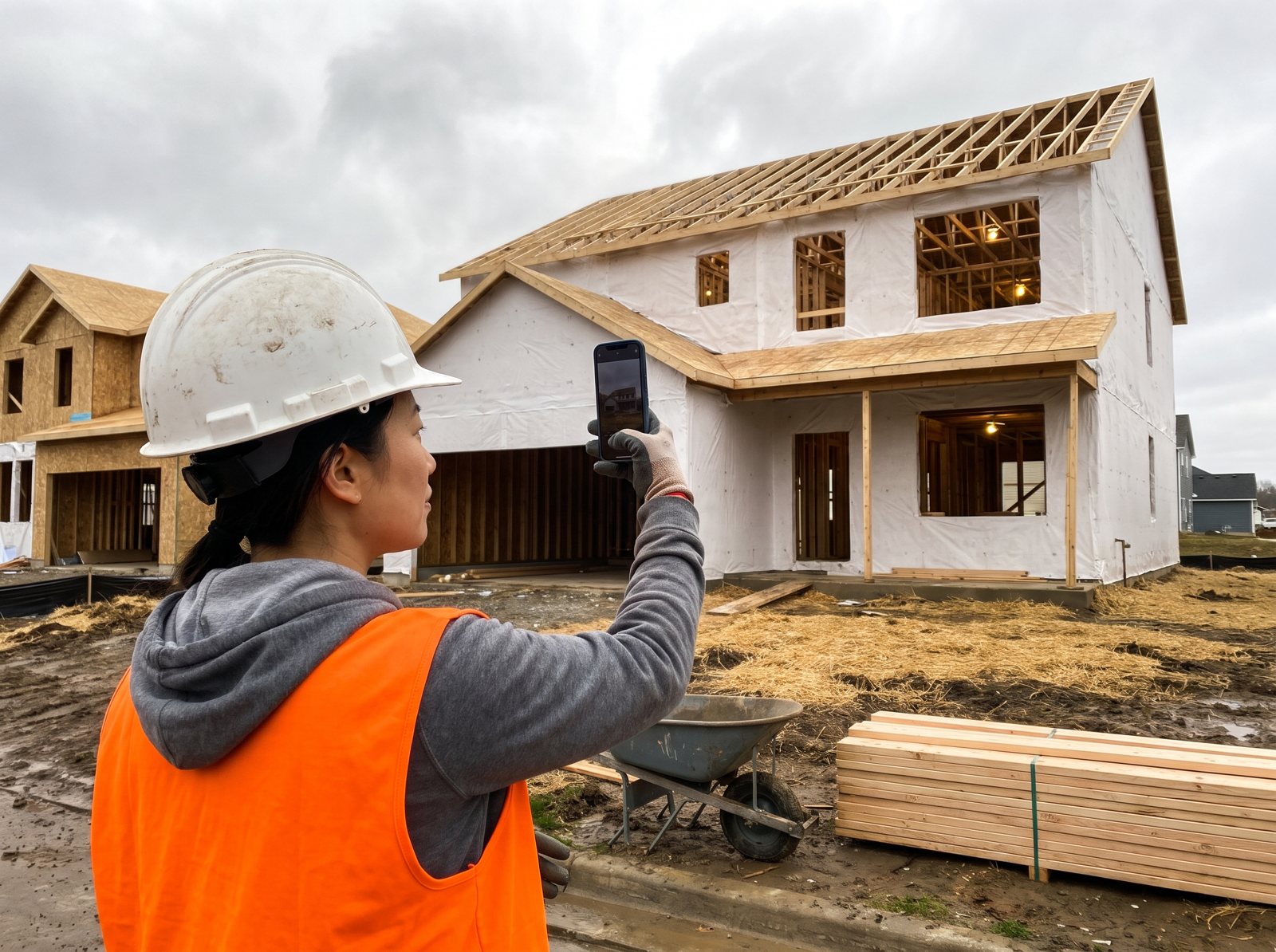
A lot of buyers commit before the house exists. So the page has to be live while it’s still a slab or a set of plans.
The numbers come from the National Association of Home Builders’ read of Census data. Of the single-family homes that were built for sale and finished in 2024, 15.2% sold before construction even started, and another 33% sold while they were still under construction. Another 17% sold in the month they were finished, and 27% sold after.
The same data shows how long the build takes. Homes built for sale took 7.6 months from permit to completion. Homes built by a hired contractor took about 12 months, and homes built by their owners took 15.1. For a home built for sale, that’s about 7.6 months when a buyer can find it online before it’s done. Custom homes take longer, but those already have an owner, so their long build is a reason to publish process pages instead.

A page that goes live with framing photos beats a perfect page that goes up after the house sells.
So this is how we time the pages:
- A new community gets its page, with the site plan and the plans you’ll offer, as soon as you’re taking interest lists. Don’t wait for the model.
- A spec home gets its own quick move-in page when it starts, with a target finish date. Add new photos as it goes up.
- Custom builders write for the buyer who is a year or more away from moving in. That means pages on how you check a lot, how design works, and what happens in each phase.
Google Business Profile: sales offices yes, model homes no
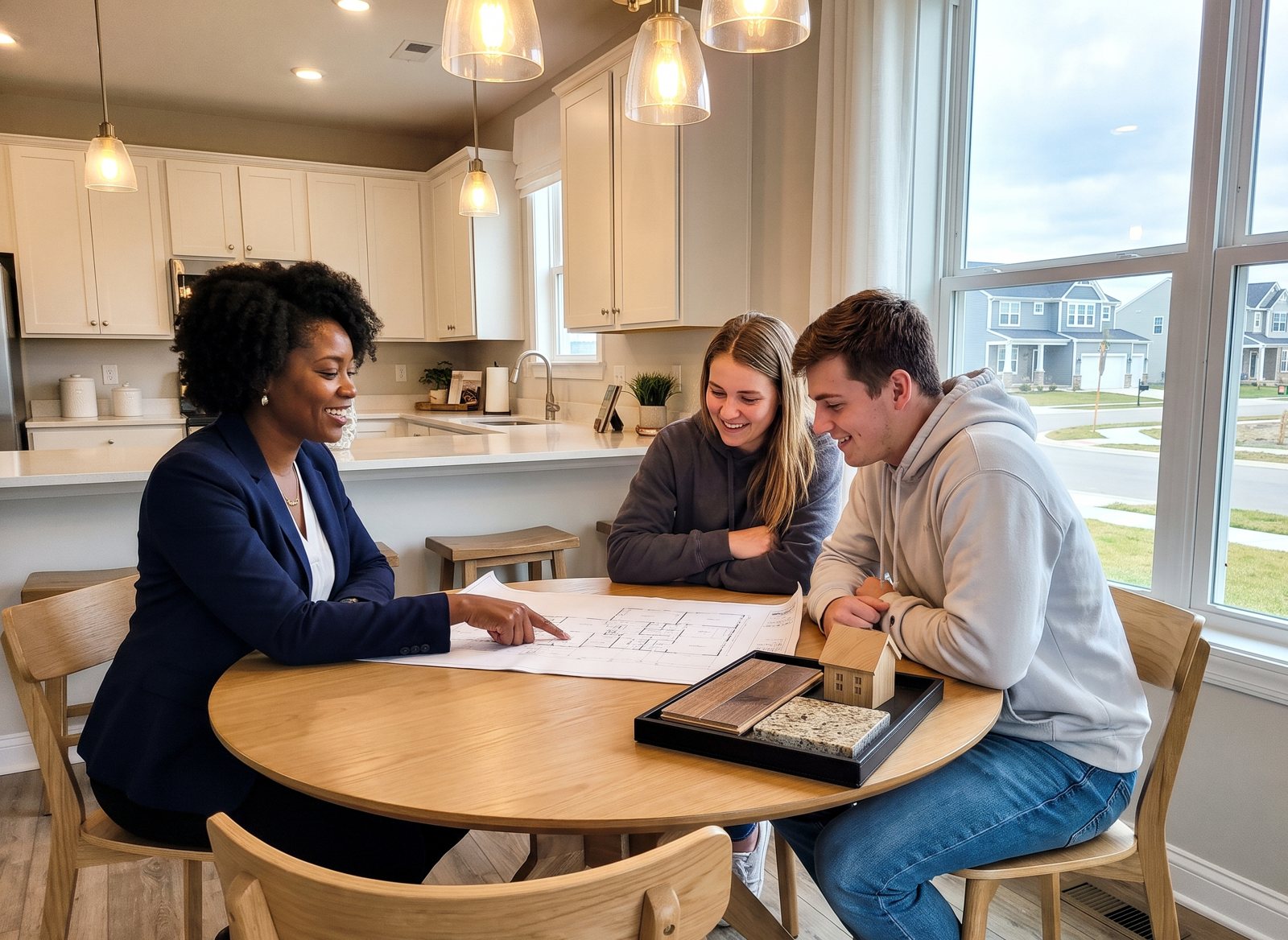
Your Google Business Profile is what shows in the map results. Google’s rule: a sales office can get a profile, but a model home can’t. The office has to have staff meeting customers during its posted hours.
Google’s eligibility guidelines list “rental or for-sale properties such as vacation homes, model homes, or vacant apartments” as not eligible. The next line says “Sales or leasing offices, however, are eligible for verification.” The same page says a business must make in-person contact with customers during its stated hours.
There are two ways to get this wrong. One is a profile for every model and spec home, which goes against that rule. The other is the opposite mistake: five staffed sales centers but only one profile, at the corporate office, so four offices never show on the map.
Our checklist:
- One profile for each sales office that has staff there during the hours you post. Google doesn’t spell out the case of a sales office inside a model. Our read: the profile is for the sales office, named as the sales office, with the hours it’s staffed.
- No profiles for models, empty spec homes or lots.
- Custom builders with no office where clients visit during posted hours should set up the profile as a service-area business. Google’s guidelines say service-area businesses should hide their address.
- Keep categories tight. Google says to choose “the fewest number of categories it takes to describe your overall core business.”
- Point each profile’s website link to the community page it serves, not your homepage. It’s one less click for the buyer.
- Add real photos: the sales office, the model rooms, the amenities, finished homes.
Google says local results are “mainly based on relevance, distance, and popularity.” You can’t move your sales office, but you can work on the other two. Google adds that “more reviews and positive ratings can help your business’s local ranking.” We’d ask at closing and again after the first warranty visit goes well. Our guide to getting more Google reviews has the scripts.
What to do when a home sells or a community sells out
Homes sell, plans get retired and communities close out. Some of those pages can keep sending buyers to your open homes. The rest should be removed cleanly.
Here’s what Google says. In a 2011 post, Google said that if content moves to a new URL, use a 301 redirect, which sends people and Google to the new page for good. If you removed the page “and there’s no replacement page on your site with similar content,” return a 404 or 410 error code. Google also warns against sending every unknown URL to the homepage.
The table is our own call on how to apply that. Google doesn’t write rules for builder pages.
| What happened | What we do with the page |
|---|---|
| A quick move-in home sold | Mark it “Sold” with links to homes still for sale. When it stops getting visits, let it return a 404 or 410. |
| You stopped offering a floor plan | 301 it to the closest plan you still build, if it’s truly similar. If not, let it return a 404. |
| A community sold out | Keep the page, add a “sold out” note and a link to your nearest open community. People may still search the name for resales or HOA info. |
| A community page has no traffic left and nothing close fits | Let it return a 404 or 410 |
| Anything at all | Never redirect it to the homepage just to get rid of it |
One more thing helps when your inventory moves this fast. Keep your XML sitemap’s “lastmod” dates honest. Google’s sitemap guide says it uses that date “if it’s consistently and verifiably” accurate. If your site stamps today’s date on every page every day, those dates aren’t accurate, and Google may stop trusting them.
Zillow and your own site
In the search we checked, Zillow and other portals held most of the results for “new construction homes.” They’re a useful channel, but they don’t replace your own site.
Zillow’s builder program is called Promoted Communities. Zillow calls it “an exclusive platform for new construction listings to be seen on Zillow, Trulia and Redfin.” Builders can upload specs, move-in-ready homes, plans and lots with New Home Feed, Zillow’s listing entry tool. Buyers can then send a “Contact Builder” form or click a direct link to your website.
Zillow says it shows your listings “without modification to your content.” That’s fair to you. But it means the same description can sit on a big portal and on your site. So our rule is that the version on your own site should be the fullest one. Add more photos, the full plan details, the schools, the HOA dues, the FAQ your sales team answers every week. Give buyers a reason to click through to you.
Then add a tracking tag to the website link in each portal listing, like ?utm_source=zillow&utm_medium=referral, if the portal lets you edit that link. Those visits will then show up under Zillow in Google Analytics. NewHomeSource and the other portals that showed up in our check are worth the same treatment.
Promoted Communities sits in Zillow’s new construction advertising section. Ask your rep what it costs, and judge it like any other ad spend. If you’re weighing paid lead sources against each other, our lead sites compared post covers the big ones for contractors.
What home builder SEO from D&J includes
This is what the work looks like for a builder, step by step.
- Audit. We crawl the site and list every community, plan and home page. Then we flag the thin ones, the sold homes still showing as available, and the old URLs that redirect to the homepage. We check every Business Profile against Google’s sales office rule.
- Site structure. Market page to community page to plan page to available home, with links going both ways. A buyer on a plan page should see where it’s built and what’s ready now.
- Community and plan pages. We rewrite them to be the fullest version anywhere online, built around what buyers rate as useful: photos, details, floor plans and tours.
- Business Profiles. One per staffed sales office, with real photos, the right hours and a website link to the matching community. We set up a review request for closings.
- Inventory upkeep. Each month we check what sold, what’s new and what moved, and fix the pages and redirects to match.
- Local links the honest way. Your local builders association, the chamber, local news when a community opens, the schools and groups you already support. We don’t recommend buying links. Google’s spam policies list buying links for ranking purposes as link spam.
- Tracking. Call tracking numbers and form tags by community, so the report shows which community each lead came from.
If your site can’t do this, say every community sits on one long page, the site comes first. Our page on website design for contractors and builders covers what we look for. Builders who also take commercial work can see our website design for construction companies.
There’s one gap a website can’t fix by itself: the call that comes in after the sales office closes. Restoral, our own AI system, answers calls and chats and books appointments onto your calendar. It works with Google Calendar, Calendly, Cal.com, Jobber and most trade CRMs, and our team sets up the connection. Ask us about yours.
How we measure it: appointments by community
Rankings are nice, but they don’t sell homes. We report on the things your sales team cares about: calls, forms and appointments, split out by community.
To get there, the setup has to be right on day one:
- A tracking number on each community page and each Business Profile, so you know which community the call was about.
- A hidden field on every form that records the page it was sent from.
- A tag on each profile’s website link, so profile visits don’t get lumped in with everything else.
- A lead source field in your CRM that your sales team actually fills in when the buyer walks in.
An example of the math, with made-up numbers: Say your Willow Creek page brings in 30 calls and forms in a quarter. Your team turns 9 of them into appointments and 2 into contracts. If your SEO spend for that quarter, split across your communities, comes to $3,000 for Willow Creek (a made-up number, not our pricing), that’s about $333 per appointment and $1,500 per contract.
Now you can compare that with what a portal lead or a paid click costs you for the same community. That’s a much better conversation than “we moved up four spots.”
We also watch searches for each community’s name in Google Search Console. When buyers start searching a new community by name, it means the word is getting out. Your page should be the one they find.
Month by month: what to expect
SEO for builders is slow at first. This is the plan for the first few months, and what not to expect.
- Month 1: Audit, tracking setup, and Business Profile fixes. Profile fixes can be the quickest win, because a sales office that’s missing from the map can’t get calls from it.
- Month 2: Site structure and the first community and plan page rewrites, starting with the communities that have the most homes left to sell. Redirect cleanup for sold homes and old plans.
- Month 3 and on: The rest of the pages, the build on your lot page if you have one, local links, and the monthly inventory check. Reporting by community every month.
What not to expect: page one for “new homes for sale” in a big city in 90 days. Nobody can promise that, and anyone who does is guessing. New pages can take a few months to settle in. Community name searches and the map tend to move first.
If you want the bigger picture beyond search, our construction marketing plan template lays out the full year.
Why work with D&J
We’re a marketing agency for contractors and home service businesses, based in Stamford, Connecticut. Home building shares the same local search basics as the trades we serve, plus its own rules, which this page covers.
- We’re a Google Partner, a Meta Business Partner and a Yelp Partner.
- We do SEO, local SEO, Google Ads, Local Services Ads, websites, reviews, social media, and call tracking and reporting under one roof. So your profile, your pages and your ads don’t fight each other.
- We’ve worked with more than 30 SERVPRO franchises and have never lost a SERVPRO client. That’s a different trade, but it’s the same kind of work a builder with several sales offices needs: local search across many locations.
You can see our case studies for the kind of work we do. If you run other trades too, our contractor SEO page covers the general approach.
Home builder SEO FAQ
How long does home builder SEO take?
Business Profile fixes and community name searches tend to move first. New community and plan pages can take a few months to settle in. Broad searches like “new construction homes” in a big metro may never be worth chasing, since portals hold most of those spots. Nobody can promise a date, because it depends on your market and your competitors.
How much does SEO cost for a home builder?
It depends on how many communities, plans and sales offices you have, and how much work your site needs. A custom builder with one office and a builder with eight communities need very different plans. The free audit shows what we’d fix first, so you can judge the scope before you talk price.
Can my model home have its own Google Business Profile?
No. Google’s eligibility guidelines list model homes as not eligible. A sales office is eligible, as long as staff meet customers there during the hours you post. Google doesn’t spell out the case of a sales office inside a model. Our read is that the profile belongs to the sales office, with the hours it’s staffed.
Should every community get its own page?
Yes, if it’s a real community you’re selling in. Buyers search for communities by name, and each one has its own site plan, schools, amenities and homes. What you shouldn’t do is make town pages that only swap the town name. Google’s spam policies list pages aimed at specific cities that funnel visitors to one page as doorway abuse, and name-swapped town pages can fall into that.
Do I still need SEO if I pay for Zillow or NewHomeSource?
We think so. Zillow’s Promoted Communities, part of its new construction advertising, can put your homes in front of buyers on Zillow, Trulia and Redfin, and buyers can click through to your site. But someone who searches your community’s name should land on your page, and your site should have more detail than any portal listing. The same goes for NewHomeSource or any other portal you pay for.
Does AI search change SEO for builders?
Some. In our October 2026 Ahrefs check, Google showed an AI Overview on “new construction homes,” “quick move in homes” and “build on your lot,” but not on “custom home builders.” The basics still apply: clear pages with real facts like prices, square feet, schools and finish dates. A page that states those facts plainly gives an AI answer something accurate to quote.
What to do this week
Five free things you can check on your own:
- Search your best-selling community’s name on your phone. Is your own page the first result, or is it a portal?
- Open each Google Business Profile. Is it a staffed sales office, are the hours right, and does the website link go to the matching community page?
- Click three homes your site lists as available. If any of them sold, fix them using the table above.
- Pick your most popular plan page. Make sure it has the floor plan image, square feet, beds and baths, and real photos.
- Ask last month’s closings for a Google review, and don’t offer anything for it.
If you’d like an outside view, start with our local SEO audit. It costs nothing, and there’s nothing to sign.


