
Tree Service SEO and Marketing for Storm Season and Beyond
Tree service SEO built from real search data: which tree jobs are easy to rank for, why storm searches never stop, and the pages, profile and phones that win the work.
5.0on Google- Google Partner
- Meta Business Partner
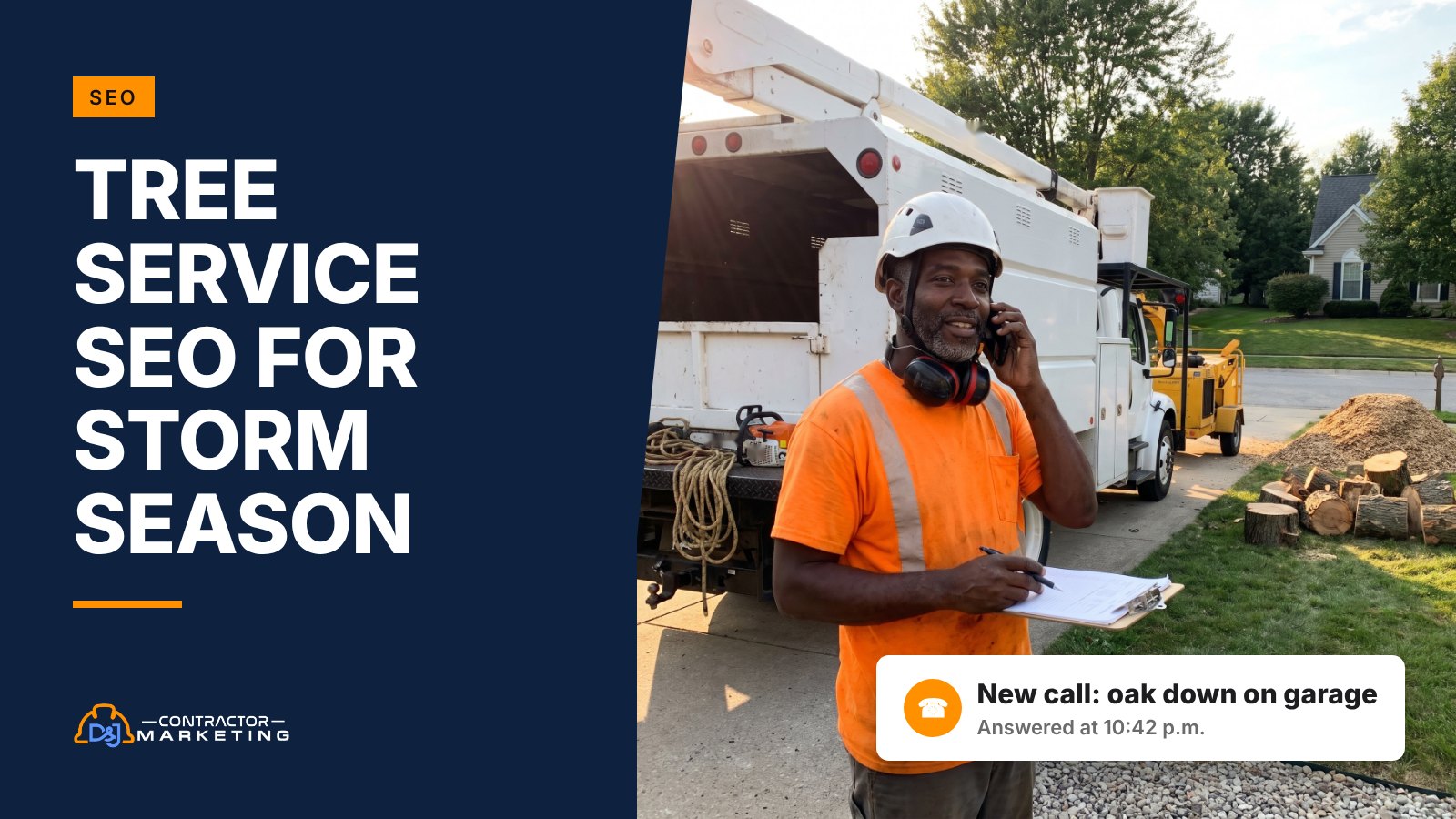
US searches for “tree removal near me” climbed from about 23,500 in December 2025 to about 60,900 in May 2026, per Ahrefs. To get those calls, your pages and profile need to be ready before the spring rush starts.
Tree service SEO is how you get found when someone needs a tree down, a stump gone or a limb off the roof. You show up in two places on Google: the map pack with the three pins, and the regular results under it. The map is won mostly with your Google Business Profile and reviews. The results under it are won with a strong page for each job you do.
The short version: build a page for every service, starting with the low-competition ones like stump grinding and emergency removal. Get those pages live before spring. Keep an emergency page and a phone that answers every month of the year, because storm searches never really stop. Then track booked jobs by service, so you know which pages pay.
Key takeaways
- “Tree trimming near me” gets about 26,000 US searches a month with an organic difficulty of just 5, and stump grinding, emergency removal and land clearing sit near 0. What people search
- Regular removal searches more than doubled from December to May, but emergency searches never fell below about 6,300 a month. Storms and seasons
- If customers don’t come to your yard, Google says to remove your address and list up to 20 service areas instead. What the work covers
- Maryland’s insurance regulator says many policies pay a limited amount to remove fallen trees, usually $500 to $1,000, typically per event rather than per tree, so your storm page should say “check your policy,” not “insurance covers it.” Insurance jobs
- An ISA Certified Arborist needs at least three years of full-time experience (or school plus experience), so link ISA’s verify tool next to their name. The arborist credential
- The USDA has found the emerald ash borer in 38 states and DC, so a page on the pests in your county can turn into treatment and removal work. Pest pages
- “Tree removal cost” gets about 6,700 searches a month with a difficulty of 3. A price range page catches it. Price pages
- Track booked jobs and job value by service. Made-up example: 4 removals at $1,500 ($6,000) beat 8 stump jobs at $300 ($2,400). How we measure
What people type when a tree has to go
Your customers don’t search for “tree service SEO.” They search for the job: “tree removal near me,” “stump grinding near me,” “emergency tree service.” Some of those terms are crowded. A few big ones have low competition in the regular results, and that’s where we’d start.
Here’s what US searchers typed each month, with Ahrefs’ keyword difficulty score (KD). KD runs from 0 to 100. The higher it is, the more strong pages you have to beat to reach the first page of results.
| Search term | US searches a month | KD | What the searcher wants |
|---|---|---|---|
| tree service near me | 63,000 | 53 | Any tree company nearby, often a quote |
| tree removal near me | 46,000 | 56 | A tree taken down, usually soon |
| arborist near me | 28,000 | 45 | Someone who knows trees, often for a sick or leaning one |
| tree trimming near me | 26,000 | 5 | Pruning, or branches cleared off the roof |
| stump grinding near me | 11,000 | 1 | A stump gone, small fast job |
| emergency tree removal | 8,500 | 0 | A tree down right now |
| tree removal cost | 6,700 | 3 | A price before calling anyone |
| stump removal near me | 3,400 | 0 | Same as grinding, different words |
| land clearing near me | 3,100 | 0 | Lots cleared for building or fencing |
| tree health assessment | 1,800 | 2 | An expert opinion on one tree |
| crane tree removal | 1,400 | 0 | A big tree near a house |
Look at the KD column. “Tree removal near me” sits at 56, so you’re up against a lot of strong pages. But “tree trimming near me” gets 26,000 searches with a KD of 5. Stump grinding, emergency removal and land clearing are close to zero.
Treat KD as a guide, not a promise: the same job worded as “tree pruning near me” sits at 61. KD also only covers the regular results. The map pack is still decided by your profile, your reviews and distance.

If your site has one “Services” page with a bulleted list, you’re not really competing for any of these terms. A real page for each of those jobs has a fair shot at ranking, while you keep chipping away at the big “tree removal” terms.
“Tree service leads” gets searched too, but by owners like you, not homeowners. Your customers never type it, so we’d never build your site around it.
For the map pack, Google says local results are mainly based on relevance, distance and popularity. It adds that how many websites link to you and how many reviews you have both count. The regular results are won by pages. You need both.
Removals peak in spring. Emergency calls run all year.
Regular removal searches swing hard between winter and spring. Emergency searches barely dip at all, which means your emergency page and your phones have to be ready every month of the year.
Ahrefs’ monthly US estimates show the swing. “Tree removal near me” bottomed out at about 23,500 searches in December 2025. By March it was over 49,000. It stayed near 60,000 from April through August, then slid back to about 41,700 in October.
“Emergency tree removal” looks different. Its slowest month was November 2025, at about 6,300. Its busiest was July 2026, at about 11,200. So the busiest month was less than double the slowest. Emergency calls never really go away. They just get louder in summer.
Two things follow from that. First, pages for planned work (pruning, removals, stumps, lot clearing) should be up well before the March jump. Start in winter and they go live in month 2, before the March jump. Start in summer and they still go live in month 2, which gives them fall and winter to settle in. Second, your emergency setup can’t be a spring project. It has to work on a Tuesday night in November.
Winter still has work in it. Even December 2025 had about 23,500 searches for “tree removal near me.” Use the slow months to post your job photos, push the pruning and removals people have put off, and get the spring pages finished. If you prefer to prune certain trees in the dormant season, say why on the page. Your local extension office can tell you what timing makes sense for the species and diseases in your area.
The storm day checklist
When a big wind or ice storm is coming, or just hit, this is the order we’d work in:
- Update your hours on your Google Business Profile if you’re running extra shifts or taking calls all night.
- Post a short update on your profile: what areas you’re covering, that you’re taking emergency calls, and the number to call.
- Put the same message at the top of your emergency page and your homepage.
- Raise your Local Services Ads budget only if you can answer the calls. Google says your ad ranking may be affected if you regularly fail to answer calls.
- Decide who picks up after hours: you, a crew lead on rotation, or an answering system that books the job.
- If you travel to storm zones, don’t stack far-off towns onto your profile. Google says your whole service area shouldn’t be more than about two hours’ drive from your base. Ads can target a storm zone instead.
- Have the crew shoot photos of every storm job (rigging, crane, cleanup) for your profile and your gallery later.
- Text each storm customer your review link the same day the cleanup is done.
Don’t treat the storm customer as a one-time job. A homeowner who just lost a big oak still has the rest of the yard, and they’ve just met you. A clean job, a quick review ask and a note offering to look at the other trees set up the next call.
What our tree service SEO covers
The work comes down to five things: your profile, your pages, your ads, your phones and your tracking.
 Google Business Profile and reviews
Your profile is what shows up in the map pack, so it gets fixed first. We pick your main category based on where most of your money comes from. Google’s own rule is to choose the fewest categories it takes to describe your core business, so we don’t stack on ten extras.
Most tree companies run out of a yard or a home, not a storefront. If customers don’t come to you, Google says to remove your address from your profile and list a service area instead. You get up to 20 areas, and the whole thing shouldn’t be more than about two hours’ drive from your base. Our service-area business setup guide walks through it.
Then photos. A climber tied in 60 feet up, a crane picking a trunk off a roof, a clean lawn after the chipper leaves: your crew’s real job photos sell better on the profile than any stock image.
Reviews come next. We set up a simple ask: a text with your review link after every finished job. Google doesn’t allow you to offer discounts or anything else for a review, and it doesn’t allow selectively asking only happy customers. So everyone gets the same ask. Our guide to asking for reviews has the exact texts.
 Website and service pages
Each job you want more of gets its own page: tree removal, trimming and pruning, stump grinding, emergency service, land clearing, and plant health care if you offer it. One page, one job. That’s how you get a shot at those low-competition terms from the table above.
A good tree service page answers what a nervous homeowner wants to know before they call:
- What the job includes. Is cleanup included? Do you haul the wood or leave it? Is stump grinding extra?
- How you protect the house, the lawn and the driveway. Rigging, mats, crane work.
- Your insurance and any credentials, like an ISA Certified Arborist on staff.
- A price range or what drives the price, so the call isn’t a surprise.
- Real photos from real jobs, with a short note on each.
- One big phone button that stays on screen on a phone.
The emergency page gets extra care, because that searcher is standing in the yard looking at a tree on the garage. Phone number first, then how fast you can usually get there, then what happens on site. This is the layout we’d build:
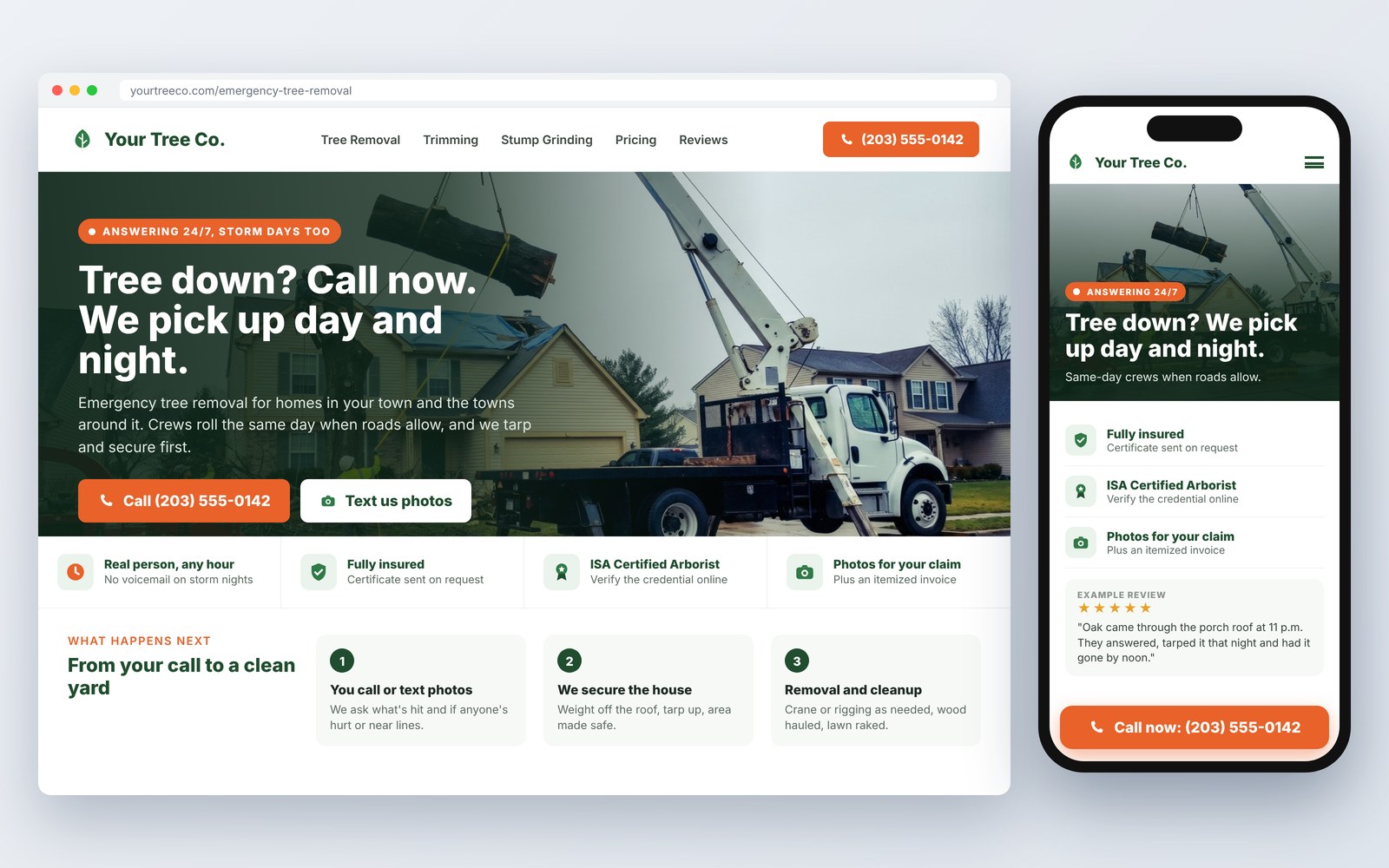
What we won’t do is build 40 pages that only swap the town name. Google’s spam policies call out pages targeted at specific regions or cities that funnel people to one page as doorway abuse. We’d write a town page only where you have something real to say about that town, like the jobs you’ve done there.
 Local Services Ads
 are Google’s pay-per-lead ads, and Google says they give you a chance to show up prominently in search results. “Tree services” is on Google’s list of eligible US categories.
You pay per lead, not per click, and Google says you only pay for leads related to the services you offer. We manage your Local Services Ads for you: the profile, the job types and the leads that come in.
 Answering and booking
You can’t answer the phone with a running saw in your hand. The crew is in the tree, the owner is on the ground running the job, and the call goes to voicemail. The person standing next to a fallen tree calls the next company.
That’s what Restoral is for. It’s our own AI system that answers calls and chats, and books the estimate onto your calendar. It works with Google Calendar, Calendly, Cal.com, Jobber and most trade CRMs, and our team sets up the connection. Our answering service for contractors page explains how it works, and the missed call calculator shows what unanswered calls might be costing you.
 Call tracking and reporting
We set up call tracking so your report shows where each call came from: the map pack, your website, Local Services Ads or Google Ads. Then you know whether the stump page or the removal page earned last month’s work.
Write for the homeowner with a tree on the roof
After a storm, a lot of your callers have a tree on the roof and one question: will insurance pay? Answer it honestly on the page and you’re the company they call. These searches also have almost no competition. “Storm damage tree removal” gets about 900 US searches a month and “tree fell on house” about 600, both with a KD of 0 in Ahrefs.
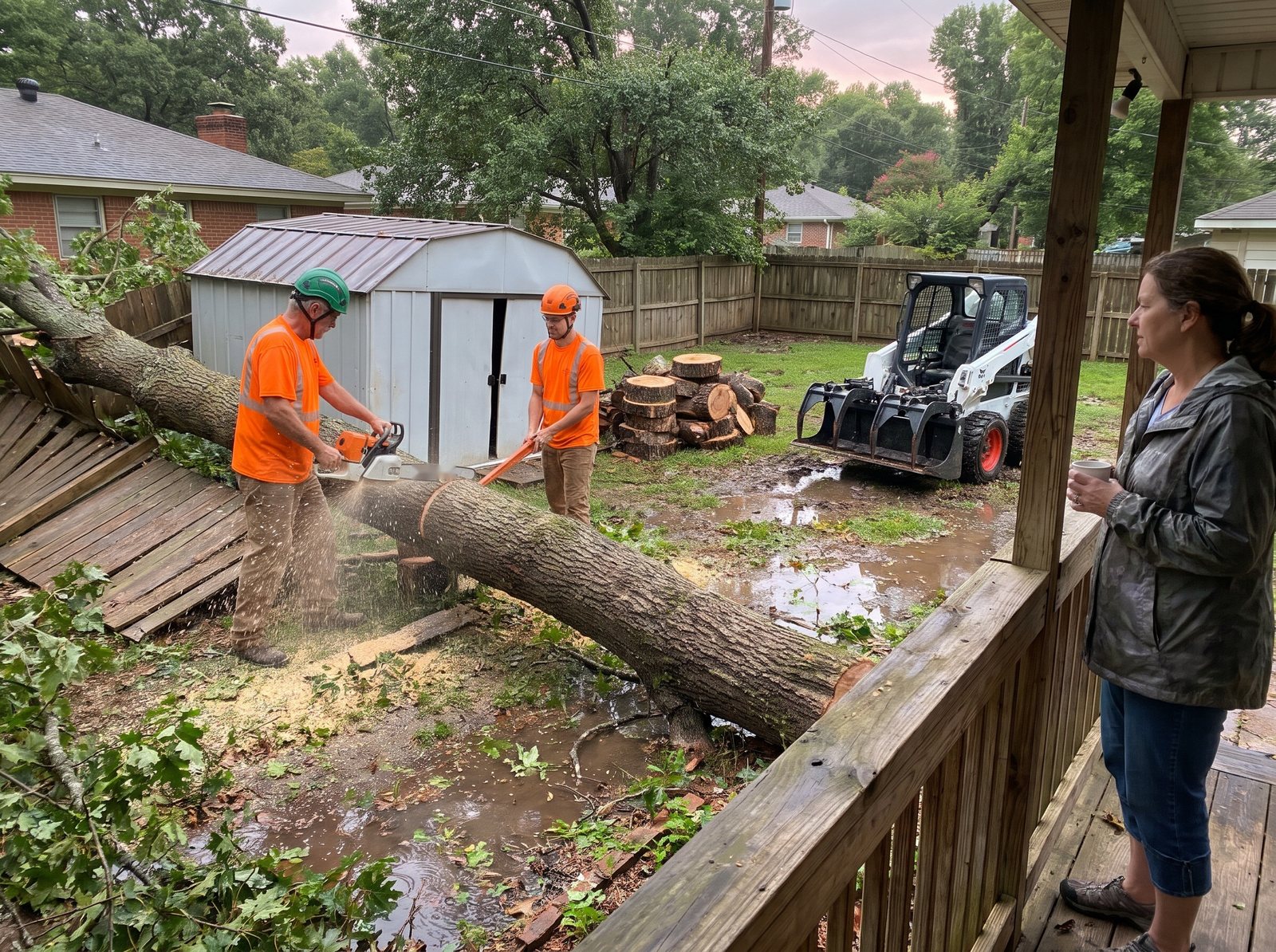
One state regulator, the Maryland Insurance Administration, says many policies pay a limited amount to remove fallen trees, usually between $500 and $1,000. It adds that the amount is usually based on the event, not the number of trees. So two trees down in the same storm may not get twice the removal money. The homeowner’s own policy decides the real number.
And trees that haven’t fallen yet are a different story. NerdWallet notes that home insurance normally won’t cover removing a tree that poses no immediate threat, like a healthy tree someone wants gone for the view.
That’s useful on your page, because it sets the right expectation before you show up. A homeowner who thinks insurance covers everything gets upset at the invoice. One who read your page already knows to call their agent.
What we’d put on a “tree fell on your house” page:
- Safety first: stay out of damaged rooms and away from downed lines.
- Take photos of the tree and the damage before anything moves.
- Call your insurance company or agent. Every policy is different, so they have the final word.
- What your crew does on arrival, and, if you do it, that you’ll give the homeowner photos and an itemized invoice for their claim.
- Your emergency number, big, at the top and bottom.
Never write “insurance will cover it.” You don’t know that, and neither do we. Saying “many policies pay something toward removal, check yours” is honest and still gets the call.
Make the arborist credential do some selling
If someone on your crew is an ISA Certified Arborist, that’s a real selling point. On a lot of tree company sites it’s tucked away in the footer. We put it on the pruning and assessment pages, next to the call button.
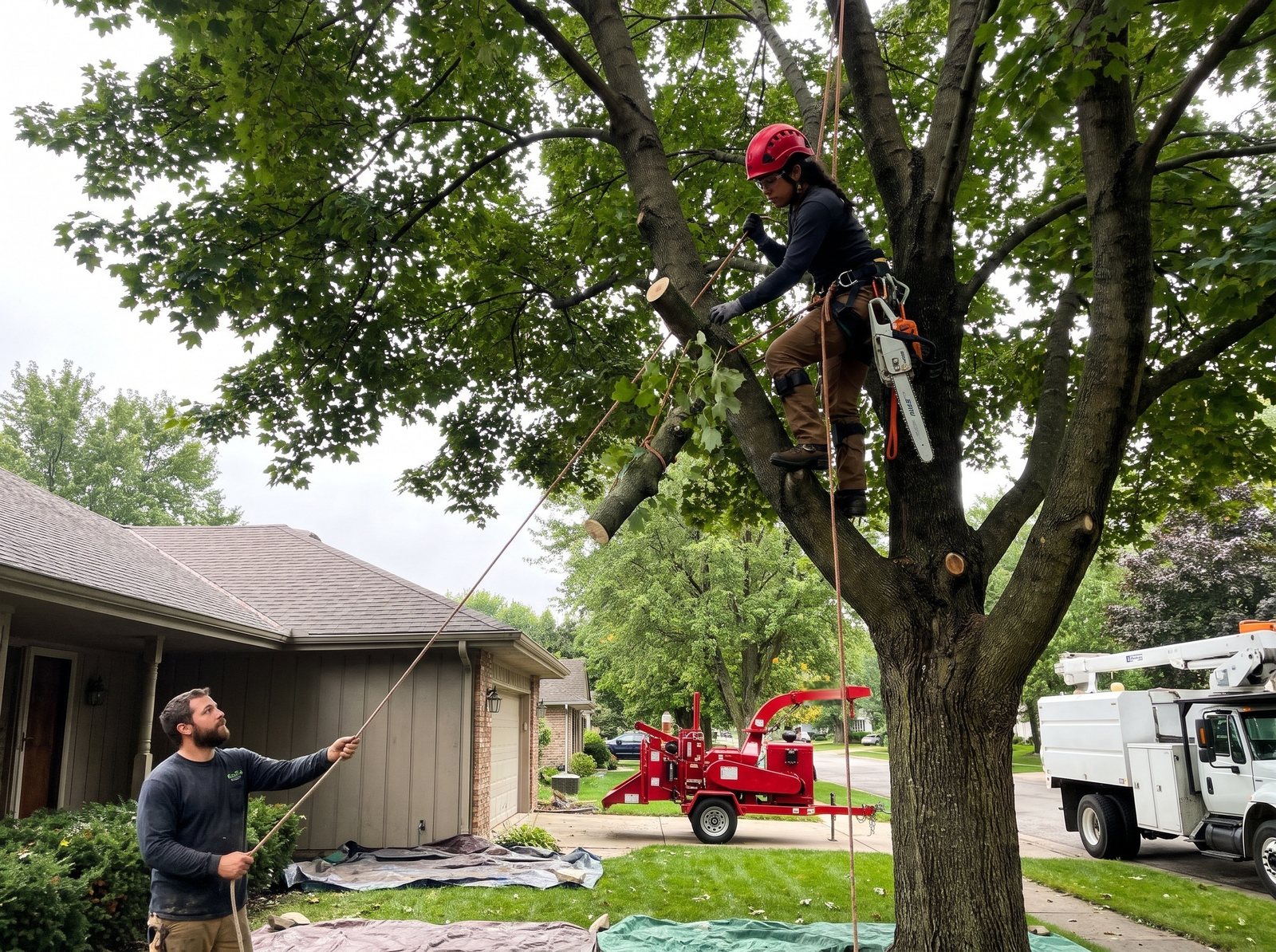
The credential isn’t easy to get, and homeowners should know that. ISA’s program guide says candidates need at least three years of full-time experience in arboriculture, or a mix of schooling and hands-on experience, before they can sit for the exam. ISA also says the program is accredited by the ANSI National Accreditation Board.
Here’s how we’d use it:
- Name the arborist on the pruning, plant health and assessment pages, with a photo on the job.
- Link to ISA’s find an arborist and verify a credential page, so a careful homeowner can check it in a minute.
- Say it in one line on your profile description and in your Local Services Ads profile.
- Explain in plain words why it matters for that job. A certified arborist can tell a homeowner if a tree can be saved before anyone starts cutting.
Searchers ask for it by name, too. “Certified arborist near me” gets about 3,200 US searches a month in Ahrefs. If you don’t have a certified arborist, don’t hint that you do. Talk about your training, your insurance and your years in the business instead.
Pest and disease pages that turn into removal jobs
Bugs and disease create tree work you can see coming. When a pest shows up in your county, homeowners start searching before they know what to call it.
The emerald ash borer is the one many tree companies will run into. The USDA says it has detected the beetle in 38 states and the District of Columbia. It also says people spread it long distances by moving infested ash firewood. That matters if you sell or haul firewood, and it’s a good line for your page.
A pest page does two jobs. It catches the early searches (“emerald ash borer treatment” gets about 800 a month, KD 9), and it gives you a reason to visit the yard. Some of those visits end in treatment. Some end in a removal, because a dead ash near a house still has to come down.
The same goes for a general “tree health assessment” page. That term gets about 1,800 US searches a month with a KD of 2. It’s a natural fit for a company with a certified arborist.
Our rule: only write about pests and diseases that are really in your area, and check your state forestry or extension office for what’s been found locally. A page about a beetle that isn’t in your state won’t bring you local work.
Publish a price range page
“What will this cost?” is the first thing a lot of homeowners want to know, and plenty of tree companies won’t say. A plain price range page gets the search and sets expectations before your estimator drives out.
The searches are there. In Ahrefs, “tree removal cost” gets about 6,700 US searches a month, “tree trimming cost” about 2,600 and “stump grinding cost” about 1,900. All three have a KD of 3 or less.
You don’t have to post a price list. A range and the reasons it moves are enough. For a sense of what national sites tell homeowners, NerdWallet puts tree removal between $200 and $2,000, with trees under 30 feet at $150 to $450 and trees over 80 feet at $1,000 to $2,000 or more, depending on whether a crane is needed. Your own numbers will be different, and your page should use yours.
The factors your page should explain:
| What moves the price | How to explain it |
|---|---|
| Height and trunk size | Bigger trees take more time, more rigging and more hauling. |
| What’s under it | A tree over a roof or a fence usually has to be lowered in small pieces. Near power lines, the utility may need to make it safe first. |
| Access | If the truck can’t reach it, the crew carries everything out by hand. |
| Crane or no crane | If a crane is needed, explain why. It adds to the bill, but it can make a risky job faster and safer. |
| Stump and cleanup | Say clearly if grinding, hauling and wood removal are included or extra. |
| Emergency timing | If you charge more for nights, weekends or storm days, say so up front. |
End the page with a clear next step: send photos for a rough quote, or book an on-site estimate. A caller who has already seen the range isn’t shocked by the quote, and that saves your estimator wasted trips.
Where SEO, Local Services Ads and Google Ads fit
Each one pays off on a different clock: Google Ads in days, Local Services Ads once Google’s checks are done, SEO in months. Small shops usually start with SEO and Local Services Ads, then add Google Ads once the phones are covered and there’s budget for storm days.
How they compare for tree work:
| SEO | Local Services Ads | Google Ads | |
|---|---|---|---|
| How you pay | A monthly fee for the work, no per-click cost | Per lead | Per click |
| How fast it starts | Months | Once Google’s checks are done | Days |
| Best for | Planned work and price searches all year | Phone calls from ready-to-book homeowners | Storm spikes and jobs you want more of right now |
| Watch out for | Slow start | Your ad ranking may drop if you often miss calls | Wasted clicks if nobody watches it |
On cost, Ahrefs estimates a click on “tree removal near me” at about $3.50 and “emergency tree service” at about $5.00. Those are averages across the country. Your town, your competitors and your ad quality will move them.
What we’d do with $1,500, $5,000 or $15,000 a month
These are example plans for total monthly marketing spend, not our prices. This is what we’d put first at each level. At every level, someone answers after hours, because a missed call on a storm night is money you paid for and lost.
- $1,500 a month. Fix the profile and reviews first, then build the pages for your two or three best jobs. If there’s money left, run Local Services Ads on a small budget. Skip regular Google Ads for now.
- $5,000 a month. Everything above, plus a page for every service and the insurance and price pages. Local Services Ads run all year. Add Google Ads for emergency terms only, and turn them up on storm days.
- $15,000 a month. All of the above across your whole service area, with pest pages, project galleries and Google Ads for planned work too.
Want to run your own numbers? Our marketing budget calculator helps you work out a monthly figure, and our Local Services Ads guide covers setup step by step.
How we measure it: booked jobs, not clicks
We count booked jobs and what they were worth, by service, along with what each one cost you to get.
Tree jobs vary a lot in size. A small stump and a crane removal over a house both count as “one job” in most call reports, even though one can be worth many times the other. So we split everything by service.
An example with made-up numbers, just to show the math. Say your stump grinding page brings in 20 calls in a month, and you book 8 of them at an average of $300 each, for $2,400 of work. Now say your removal page brings only 12 calls. You book 4, they average $1,500, and that’s $6,000. Fewer calls, but $3,600 more work.
Look only at calls and stump grinding looks like the winner. Look at booked dollars and you’d put the next dollar into removals.
Your monthly report from us shows, in plain words:
- Calls and form leads, by service and by source (map pack, website, Local Services Ads, Google Ads).
- Missed calls, and how fast the rest were answered.
- Booked jobs and job value, if you share them from your CRM or your notes.
- Cost per booked job for each paid channel.
- New reviews on your profile.
- What we did this month and what’s next.
What the first three months look like
SEO takes months, not weeks. This is what we’d do first, second and after that, and what you should expect to see along the way.
Month 1: fix the base and the phones
We audit your profile, site and tracking. We set the right category, clean up your service area, add real photos and start the review asks. Call tracking goes in, and we sort out who answers after hours. If your site is slow or hard to use on a phone, that goes on the list too.
Month 2: build the pages for your best jobs
We write the pages for the jobs you want more of, starting with the low-competition ones like stump grinding and emergency service. The emergency page and the “tree fell on your house” page go live before the next storm, not after. If you’re running Local Services Ads, we tune the job types and check every lead.
Month 3 and on: grow what works
Now we have data. We add price, credential and pest pages, look at which services are booking, and put more work behind those. New pages can take a few months to settle in, so we plan ahead of the spring rise. Nobody can promise a ranking by a date, and you should be wary of anyone who does.
Questions to ask any tree service marketing company
Before you sign with anyone, us included, ask these questions. A good answer is specific to tree work, not a pitch you could give a dentist.
- Which of my services would you build pages for first, and why?
- What do you do on a storm day, and who’s watching my ads and phones?
- Will you build town pages that only swap the city name? (The right answer is no.)
- How will I know which calls came from you, by service?
- Who owns my website, my profile and my ad accounts if I leave?
- How do you ask for reviews without breaking Google’s rules?
- What will you need from me each month, like job photos or booked job numbers?
If you get vague answers, or a promise of “number one in 30 days,” keep looking. Get it in writing that the website, profile and ad accounts are in your name.
Why work with D&J
We’re a marketing agency for contractors and home service businesses, based in Stamford, Connecticut. We’re a Google Partner, a Meta Business Partner and a Yelp Partner.
We handle SEO and local SEO, Google Ads and Local Services Ads, contractor websites, reviews, call tracking and reporting. Restoral, our own AI system, picks up the calls your crew can’t. BuilderBase, our own app, writes your social posts with AI and posts them to your pages and your Google Business Profile. It can also pull new job photos from Google Drive, Dropbox or CompanyCam and turn them into post drafts, so your crane and cleanup shots don’t sit in a phone.
If you also do lawn and landscape work, our landscaping SEO page covers that side. For the general playbook across all trades, see our contractor SEO page.
What to do this week
You don’t need an agency to start. Five things you can do yourself this week:
- Search “emergency tree removal” and “stump grinding near me” on your phone from your shop. Note who shows up in the map pack and whether you do.
- Open your Google Business Profile and check your hours, your service areas and your photos.
- Ask the crew to send you five real job photos this week, and add them to your profile.
- Write down who answers the phone after 6 p.m. If the answer is “nobody,” fix that before the next storm.
- Text your last ten finished jobs your review link, with no discount or freebie attached.
If you’d like an outside look first, our free local SEO audit shows where your profile and site stand.
Tree service SEO FAQ
How long does tree service SEO take to work?
Profile fixes like hours, service areas and photos usually show up sooner than new pages. New service pages usually take a few months to settle in, which is why we publish them before spring. Nobody can promise a ranking by a date, because it depends on your town, your competitors and how much work your site needs.
How much does SEO cost for a tree service?
It depends on how many services and towns you want to grow and how much your site and profile need. A one-truck removal company and a three-crew company with a plant health program need very different plans. The free audit shows what we’d fix first, so you can judge the scope before talking price. The example budgets above, from $1,500 to $15,000 a month, are total marketing spend including ads, not our fee.
Which main Google category should a tree company pick?
Pick the one that matches where most of your money comes from. Google says to choose the fewest categories it takes to describe your core business. Type “tree” into the category box and look at what Google offers. If removals and trimming pay the bills, lead with the closest match to that. Add a second category only for work that’s a real part of the business.
Do I need a page for every town I work in?
No. Google’s spam policies treat pages aimed at cities that funnel people to one page as doorway abuse. Set your towns as service areas in your profile, list them on your service pages, and write a town page only when you have real jobs or local details to share there.
Are Local Services Ads worth it for tree companies?
They can be, because tree services is an eligible US category and you pay per lead, not per click. The catch is the phone. Google says your ad ranking may be affected if you regularly fail to answer calls, so only turn them up when someone can pick up.
Should I put my shop address on Google?
Only if customers come to it. Google says that if you don’t serve customers at your business address, you should remove it from your profile and set a service area. Most tree companies work at the customer’s home, so a service area is usually the right setup.