


It’s 2 a.m., a supply line under a kitchen sink just let go, and a homeowner is calling every plumber on the map. The one who answers gets the job.
This guide covers where plumbing leads come from, what each source really costs in 2026, and which ones fit emergency calls versus planned jobs like water heaters and repipes. You’ll also get the math, the phone scripts and a budget plan we’d actually use.
The short answer: the best plumbing leads come from people who call you directly, through your Google Business Profile, your reviews, past customers and referral partners. For fast volume, Google’s Local Services Ads (LSA) and pay per call are usually the best paid sources for emergency work. Shared lead sites can work, but only if you answer in minutes. Whatever you try, measure it by what each booked job cost you.
Key takeaways
- A typical plumbing search ad lead cost $129.02 in LocaliQ’s 2025 benchmarks, and most lead sites don’t publish prices at all. Costs by source
- Emergency jobs reward speed and planned jobs reward trust, so they need different lead sources. Match sources to jobs
- A cheap shared lead can cost more per booked job than a pricier exclusive one. The booked job math
- Google began moving Local Services Ads into Google Ads in August 2026. Separately, it no longer credits leads for job types or areas you don’t serve. What changed at Google
- Your Google Business Profile is free; remove your address if customers don’t come to you and ask for reviews every week. Profile fixes
- Before you buy leads, get written answers on sharing, billable calls, credits and contract terms. Questions for lead vendors
- With LSA, a missed call or voicemail during business hours can still be charged if the caller stays on more than 20 seconds. Call coverage and a script
- Property managers, inspectors and past customers send steady work for the cost of a visit or a text. Partner script
Where plumbing leads come from and what each costs
Plumbing leads come from two places. You rent them from someone else, like Google, Angi or a pay per call company. Or you earn them from your own profile, your reviews and the people who already know you. Rented leads are fast, but you pay for every one. Earned leads are slow to build and cheap once they work.
Here’s how each source bills you, from each company’s own pages. Most won’t publish a price, and we say so instead of guessing. You’ll learn your real price by testing and tracking.
| Lead source | How you pay | What it costs | Shared with other plumbers? |
|---|---|---|---|
| Local Services Ads (LSA), now moving into Google Ads | Per valid call or message, not per click | Not published. Google says lead prices vary by location, job type, lead type and bidding mode | Not resold, but the customer can call several plumbers from the same list of ads |
| Google search ads | Per click | A typical plumbing campaign paid $10.49 a click and $129.02 per lead in LocaliQ’s 2025 benchmarks | No, but you compete with other ads on the page |
| Pay per call companies | Per call that meets their rules | You set or approve the price per call | eLocal and Service Direct both call their plumbing calls exclusive. Get it in writing |
| Angi | Subscription, per lead or a bundle of leads | Not published. Quoted by a rep | Can be. Angi’s terms say you may compete with other pros, including Angi’s own pre-priced service |
| Thumbtack | Per lead, with a budget you set | Not published. Thumbtack says you control your pricing and budget | Thumbtack says “limited competition per lead” |
| Google Business Profile, SEO, referrals | No fee per lead | Your time, or what you pay someone to do it | No |
A quick note on that LocaliQ number. It’s the median of 3,211 campaigns run by LocaliQ’s own customers between April 2024 and March 2025, so half paid more and half paid less. Use it as a yardstick, not a quote. A plumber in a small town and one in a big metro can see very different numbers.

Our take: the cheapest lead is the one that calls you directly because it found your profile, your site or a friend’s text. Paid sources fill the schedule fast. But if shutting off one ad account would empty your schedule next week, you’re renting your business.
What about Facebook, Nextdoor, Yelp and mailers? They can work for planned jobs and offers, like a water heater special. We’d test them only after the sources above are tracked and answered, because they rarely catch someone with water on the floor right now.
If you want the bigger picture across all trades, our contractor leads guide covers the same split. Everything below is just for plumbers.
Emergency calls and planned jobs need different sources
A burst pipe and a new water heater are two different buyers. The first one calls whoever answers. The second one reads reviews, gets a couple of quotes and books later. Send both kinds of jobs through the same lead source and you’ll overpay for one of them.
Here’s how we match sources to plumbing work. It’s a rule of thumb, so adjust it for your market.
| Job type | How the customer shops | Sources that fit | What tends to waste money |
|---|---|---|---|
| Burst pipe, no water, sewage backup | Calls the first plumber who picks up | LSA, your Google Business Profile, pay per call | Any lead you can’t answer live |
| Clogged drain, running toilet | Wants someone today, checks price and reviews | Google Business Profile, LSA, past customers | Shared form leads that sit for hours |
| Water heater replacement | Wants it fast but often compares two quotes | Google search ads, Google Business Profile, reviews, past customers | Leads with no follow-up after the quote |
| Repipe, sewer line, slab leak | Researches for days, wants proof you’ve done it | Your website service pages, reviews, realtor and inspector referrals | Cheap leads from people “just getting prices” |
| Remodel rough-in, new construction | Comes through a builder or remodeler | Referral partners, direct outreach | Consumer lead sites |
| Commercial service | Comes through a property or facility manager | Direct relationships, referrals | Most homeowner lead platforms |
For emergencies, you need a live person on the phone and ads that show up while someone is panicking. For planned jobs, you need reviews, real job photos and a website page that explains the job.
So before you sign up for anything, pull up last year’s jobs. Sort them by profit. Which ones made the most money? A shop that lives on water heaters and repipes should spend differently than one that runs drain calls all day.
Track cost per booked job, not cost per lead
Cost per lead tells you what a phone ring cost. Cost per booked job tells you what a paying customer cost. That second number decides whether a source stays or goes.
Here’s an example calculation with made-up round numbers. Say you’re a plumber testing three sources in one month.
| Source (example) | Spend | Leads | Booked jobs | Cost per lead | Cost per booked job |
|---|---|---|---|---|---|
| Shared form leads | $900 | 30 | 3 | $30 | $300 |
| Pay per call | $1,200 | 15 | 6 | $80 | $200 |
| LSA | $1,500 | 20 | 7 | $75 | about $214 |
Look at the last column. The shared leads look cheapest on the invoice, at $30 each, until you notice that only three of those thirty people ever let you in the door. They’re the priciest way to get a customer here. Those leads were shared, so you were racing other plumbers to every one. Don’t copy these numbers. In your shop, LSA could just as easily be the worst of the three. Copy the habit: count booked jobs per source, every month.
Three of thirty shared leads booked. That’s the number the invoice never shows you.
You don’t need new software to track this. A shared spreadsheet works fine. Someone just has to fill it in every day. Use these columns:
- Date and time the lead came in.
- Source (ask “how did you hear about us?” and check the tracking number).
- Job type (drain, water heater, repipe, sewer, other).
- Answered live, or called back (and how many minutes later).
- Booked yes or no.
- Job total once it’s invoiced.
After 30 days, sort by source and add up spend, booked jobs and revenue for each one, then cut the worst source and move its money to the best one. Repeat.
One tip: give each paid source its own call tracking number. Without it, a lot of leads get marked “Google” just because that’s what the customer remembers.
Local Services Ads are moving into Google Ads
If you run Local Services Ads (LSA), your account is changing. Google is moving LSA into a Performance Max campaign type with “pay-per-lead goals.” The first phase began in August 2026 for select US home service advertisers, and Google lists plumbing among them. If you work out of your truck with no storefront, Google says service-area businesses like yours move in a later wave in late 2026. Your account admin gets an email 14 days before the migration date.
What stays the same
Google says you still pay for valid leads like calls and messages, not clicks. The ads still show only on Google Search and Maps, in the same spots. There are still no keywords to manage, and your Google Verified badge carries over. Google says insurance and license reverification are no longer required for the move.
What changes
You’ll manage budgets, service types and your lead inbox inside Google Ads. Your weekly budget becomes a daily one (weekly divided by 7). Daily spend can swing, but Google caps the month at your daily budget times 30.4. Google also says manual bidding and industry-level Target CPA are being phased out. BBB callouts go away, so pick at least six other callouts, like your hours or specialties. Give it up to two weeks to settle after the switch.
Your old LSA reports don’t move over, so download or screenshot them before your account migrates. And if you still hear about the “Google Guaranteed” badge, Google Verified replaced it along with the other LSA badges. Our Google Guaranteed explainer covers that switch.
What you get charged for
Google’s help page lists a missed call as a valid lead if it comes in during your business hours and the caller stays on the line for more than 20 seconds. Voicemail doesn’t save you. If your greeting plays during business hours and the caller stays past 20 seconds, Google counts it as a connected call, message or not. That’s Google’s current LSA rule, so check the billing terms in Google Ads after your migration in case it changes.
There’s some good news too. If the same customer calls or texts again from the same number within 15 days, you aren’t charged again. And message leads are usually priced lower than phone leads, though not always.
Google doesn’t publish a plumbing lead price. You’ll see what you paid per lead in your own leads and billing reports. Bad leads still get credits, usually within 30 days, though the original charge still shows on your invoice. But Google no longer credits “job type not serviced” or “geo not serviced” leads. So if you don’t do septic or gas lines, take them off your service list.
Setup checklist for plumbers
- Turn off every job type you don’t want, one by one.
- Set your service area to where your trucks can get to fast, not your whole county.
- Keep your profile hours honest, and set your Google Ads ad schedule to the hours someone actually answers. Google only charges an unanswered call that lands inside both. If your profile says open 24 hours and your ads run all night, a missed 3 a.m. call that lasts past 20 seconds can be charged.
- Back up your old LSA reports before the migration.
- Leave feedback on bad leads on the Leads page.
- Keep your business name and address right on your profile too, since they sync to Google Ads and can’t be edited there. A big name or address change triggers a review that can pause your ads for a day or two, so don’t make one in your busy season.
For the full walkthrough, see how Local Services Ads work.
Your Google Business Profile is the cheapest lead source
LocaliQ says Google sees almost 180,000 searches a month for “plumber near me” in the US. A lot of them never get past the map. They tap call on one of the first few plumbers they see. Your Google Business Profile costs nothing, yet a lot of plumbers set it up once and never tune it for the jobs they want.
Here’s what we fix first:
- Address. If customers don’t come to your shop, Google says to remove your address from the profile and use a service area instead. You can list up to 20 service areas, such as cities or ZIP codes.
- Categories and services. Pick “Plumber” as the main category. Then add the services you want more of, like water heater installation or drain cleaning, using Google’s own wording.
- Photos from real jobs. Trucks, crews, before and after shots of a repipe. Skip the stock photos.
- Reviews, every week. Google says you can ask customers to use a review link or scan a QR code. Text the link right after the job, while the customer is still happy. Our free review link generator makes the link in a minute.
- Answer every review. Short, specific, and no sales pitch.
One warning. Google prohibits offering incentives like discounts in exchange for reviews. So a “$25 off your next visit for a review” card breaks the rule. Skip it.
A strong profile won’t fill your schedule alone. But it makes every other source work better, because people check your reviews before they call, even when they found you through an ad. For the website side of this, see our guide to SEO for plumbers.
Buying plumbing leads: shared, exclusive and pay per call
Read the contract before you read the sales deck. Buying leads can work for a plumber, but only when you know what you’re buying, who else is buying it and what happens when a lead is junk.
Shared marketplaces like Angi
Angi’s Pro Agreement says pros pay “as part of a subscription, per Lead, or as part of a bundle of Leads.” It also says Angi limits how many pros a homeowner sees, but you may still compete with other pros, including Angi’s own pre-priced service, for the same job. Subscription fees can go up as much as 10% at renewal. And you may owe an early termination fee if your contract has one.
Angi can still pay off if you call back in minutes, because you’re often not the only call that customer gets. Our Angi leads review goes through the rest of the terms.
Thumbtack
Thumbtack’s pro page says there’s no subscription cost and that you control your pricing and budget, which sets how many leads you get. It describes “limited competition per lead.” We cover the trade-offs in whether Thumbtack is worth it.
Pay per call companies
Pay per call companies run their own ads and forward the calls to you. eLocal says you pick the service area, the hours you take calls and the pricing. Service Direct says you only pay for valid calls and there’s no term contract. For emergency plumbing, a live call is usually worth more than a form, because the customer wants help now.
Ask these before you sign anything
- Is this lead sold to anyone else? How many?
- What counts as a billable call? How many seconds?
- How do I get a credit for a bad lead, and how long do I have?
- Can I turn off job types, like septic or gas lines?
- Can I set hours, so I’m not paying for calls at 3 a.m. when nobody answers? (With LSA, that’s your ad schedule.)
- Is there a contract term or a cancellation fee?
- Can the price go up, and how much notice do I get?
- Do I get call recordings?
- Who owns the reviews and the profile if I leave?
Write the answers down, with the rep’s name and date. No written answer, no contract.
Answer every call, even at 2 a.m.
The fastest way to waste lead money is to let the phone ring out. A plumbing lead that hits voicemail is often booked with someone else before you call back. And with LSA, that missed call can still show up on your bill. If you can’t pick up, compare your options in our guide to an answering service for contractors.
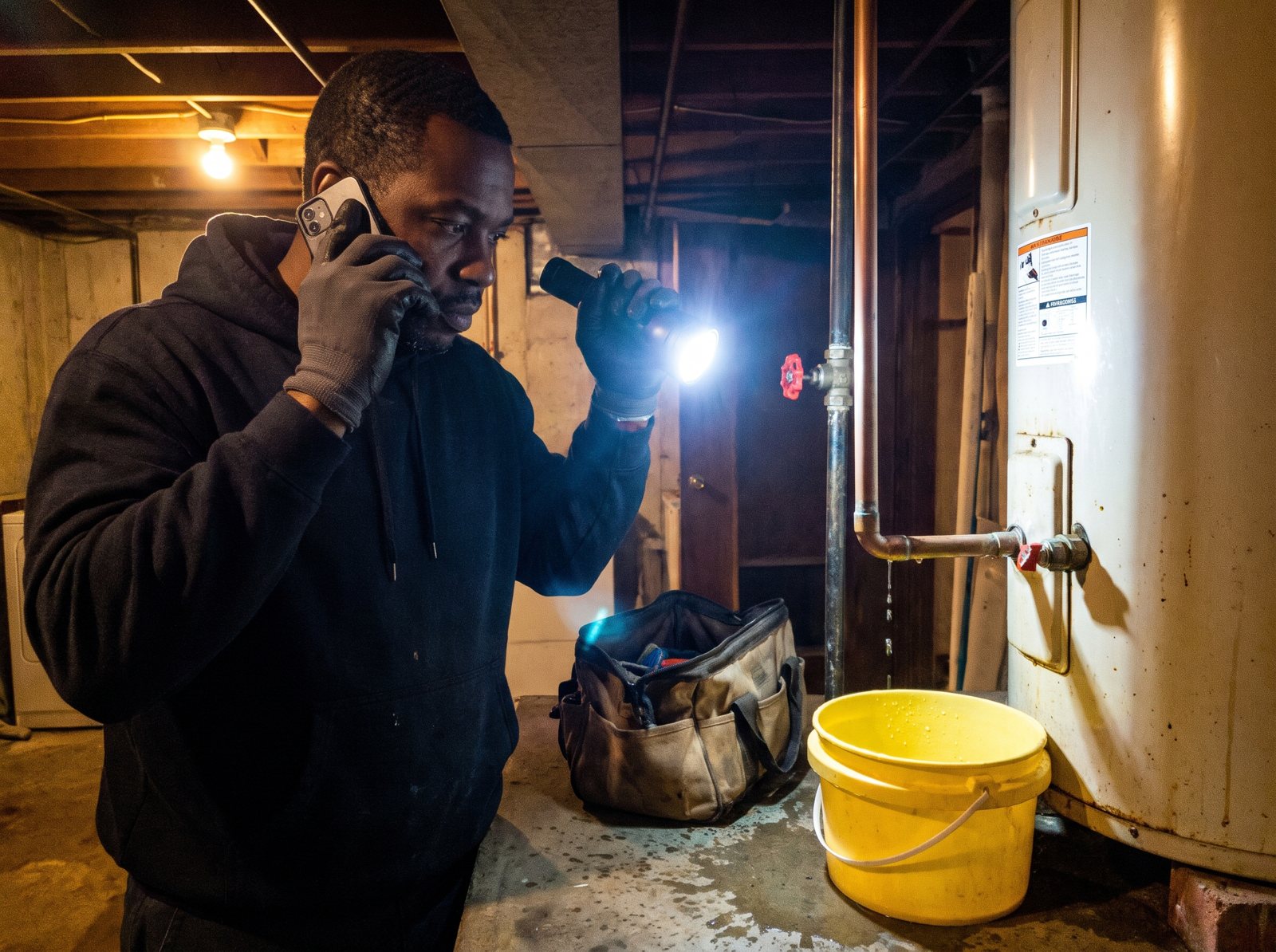
Harvard Business Review was warning about slow replies back in 2011, in The Short Life of Online Sales Leads. Its summary says most companies are not responding nearly fast enough. Plumbing is worse. Nobody with water on the floor waits.
Pick a coverage plan
- On-call rotation. One tech carries the phone after hours. Pay them for it, or it won’t last.
- Answering service. Someone takes a message and texts it to the on-call tech. Make sure they can book into your schedule, quote your after-hours fee and text the tech right away. A voicemail box is not a plan.
- AI receptionist. Our own system, Restoral, answers calls and chats and books jobs onto your calendar. It works with Google Calendar, Calendly, Cal.com and Jobber, and our team sets up the connection.
Whatever you pick, test it. Call your own number at 11 p.m. on a Saturday, from a phone your team won’t recognize, and listen to exactly what a panicked homeowner would hear.
A 2 a.m. call script
Keep it short. A panicked caller needs to hear that help is coming.
- “Thanks for calling [your company], this is [name]. What’s going on?”
- “Is water still running? Do you know where your main shutoff is?” Walk them through it if not.
- “What’s the address, and the best number to reach you?”
- “I can have someone there by [time]. Our after-hours call fee is [your fee], and the tech will give you a price before any work starts. Want me to book that?”
- “You’ll get a text when the tech is on the way.”
Step 2 keeps the damage down before you arrive, and the customer remembers who helped.
For web forms and texts during the day, set a simple rule: someone replies within five minutes. Put it in writing. Then check the reply times on your lead sheet every Monday morning, and talk to whoever was on the phones if the five-minute rule slipped.
Referral partners and commercial work
Some of the best plumbing leads never touch a website. They come from a property manager with 40 units, a home inspector who just flagged an old water heater, or a restoration crew that needs a plumber on site today. They cost you a coffee and a drive.
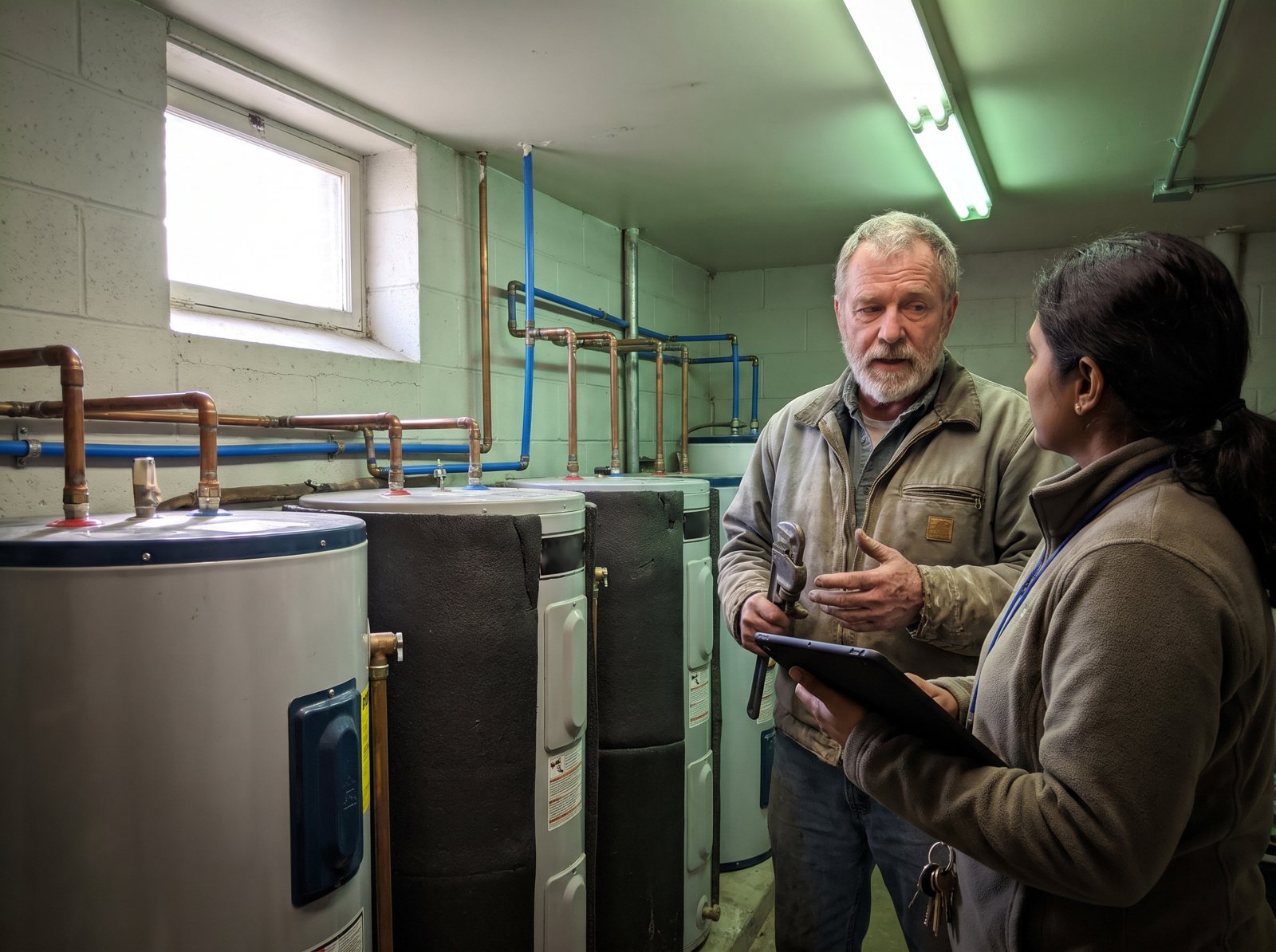
Good partners for plumbers:
- Property managers and HOAs. Steady service work, and often your path into commercial jobs.
- Home inspectors and realtors. They find leaks, old water heaters and sewer problems right before a sale.
- Water damage restoration companies. They need someone to fix the leak before they can dry the house.
- HVAC shops and electricians that don’t do plumbing. Trade referrals both ways.
- Remodelers and builders who need a reliable rough-in plumber.
Pick five in your area this month. Call or stop by with a simple offer. Here’s a script you can change to fit. Only promise 24/7 if you really answer at night:
“Hi, I’m [name] with [company]. We’re a local plumbing shop and we answer 24/7. When your tenants have a plumbing problem, who do you call now? If they’re ever slow, I’d like to be your backup. Can I send you my direct number and our after-hours line?”
Then call the partner back after every job they send, and tell them how it went.
For commercial work, the same idea applies at a bigger scale. Facility managers want a plumber who shows up, documents the work and invoices cleanly. Bring a sample invoice, your certificate of insurance, a W-9 and a list of the commercial jobs you’ve done, and ask what their current plumber gets wrong.
Your past customers are leads you already paid for
A lot of shops never text a customer again after the invoice. Those customers already trust you, and a text costs nothing.
Three easy ways to work your list:
- Maintenance plans. A yearly drain and water heater check gives customers a reason to stay with you, and gives you work in slow months. Our plumbing service agreement template is a free starting point.
- Water heater follow-ups. When your tech notes a water heater’s age, save it. When it’s getting old, send a text.
- Seasonal reminders. Before the first freeze, remind customers about outdoor spigots and pipes in cold spots.
Here’s a water heater text you can copy:
“Hi [first name], it’s [name] from [company]. When we were out last year, your water heater was about [age] years old. Want us to check it before it gives out? We have openings this week.”
Keep the texts short and personal, and only send them to customers who agreed to get texts from you. Texting rules are strict, so check with your attorney if you’re not sure your consent records hold up. Then ask every happy customer for a review in the same thread.
What we’d do with $1,500, $5,000 or $15,000 a month
Here’s how we’d split a plumbing lead generation budget at three sizes. These are our starting points, not promises. Your market, your season and how well you answer the phone will move the results more than the split does.
$1,500 a month: one or two trucks
- About $1,000 on LSA, with service types trimmed to the jobs you want.
- About $500 on your Google Business Profile, reviews and a simple site with tap-to-call.
- $0 extra on lead marketplaces until the first two are working.
- Your own time: five partner visits a month and a review text after every job.
$5,000 a month: three to eight trucks
- About $2,000 on LSA.
- About $1,500 on Google search ads aimed at water heaters, repipes and sewer lines.
- About $1,000 on SEO for your main service pages.
- About $500 on call tracking, review requests and a past-customer text list.
- If you have someone answering after hours, move $500 from search ads into a pay per call test.
$15,000 a month: a bigger shop with a dispatcher
- About $5,000 on LSA across your service areas.
- About $5,000 on Google search ads, split between emergency and planned jobs.
- About $3,000 on SEO and your plumbing website.
- About $2,000 on testing a second paid source, call answering and partner marketing.
Two rules apply at every level. Don’t add a new source until you can answer the calls you already get. And don’t judge anything in under 60 days, except a source that sends obvious junk.
Plumbing leads FAQ
How much do plumbing leads cost?
It depends on the source. In LocaliQ’s 2025 benchmarks, the median plumbing search ad campaign paid $129.02 per lead. Google says its pay-per-lead prices vary by location, job type and lead type. Angi and Thumbtack don’t publish plumbing lead prices. What matters most is what you pay per booked job.
How can I get plumbing leads for free?
Set up your Google Business Profile with a service area and the services you want. Ask every happy customer for a review with a link or QR code. Visit property managers, home inspectors and restoration companies. Text past customers about maintenance. None of this costs money, but all of it takes steady time each week.
Are exclusive plumbing leads worth paying more for?
Often, yes, especially for emergency work. When a lead goes only to you, you’re not racing three other shops to the callback. A higher price can still mean a lower cost per booked job. Always confirm “exclusive” in writing, and ask how the vendor defines a billable call.
How do I manage plumbing leads and follow-ups?
Log every lead the day it comes in: source, job type, how fast you replied, booked or not, and the final ticket. Reply to forms and texts within five minutes during business hours. Follow up on every unbooked quote two or three times over the next week, then ask why if they went elsewhere.
Are Google Local Services Ads going away for plumbers?
No. Google is moving them into Google Ads as Performance Max campaigns with pay-per-lead goals. Google started with select US advertisers in categories including plumbing in August 2026. Service-area businesses without a storefront follow in late 2026. You still pay per valid lead, and the ads still show on Search and Maps in the same spots.
How do I get commercial plumbing leads?
Start with property managers, facility managers and general contractors near you. Call or visit with your direct line and your after-hours number, and ask what their current plumber gets wrong. Bring a clean sample invoice. Commercial buyers care about response time, paperwork and showing up, more than the lowest price.
What to do this week
You don’t need a new system to get more plumbing leads. You need to stop losing the ones you already pay for, then add sources one at a time.
- Call your own business line after hours and see who answers.
- Start a lead sheet today and give every paid source its own tracking number.
- Open your LSA settings, turn off every job type you don’t want and set an ad schedule.
- Text a review link to your last ten happy customers.
- Pick five referral partners and call two of them by Friday.
If you’d like a second set of eyes, we’ll look at your Google profile and website and show you where leads are leaking. For more ideas beyond leads, see our guide to plumbing marketing and our broader take on lead generation for contractors.


